Trump signs H-1B order targeting employers that lay off Americans, tighten scrutiny of foreign hires
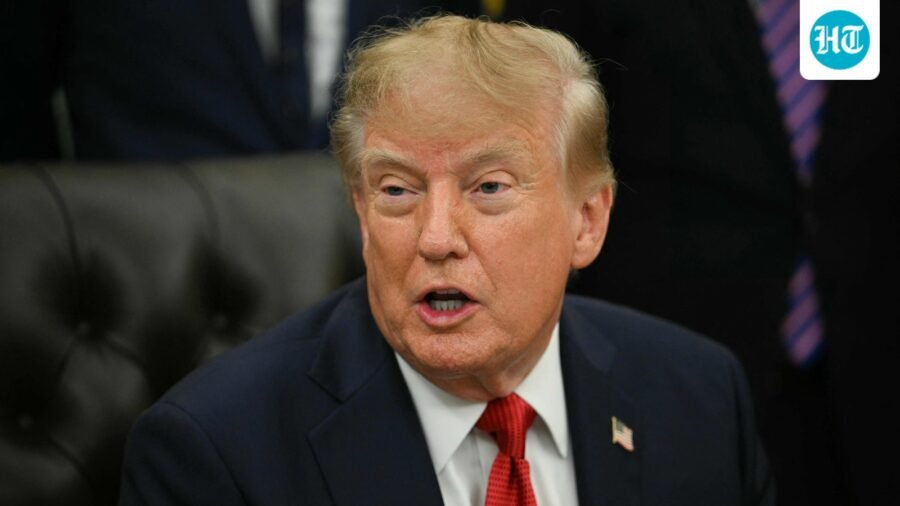
The new executive order, signed by President Donald Trump, targets H-1B visa applications from employers who have laid off US workers or plan future layoffs.
Published on: Sep 19, 2026, 07:08:25 IST
Prefer HTon Google
Share via
Copy link
President Donald Trump has signed a new executive order directing US agencies to scrutinize H-1B visa applications involving employers that have laid off American workers or are planning layoffs that could affect similarly situated US employees.
The order expands scrutiny of employers using the H-1B program and calls for greater coordination among the Departments of Labor, Homeland Security, State, Commerce and Education, as well as the Small Business Administration.
H-1B employers facing scrutiny over layoffs
Under the executive order, the Departments of State, Labor and Homeland Security must consider whether an H-1B sponsoring employer has directly or indirectly carried out layoffs during the previous year or has plans for future layoffs that could negatively affect similarly situated American workers.
That means employers could face additional scrutiny not only after US workers have been dismissed, but also when agencies identify a risk that planned layoffs could affect American employees.
The order also directs the Labor Department's Wage and Hour Division to begin, within 30 days, reviewing data connected to previously submitted labor condition applications to determine whether further action against sponsoring employers is warranted.
The White House said the move is intended to strengthen the integrity of the H-1B program and protect American workers.
Why Trump is targeting H-1B employers
The administration's order alleges that some employers, third-party placement groups and outsourcing companies have used the H-1B system to obtain lower-paid foreign workers and displace US employees.
The White House cited technology-sector layoffs and said employers in the sector had collectively sought hundreds of thousands of H-1B workers while laying off between 800,000 and 1.3 million American employees from 2022 through 2026. It also alleged that some US workers were required to train foreign replacements before leaving their jobs. These figures and allegations are presented by the White House as part of its justification for the order.
The administration also pointed to outsourcing companies, saying some H-1B workers are deployed to replace US employees at third-party client businesses before portions of the work are transferred overseas.
The order says agencies have identified other alleged violations, including misrepresenting job duties and working conditions, falsely qualifying positions as specialty occupations and providing questionable educational credentials in support of H-1B applications.
What changes for H-1B employers
The executive order does not itself announce a blanket ban on H-1B hiring by companies that have conducted layoffs. Instead, it instructs federal agencies to take those layoffs and planned layoffs into account when processing H-1B-related applications, petitions, visas and entries.
It also establishes broader interagency information-sharing. Commerce, Education and the Small Business Administration are expected to provide wage, employment, academic, industry and other economic information to the agencies responsible for administering the H-1B program.
The White House says the additional coordination is introduced to identify cases in which H-1B hiring could conflict with statutory requirements.
The order is part of a broader Trump administration push to tighten the H-1B program. On the same day, the White House also issued a proclamation extending restrictions on the entry of certain H-1B workers unless their petitions are accompanied by a $100,000 payment, subject to specified exceptions. That restriction is set to take effect September 21, 2026.
See Less
White House correspondents body slams Trump’s ban on CNN, MS NOW and Politico
By Sohail Khan · 19 Sep

Leave a Reply