Trump rejects Iran ceasefire proposal: Why talks have stalled and what happens next?
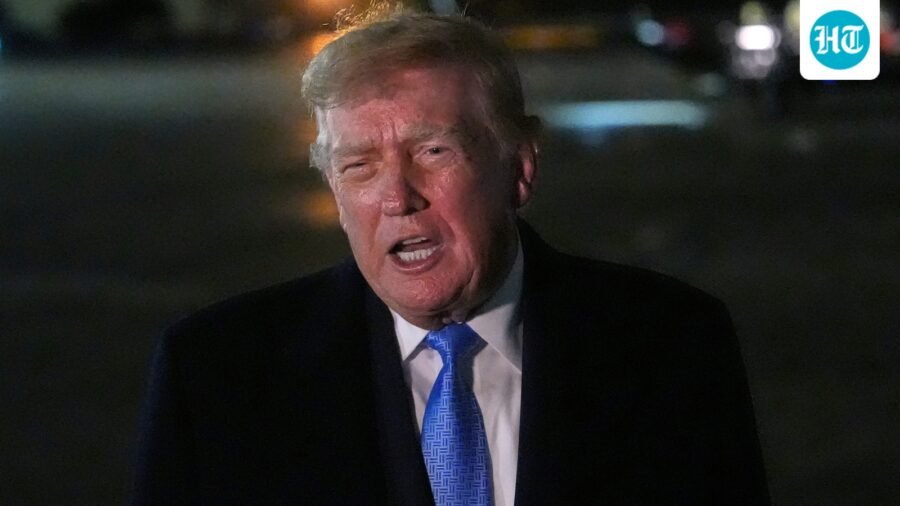
President Trump has rejected a ceasefire proposal with Iran, anticipating renewed military action post-midterms.
Updated on: Sep 28, 2026, 10:24:42 IST
Prefer HTon Google
Share via
Copy link
US President Donald Trump has rejected the terms of a proposed ceasefire with Iran, with reports in the US media saying he has told aides that he expects a renewed bombing campaign against Iran after the November midterm elections.
The development comes even as Washington and Tehran continue to communicate through mediators, including during the United Nations General Assembly’s High-Level Week in New York. Trump has also said he expects more talks with Iran this week.
What exactly has happened?
On Saturday, Trump confirmed that he had rejected the terms of a proposed Iranian peace plan that would have led to the reopening of the Strait of Hormuz and a pause in fighting across the region.
The proposal, conveyed to Washington through Qatari mediators, would have seen the US lift its naval blockade and ease some sanctions on Iran. In return, Iran would reopen the Strait of Hormuz and begin talks on its nuclear programme. The proposed arrangement would have triggered a seven-day countdown to the reopening of the strait and a pause in regional fighting.
Trump's rejection came with reports that he is unconvinced diplomacy with Iran will work. According to The Wall Street Journal, Trump has told aides that he expects the US to resume bombing Iranian territory after the November congressional elections.
The development is significant because diplomatic efforts have continued despite the military confrontation. US and Iranian officials have held indirect discussions through mediators, including on the sidelines of the UN General Assembly in New York.
Iranian Foreign Minister Abbas Araghchi has said Tehran was still waiting for mediators to convey Washington's formal position on its proposal.
Why exactly have talks fallen through?
The central problem is that Washington and Tehran are seeking very different terms before agreeing to a deal.
US Ambassador to the UN Mike Waltz has said Iran asked for too much up front, including billions of dollars in sanctions relief.
Washington believes its strategy of applying economic pressure on Tehran will eventually force Iran back to the negotiating table. The Trump administration has significantly intensified that pressure through the US Treasury's Operation Economic Outcast, which was launched in August.
The campaign targets financial networks, companies and entities accused of helping Iran generate revenue or evade US sanctions. The measures have targeted sectors including digital assets, technology, gold, aviation and shipping. The US has also sanctioned entities in countries such as Turkey and the UAE that it says are helping Iran maintain financial lifelines.
The pressure has also affected Iran's aviation links with key regional countries. The UAE, for example, suspended flights operated by Iranian airlines earlier this month after the US imposed sanctions.
Washington believes Iran's substantial economic problems will make it more willing to negotiate. Tehran, however, believes it can withstand prolonged economic pressure as well as the possibility of another US bombing campaign.
What does the Strait of Hormuz have to do with the talks?
The Strait of Hormuz has emerged as the central issue in the US-Iran confrontation.
The waterway is a crucial global energy route. Before the war, around one-fifth of the world's oil and natural gas passed through the strait. Its closure or disruption has therefore had major implications for global energy markets and shipping.
The US has used its naval blockade and economic pressure to push Iran to reopen the waterway, while Tehran has made reopening it conditional on Washington meeting its demands.
Trump has also argued that increasing volumes of oil are now moving through the strait, reducing the need for Washington to agree to a deal with Tehran.
The latest Iranian proposal specifically linked the reopening of the Strait of Hormuz to US concessions, including lifting the naval blockade, easing sanctions on Iranian oil sales and restarting nuclear negotiations.
What does Iran want?
Iran has sought the lifting of the US blockade and sanctions relief as part of any agreement.
Tehran has also indicated that it wants to return to the framework of a memorandum of understanding reached after talks in Islamabad in June. Washington, however, is reportedly not interested in returning to that proposal.
Iranian officials have maintained that the Strait of Hormuz will be reopened only after the US meets its conditions.
Araghchi has said Iran's position is clear and that any move towards reopening the waterway is contingent on those conditions being met.
The Iranian position reflects Tehran's belief that the Strait of Hormuz remains one of its most important sources of leverage in negotiations with Washington.
Does Trump still want talks?
Yes.
Despite rejecting Iran's latest proposal, Trump told Axios in a phone interview on Sunday that he expects more talks with Tehran this week.
"I expect more talks with Iran [this week]. They want to make a deal, but it is not the deal that I want to make. It is what we would have maybe agreed to a year ago. They overplayed their hand."
At the same time, Trump confirmed that he is considering renewed military action against Iran. Asked about resuming strikes, he said: "I am always thinking about it."
This means that diplomacy has not completely broken down, but military escalation remains a possibility.
Why does Qatar matter?
Qatar has emerged as the key mediator between Washington and Tehran.
Qatari negotiators have been shuttling between the two sides and are continuing efforts to bridge their differences. The mediators were still discussing changes to the proposed text over the weekend, according to Axios.
More indirect talks through Qatari mediators could begin as early as Monday.
Qatar's prime minister has acknowledged that securing a diplomatic breakthrough to end the US-Iran conflict has become harder, but said positive progress had been made in recent discussions.
Other Gulf countries are also closely watching the negotiations. Saudi Arabia and the UAE have pushed Washington to maintain economic pressure on Tehran and have been wary of concessions that could ease sanctions.
Are the talks stalled now?
Not completely.
The rejection of the latest ceasefire proposal has created a fresh setback, but both sides continue to communicate through intermediaries.
Trump's comments indicate that Washington is willing to keep talking even while maintaining the possibility of military action. Iran, meanwhile, has continued to call for a negotiated solution and has said its conditions for reopening the Strait of Hormuz remain unchanged.
The key question now is whether Qatari mediation can narrow the gap over sanctions relief, the US blockade, the Strait of Hormuz and Iran's nuclear programme.
See Less

Rescuers search for 12 missing after avalanche strikes Himlung Himal peak in Nepal
By Sohail Khan · 28 Sep


Leave a Reply