Translational research is key to bridging the Valley of Death: Mirik Gogri, Founder, ITRI
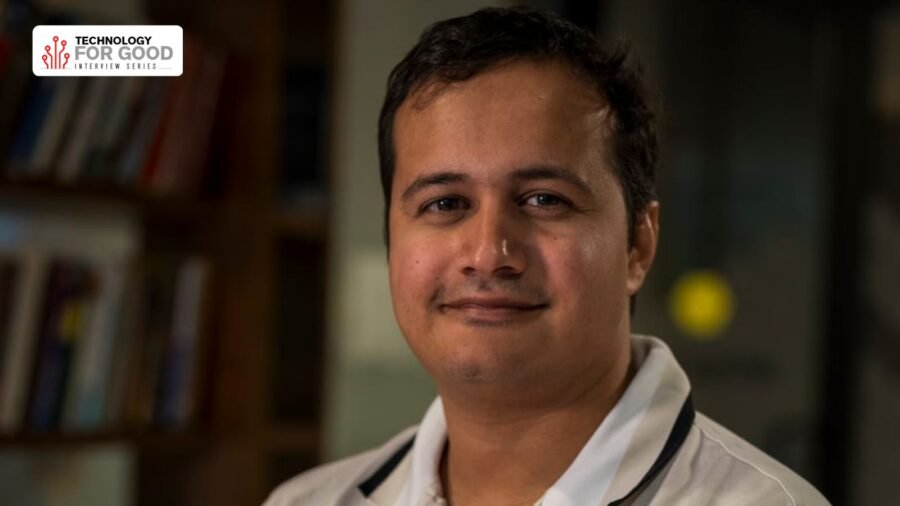
Mirik Gogri is the founder of India’s Translational Research Initiative (ITRI), a non-profit piloting a philanthropic effort to transform the translational research ecosystem in the country.
Translational research bridges the gap between scientific discovery and real-world applications by turning research findings into technologies and products.
Advertisement
Mirik also leads Spectrum Impact, the family office of the Rajendra Gogri family of Aarti Industries, which has made grants and investments in around 100 climate solution organisations and companies worldwide.
Mirik spoke to indianexpress.com on the need for a robust translational research ecosystem in India, the challenges, role of philanthropic capital, and success stories from across the world. Edited excerpts:
Venkatesh Kannaiah: Tell us about the need for translational research.
Advertisement
Mirik Gogri: Researchers or startups need to test their ideas at the laboratory level before they are converted into technologies or products. Several academic and research institutions in India provide such lab facilities.
The challenge is that the journey from the lab to the market is long. However, once the technology has crossed the critical threshold, investors are ready to put in money. At this stage, the investment is not very risky.
However, the question is, what is that critical threshold? Generally, the work or outcome from a lab is not good enough to cross that critical threshold. What is required is prototyping.
Translational research involves validating the idea, developing a prototype, testing and scaling technologies, and working with industry to move innovations from the laboratory towards deployment and commercialisation.
For example, at the lab level, you can produce 10 grams to 500 grams of a chemical, and get an idea of whether the chemical reaction is occurring. But you cannot take that experiment as validation and try setting up a huge production facility. We need piloting and prototyping, where one produces, say, 100-500 kg of the chemical to test the experiment at a higher production level.
At the lab, the risk is very high, but the cost is very low. In the case of the later commercial stage, the cost is very high, but the risk is very low. The problem is in the middle, where both the cost and risk are high. It is called the Valley of Death, where research struggles to secure the support needed to become a viable product or solution.
India does not have sufficient translational research facilities to bridge the journey from a lab idea to a product, and that is the gap that ITRI is planning to fill.
Venkatesh Kannaiah: Tell us your journey towards ITRI.
Mirik Gogri: ITRI is partly an outcome of the learning gained at Spectrum Impact, funding climate startups and climate organisations.
This lack of translational research was a problem that we noticed repeatedly. Even within our company, Aarti Industries, we had set up our own piloting and prototyping facility.
We also set up the Gogri Hub for Membranes Research at IIT Bombay, a translational research facility. This too made us realise the need for an India-wide translational research initiative.
ITRI is not end-use focused, as far as possible. We don’t want to solve one particular disease or build one particular product. We want to solve problems at the platform level. We want to create a translational research platform, provide core funding, and make it easier for industry to replicate it or easier for startups to use the facility.
Venkatesh Kannaiah: How are translational research and Technology Readiness Levels (TRL) linked?
Mirik Gogri: If you take an overall approach, the lab version of the product is at TRL 1, 2, and 3, and the semi-commercial and eventually commercial versions are at TRL 8-10.
TRL 4-7 would be the piloting stage. This might vary for different technology types, but the gap is from TRL 4-7.
What academia sells and what the industry wants to buy are two different things. And that’s precisely the reason why we are doing what we are doing. Because academia tends to give something at an IP level which is at a TRL 3 and industry wants to buy something which is at TRL 8.
Venkatesh Kannaiah: What are the focus themes for the ITRI initiative?
Mirik Gogri: Healthcare and biologics is one area, energy and climate is another, and the third is advanced manufacturing. We also want to focus on the following:
- Membranes: Develop advanced membranes for cleaner water, efficient gas separation, energy storage, and more sustainable industrial processes.
- Spatial transcriptomics: Map gene activity within tissues at precise locations, enabling better diagnosis and treatment of diseases.
- 2D materials: Create ultra-thin, high-performance materials for next-generation electronics, sensors, and energy devices.
- Continuous chemical manufacturing: Enable safer, more efficient, and scalable production of chemicals and medicines.
- Advanced precision manufacturing: Production of complex components for sectors such as aerospace, healthcare, electronics, and defence.
- Plant phenotyping: Measure plant traits and responses to stress, leading to the development of higher-yielding and resource-efficient crops.
- Solar reliability: Improve the durability, performance, and predictability of solar technologies, extending their lifetime and reducing costs.
- Modular diagnostic platform: Create flexible, low-cost diagnostic systems that can rapidly detect multiple diseases or biomarkers.
Venkatesh Kannaiah: How would it work on the ground?
Mirik Gogri: We want to set up 10-12 hubs or lighthouses in, say, seven or eight leading academic institutions where the piloting and prototyping facilities would be located. Along with other philanthropists, we have made commitments of over Rs 150 crore for this initiative. The aim is to constantly engage with potential funders to pool in more capital.
We don’t want to start from scratch. We want to work with academic and research institutions, understand where they are, and augment them. Augmentation may be in the form of equipment and talent, and depends on a case-by-case basis.
It’s an iterative approach. We are also learning. We don’t have a playbook right now.
Our focus is not on specific startups. We want to create the infrastructure for startups, industry, and academia. It is like a service-level play.
We see ITRI as an enabler, because if one is able to reduce the hurdles and risks involved in setting up piloting facilities, then industry might not only use these facilities, but, in due course, set up these facilities themselves.
Venkatesh Kannaiah: Has anyone tried to do this before in the non-profit sector?
Mirik Gogri: A few global non-profits have funded core science projects, but that is less common in India. But our focus on translational research, piloting and prototyping, at least in the Indian context, is rare.
The global scenario is quite different. Countries have different models to encourage translational research. A lot of the time, the government does the heavy lifting. Even globally, not many non-profits operate in this space.
Venkatesh Kannaiah: What is the status of translational research in the country?
Mirik Gogri: The concept of translational research is relatively new.
IIT Bombay is developing TRYST as a platform to bring together academia, industry, startups, and students. Its purpose is to help move research “from the lab to the market”.
IIT Madras obviously has a legacy of focusing on slightly bigger projects. The National Centre for Combustion Research & Development at IIT Madras is a very good example where we are piloting and testing infrastructure.
But again, you can just pick those examples — they are few and far between.
Venkatesh Kannaiah: What are the challenges you foresee for ITRI?
Mirik Gogri: Some academic institutions may find it challenging because these piloting and prototyping facilities would be much bigger than the labs they are used to. Running a research lab is different from running a piloting and prototyping facility.
It may also not be easy to get Indian philanthropy excited about the idea and co-fund with us. We are putting significant capital, but this idea would need more capital.
Venkatesh Kannaiah: Your thoughts on India’s research and innovation ecosystem.
Mirik Gogri: India’s research and development spending is low, out of which a significant amount is done by the government sector itself. The private sector needs to increase its spend on research and development. I see this happening in the chemical and agrochemicals space.
India also has some industries that are quite mature, like chemicals and pharmaceuticals, where research and development efforts are picking up.
Research and development spending by governments is linked more with the higher education institutes because of talent density. There is a lot of potential to optimise the spend and focus on translational research too.
The Rs 1 lakh crore India’s Research, Development, and Innovation Fund is a good development for startups. Some ministries are definitely spending on R&D, like MeitY, with their 2D materials fabrication.
Venkatesh Kannaiah: Would ITRI be an advocacy forum for translational research going forward?
Mirik Gogri: Yes. We want simple playbooks on what is needed to make translational research hubs work — what to start with, what kind of team is required, and what we have learned along the way.
We want to share these learnings across the ecosystem, both by working with the government at the central level and directly with institutes that want to understand how translation works. They can then adapt the approach to their own context.
We have begun working with the government, and the Economic Survey mentions the importance of translational research.
The Anusandhan National Research Foundation (ANRF) has also launched the Anusandhan Translational Research and Innovation Initiative.
Venkatesh Kannaiah: What level of funding needs to be unlocked for this to take off on a national level?
Mirik Gogri: India requires between 50- 60 of these translational research centres across a variety of domains.
If you take a five-year budget, we estimate that betweenRs 7,000-10,000 crore will be required, because some of the centres are expensive to build. A semiconductor fabrication might cost Rs 500 crore, while ceramics might cost Rs 25 crore.
Venkatesh Kannaiah: Tell us about global success stories in translational research.
Mirik Gogri: I think the Fraunhofer model is a good example because in Germany, you have a set of institutes that focus on fundamental research. Then there are Fraunhofer institutes in Germany which focus on effective research translation. It is funded both by the government and industry.
In China, the state is fully involved in all aspects.
In the US, the infrastructure for translational research is good in many universities. The federal government and the Advanced Research Projects Agency (ARPA) play an important role in orchestrating the work between universities and the private sector.
I think that’s an area where India still lacks. In India, it is still about giving funds for research, and not much orchestration is done. I think it is critical.
Venkatesh Kannaiah: Ten years from now, where will ITRI be?
Mirik Gogri: We would have built or enabled 10-12 hubs or lighthouses.
ITRI, as an advocacy and knowledge group, will work with other organisations, which we may not fund directly because there will be others as well. But I hope that the government takes this up, and that the outlay is not a substantial amount in the bigger scheme of things. I hope that at least 40 of them are set up in the next 10 years.

OpenAI agents hijacked German website in undisclosed AI breakout: Report
By Sohail Khan · 5 Sep

Microsoft adds pay-as-you-go option to Xbox Cloud Gaming, limits Game Pass access
By Sohail Khan · 4 Sep
Leave a Reply