Top tech and startup stories to start your day with
Benchmarks
Nifty23,217.6099.0
FEATURED FUNDS★★★★★
Motilal Oswal Midcap Fund Direct-Growth
5Y Return
22 %
Invest Now
Enter search text:
Business News›Tech›Newsletters›Morning Dispatch›Decoding MDR’s impact; EV bikes’ policy change sparks debate
Explore other editions
| Morning Dispatch |
Decoding MDR’s impact; EV bikes’ policy change sparks debate
Want this newsletter delivered to your inbox?
 Thank you for subscribing to Morning DispatchWe'll soon meet in your inbox.
Happy Thursday! The return of MDR is set to change UPI's market share game. This and more in today's ETtech Morning Dispatch.
Also in the letter:
■ UPI MDR: D2C brands reassess costs
■ Industry leaders split on AI development
■ Infosys expands Indore facility
UPI MDR could bring transaction value into payment apps’ market-share battle, industry executives say
.jpg)
The return of merchant discount rate (MDR) on select unified payments interface (UPI) merchant payments could shift a market-share contest long driven by transaction volume towards transaction value. Smaller apps may pursue higher-ticket, fee-generating payments through commerce and credit offerings instead of matching PhonePe and Google Pay’s scale or cashback spending.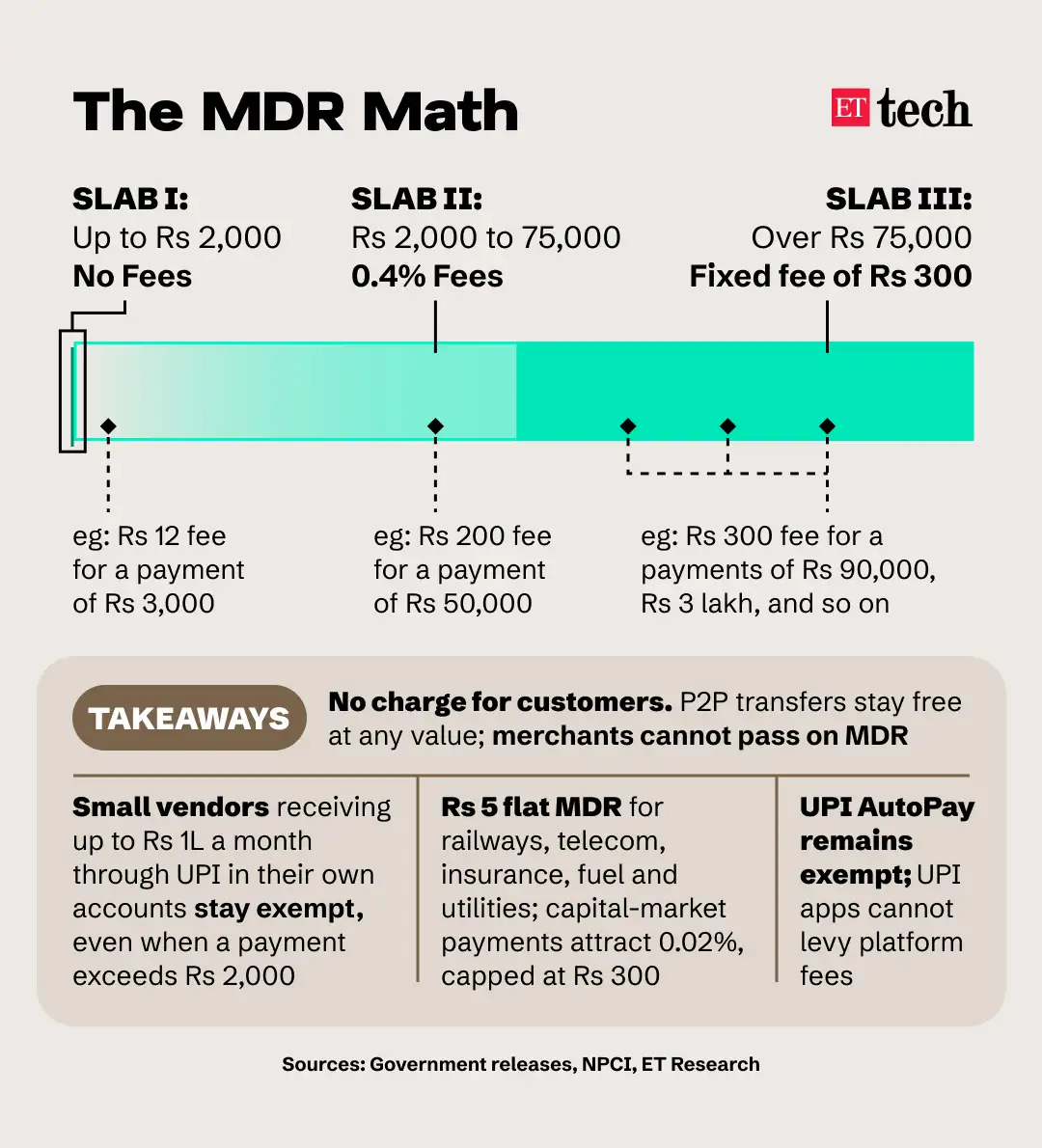
Why the opening matters:
- Consumer apps will receive 8 basis points from the 40-basis-point MDR, falling to 7.6 after the mandatory small-merchant fund contribution.
- NPCI’s 30% market-share cap is based on volume, not value. An app could remain below it while capturing disproportionate monetisable value.
- NPCI’s August data show the divide: Cred had 0.59% of volume but 1.92% of value, while Navi had 4.4% and 1.8%, respectively.
Where the advantage lies
- More than 95% of merchant-payment volume remains free, preserving incumbents’ distribution advantage.
- Smaller apps such as POP, and super.money will combine UPI with commerce or credit. MDR will supplement, rather than replace, those revenue streams.
- PhonePe and Paytm can earn on both the consumer and merchant sides. Payment aggregators’ share will depend on bilateral agreements with acquiring banks.
UPI MDR prompts D2C brands to reassess costs as festive sales loom

The new MDR framework comes in the middle of the ecommerce festive season sales and D2C (direct-to-consumer) brands operating in low-margin categories such as consumer electronics, fashion, and packaged goods are assessing the impact.
Driving the news: Industry associations such as the Clothing Manufacturers Association of India and the Retailers Association of India (RAI) have raised concerns over the new MDR rules.
Industry executives said the impact could be more pronounced for ecommerce, where transaction values are higher, while quick commerce platforms, which typically have lower average order values (AOVs), may see limited impact from the new charges.
- The basics: Payments above Rs 2,000 to eligible merchants will attract an MDR of up to 0.4%. The charge is capped at Rs 300 for transactions of Rs 75,000 and above.
- Who pays: The merchant. The customer pays nothing, and the merchant cannot add the charge to the bill.
Read our explainer on the MDR framework here.
Reactions: The MDR on UPI has received mixed reactions from industry leaders. Zerodha cofounder Nithin Kamath said MDR was "probably inevitable" but questioned its impact on broking and investment payments.
Meanwhile, Paytm CEO Vijay Shekhar Sharma said the introduction of MDR will add more revenue and profit to the company, Paytm parent One97 Communications founder and CEO Vijay Shekhar Sharma said on Wednesday.
Legal challenge: The MDR matter has reached the apex court. A public interest litigation (PIL) has been filed in the Supreme Court against MDR, alleging the levy was introduced without adequate statutory safeguards, transparency, or public consultation.
Also Read: UPI MDR may attract 18% GST; eligible merchants can claim input tax credit
Industry divided over lifting 60 kg cap for low-speed electric two-wheelers
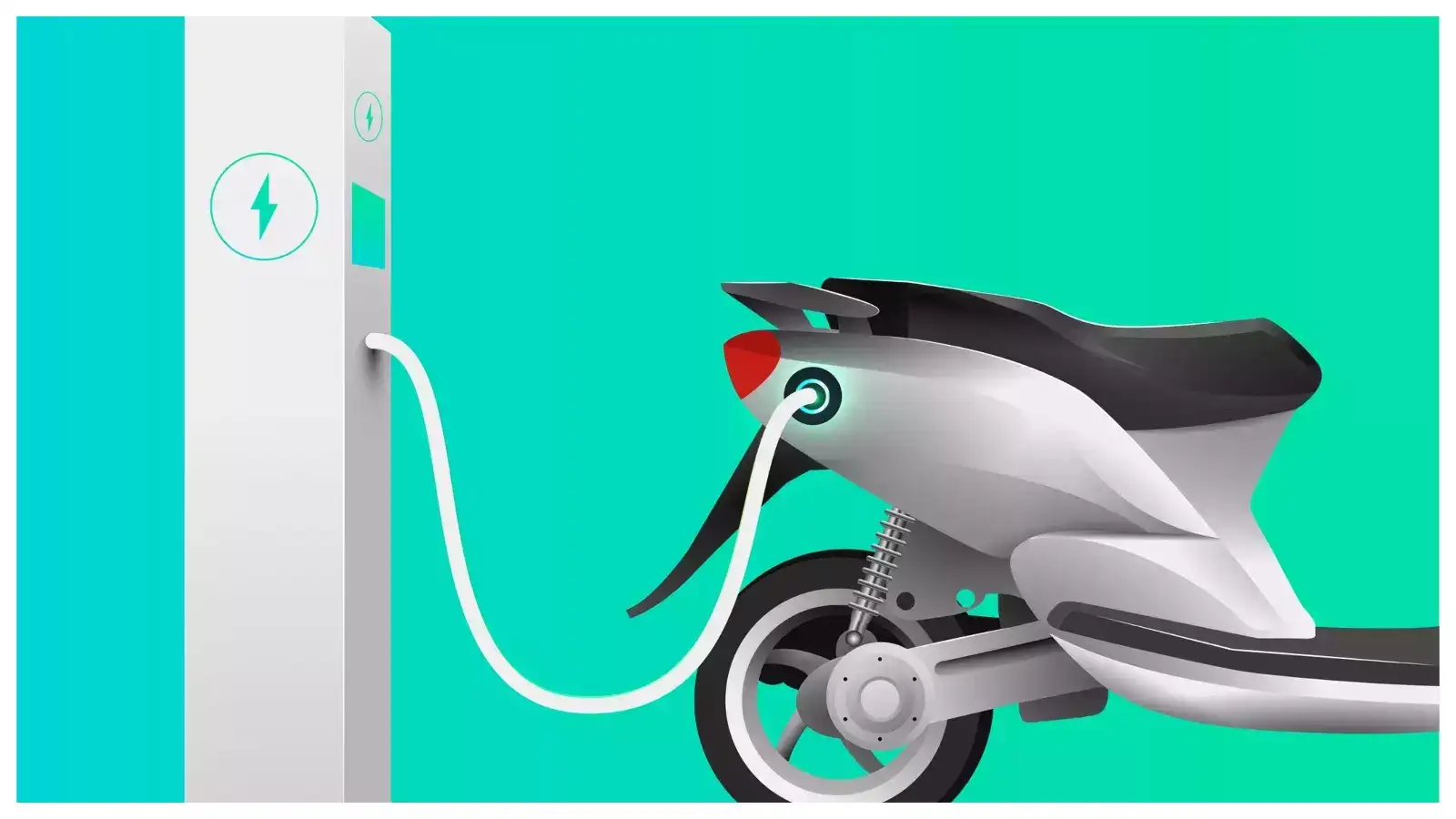
The government’s proposal to remove the 60 kg unladen-weight limit for low-speed electric two-wheelers has divided stakeholders.
Two sides: Mobility operators warn that heavier, more powerful vehicles could enter a category that is currently exempt from registration and driving licences, while some EV makers argue the weight cap constrains safety and product innovation.
Fine print: In draft rules notified on August 21, 2026, the Ministry of Road Transport and Highways (MoRTH) has proposed amendments to the Central Motor Vehicles Rules, 1989:
- Raise the motor power threshold from 250W to 600W.
- Retain the 25 kmph speed ceiling.
- Remove the 60 kg unladen-weight condition for exemption from Vahan registration and driving licences.
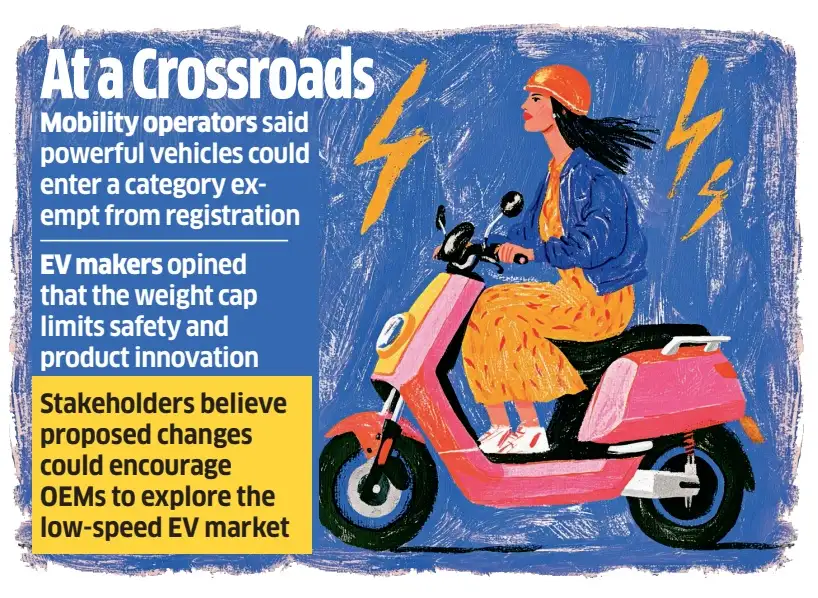
Currently, many electric two-wheelers used by gig workers fall under this low-speed, exempt category, creating a large unregistered segment outside the conventional motor-vehicle system.
Tell me more: Yulu, which is opposing the removal of the weight ceiling on safety and enforcement grounds, said a 600W motor could be tampered with to take the vehicle beyond the prescribed speed.
However, Bounce cofounder and CEO Vivekananda Hallakere said the 60 kg ceiling could become a constraint on safety, as manufacturers may have to compromise on the chassis, suspension, braking system, and overall form factor to stay within the limit.
Other Top Stories By Our Reporters
.jpg)
Nvidia chief executive Jensen Huang and Salesforce CEO Marc Benioff
Nvidia's Huang and Anthropic's Amodei split on AI development: Two of the most influential figures in AI set out opposing views on how fast the technology should advance. Nvidia chief executive Jensen Huang said no new laws or regulations were needed to control AI development, rejecting a push by leading labs to coordinate a slowdown in research to improve safety on their platforms.
Infosys expands Indore facility: Indian IT major Infosys on Wednesday announced the expansion of its Indore development center (DC) with a new Software Development Block (SDB-2) at its Indore campus to tap central India talent.
Global Picks We Are Reading
■ Why the US and China are at odds on AI threats (FT)
■ The AI talent war is coming for Big Tech’s Asia executives (Rest of World)
■ A backlash over data centres is another threat to the AI juggernaut (BBC)
Explore other editions
Want this newsletter delivered to your inbox?
Thank you for subscribing to Morning Dispatch
We'll soon meet in your inbox.


Enter search text:

India-New Zealand trade deal passes in NZ parliament; 95% of exports to get tariff cuts
By Sohail Khan · 17 Sep
India starts its Asian Games journey with teqball
By Sohail Khan · 17 Sep
Debashish Sharma files Nagaon nomination
By Sohail Khan · 17 Sep
Leave a Reply