The two balance sheets behind every e-waste decision
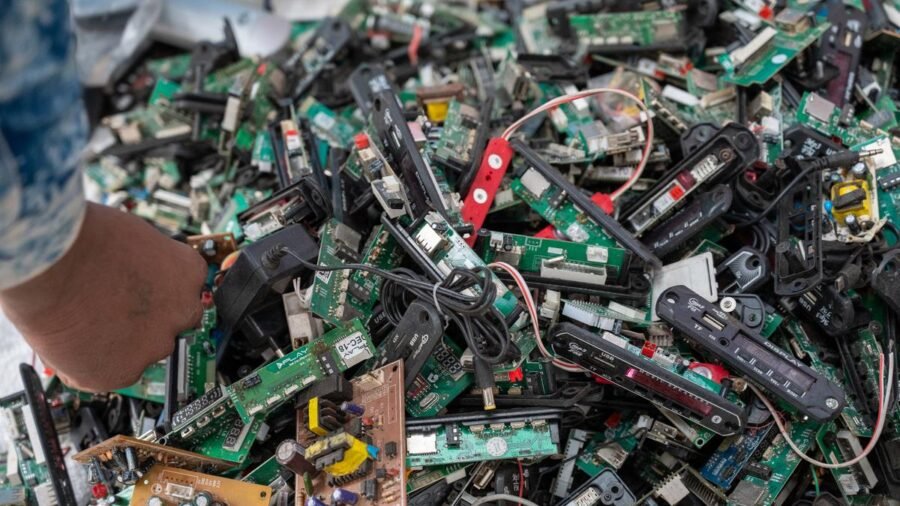
Every few years, governments and companies replace thousands of computers, servers, networking devices and storage systems. What looks like a routine technology refresh is, in reality, the creation of a valuable mine. Discarded IT equipment contains copper, aluminium, gold, silver, palladium and critical minerals that the world is scrambling to secure. As economies digitise, these growing mountains of electronic waste are among the largest untapped sources of strategic raw materials — and, when poorly handled, hazardous waste. This is the promise of urban mining: recovering valuable materials from products that have already served their purpose, instead of digging deeper into the earth. It begins with recognising that yesterday’s electronics can become tomorrow’s resource base. The economics, however, are not always straightforward.
The long chain of recycling
Safely recovering materials from electronic waste requires sophisticated technology, secure data destruction, environmentally compliant processing and traceable supply chains, with collection and segregation adding to the cost. Yet the benefits go beyond recovered metals: less virgin mining, stronger domestic supplies of critical materials, lower import dependence and responsible handling of hazardous components.
This helps explain why advanced recycling has yet to become the default choice in India. Procurement in both the public and private sectors often rewards the lowest visible cost: maximise resale value, minimise processing cost. The strategic value of recovering critical minerals, ensuring secure data-destruction, environmental benefits and strengthening domestic industrial capability rarely appears on the invoice.
Every significant public or corporate decision creates two balance sheets. The first is financial and immediate: purchase price, resale value, savings achieved. It is measurable, auditable and reflected in annual budgets. The second is strategic. It remains open long after the transaction is complete, recording the consequences of today’s decisions: resource security, environmental sustainability, industrial capability, supply-chain resilience, public health and national competitiveness. Good governance, and increasingly good business, depends on managing both. Some investments look expensive at first but can transform economies. Solar power is a good example. Fifteen years ago, it struggled to compete with conventional electricity on cost, and governments that invested early were criticised for paying too much. Today, scale and learning have made solar one of the world’s cheapest sources of electricity, while countries that built manufacturing capacity early enjoy advantages that simple cost comparisons could not have predicted.
What organisations must ask
Investment in urban-mining infrastructure looks similarly expensive if judged only against the cost of disposing of a computer. The calculation changes when the value of recovered materials, avoided imports, environmental safeguards, data security and future industrial capability are counted together. Many costs excluded from an initial transaction return later in another form, and more expensive over-time. Pollution becomes health-care expenditure. Resource depletion becomes import dependence and high manufacturing costs. Weak domestic capability becomes strategic vulnerability.
Selecting a recycler solely because it offers the highest resale value may appear prudent. But organisations should also ask whether sensitive data is securely destroyed, whether refurbishment precedes recycling, and whether critical minerals are recovered efficiently and transparently. A marginal gain today can become tomorrow’s cybersecurity risk, import dependence, reputational damage and permanent loss of strategic resources. The challenge is not confined to boardrooms. It also shapes public policy. Governments have traditionally relied on the valuable lowest-price principle to ensure transparency and fiscal discipline. But today’s economy increasingly depends on renewable energy systems, batteries, electronics and advanced manufacturing, sectors where the lowest acquisition cost is rarely the lowest lifetime cost.
Many countries are now moving toward life-cycle costing and value-based procurement, asking “which option delivers the greatest long-term public value?” Procurement then becomes a tool of industrial policy, shaping which technologies scale and which capabilities are built. The same principle applies to compliance markets such as Extended Producer Responsibility, where judging compliance only on the cheapest available certificate rewards the lowest-cost provider rather than the highest-quality outcome. Rewarding traceability, recovery efficiency and technological capability would instead draw investment into advanced recycling and strengthen India’s domestic supply of critical minerals.
Environmental costs never remain environmental alone; they become economic costs. Governments spend more on remediation, businesses face higher compliance costs, and citizens bear the burden through taxes and lost productivity. The costs may be delayed or redistributed, but are rarely avoided.
The choice made is important
Whether India’s discarded computers, servers, batteries and electronics become a strategic national asset or an environmental liability depends on choices made today by governments and businesses alike. Every invoice records a price. Every decision creates two balance sheets. One closes with the transaction. The other continues to shape economic resilience and industrial and national capability. Therefore, the question is: Which decision is it that leaves behind the smallest unpaid bill?
Suman Chandra is a senior IAS officer currently serving as Director in the Ministry of New and Renewable Energy. Abhinav Mathur is a former Senior Adviser, NITI Aayog currently serving as an Adviser to the Board at Attero. The views expressed are personal

Don’t buy a lab-grown diamond before checking these 7 things
By Sohail Khan · 29 Sep
Towards a gender just Uniform Civil Code
By Sohail Khan · 29 Sep
Essar eyes $18-billion US steel plant: Why Indian firms are investing in US amid tariffs
By Sohail Khan · 29 Sep