The patient is the least informed in healthcare
Synopsis
Significant price differences in healthcare consumables have drawn attention, prompting calls for better consumer protection. Maharashtra's FDA has uncovered alarming disparities, highlighting information asymmetry faced by patients. The Supreme Court reaffirmed consumer accountability for medical services, emphasizing the need for transparency. Consumers are encouraged to ask questions and take advantage of available grievance mechanisms. Strengthening enforcement and data-sharing among regulators can improve the integrity of healthcare transactions.
 ET Bureau
A September study conducted by Maharashtra's Food and Drug Administration's (FDA) State Price Monitoring Resource Unit highlights price differences of as much as 2,841% between procurement prices and declared MRPs for certain hospital consumables. FDA commissioner Tukaram Mundhe has consequently sought intervention from ministry of chemicals and fertilisers' Department of Pharmaceuticals and National Pharmaceutical Pricing Authority (NPPA) to examine margin rationalisation and greater price oversight.
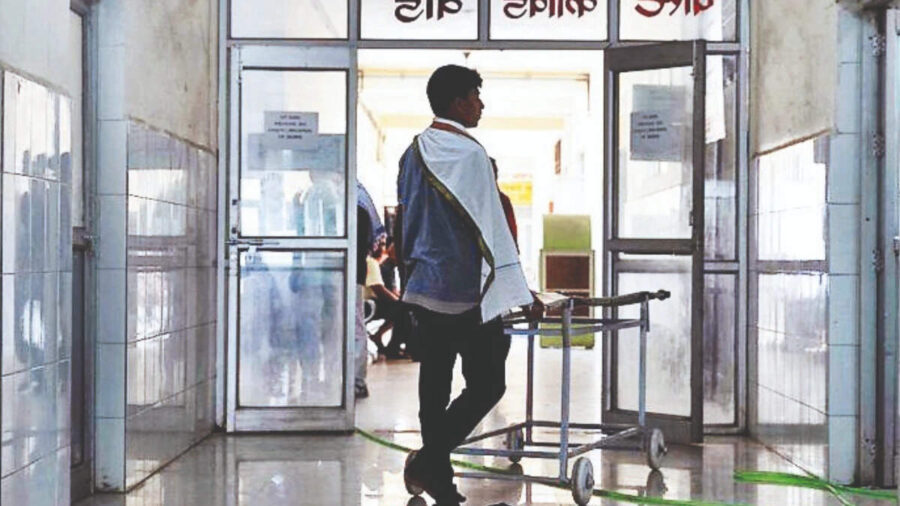
The numbers are startling. But the bigger issue is information asymmetry. In most markets, consumers exercise power through choice. We compare prices, brands and quality. Healthcare is different. A patient lying in an ICU does not ask whether another hospital can supply a cheaper oxygen mask. A family rushing someone into emergency care does not bargain over the price of a catheter.
Also Read: Hospitals seek new pricing rules as Maharashtra FDA flags high markups
The person paying the bill often knows the least about how that bill has been constructed. That is precisely why consumer protection assumes special importance in healthcare. Significantly, Supreme Court has just reinforced the legal position. On Sept 9, a 5-judge bench dismissed a curative petition challenging the 1995 'Indian Medical Association v V P Shantha' judgment.
That judgment established that medical services rendered for consideration fall within the meaning of 'service' under consumer law. As the law stands today, doctors and hospitals providing paid medical services remain accountable before consumer commissions for deficiency in service.
This should not be interpreted as an assault on the medical profession. Doctors perform a difficult job, frequently making life-and-death decisions with imperfect information. An unsuccessful treatment is not automatically negligence, nor should every medical complication become litigation. Consumer law does not require perfection. What it requires is reasonable care, transparency and accountability. That distinction is critical.
A consumer movement in healthcare must, therefore, avoid becoming a 'doctor vs patient' confrontation. Its real objective should be to correct the imbalance of information and negotiating power between an individual patient and an increasingly complex healthcare ecosystem comprising hospitals, laboratories, pharmacies, device manufacturers, insurers and intermediaries.
For consumers:
Ask questions: Ask for an itemised bill, what an implant or consumable costs, whether a cheaper equivalent exists, for copies of prescriptions, diagnostic reports and discharge papers. Examine insurance exclusions rather than discovering them after hospitalisation. Preserve bills, emails, prescriptions and payment records. Documentation converts dissatisfaction into evidence.
MRP check: MRP is a ceiling, not a certificate of economic reasonableness. When procurement prices and patient-facing prices diverge dramatically, regulators are entitled to ask whether the market is functioning competitively and transparently.
Speak up: We often complain vocally, but complain institutionally far less. GoI's National Consumer Helpline provides a pre-litigation grievance mechanism through the telephone number 1915, WhatsApp and online portal. If that does not resolve the dispute, consumers can file complaints digitally through e-Jagriti, which has subsumed the earlier e-Daakhil platform, and now enables online filing and tracking of consumer cases.
Also Read: Let's know what we eat: The type of front-of-pack labels consumers actually need
These mechanisms exist only if citizens use them. There is also a responsibility on GoI. India's consumer protection architecture has advanced substantially. But rights without timely enforcement become theoretical rights. Consumer commissions must be adequately staffed and cases decided quickly. Regulators such as NPPA, Food Safety and Standards Authority of India (FSSAI), insurance regulators and medical regulators need stronger data-sharing mechanisms so that recurring patterns become visible before individual consumers suffer.
Technology can make this dramatically easier. Imagine every hospital bill being machine-readable, with major consumables displaying the hospital procurement band, applicable price ceiling where one exists, and amount charged to the patient. Algorithms could automatically flag extreme deviations. Insurers could identify unusual billing patterns. Regulators could detect systemic problems rather than wait for individual complaints. Sunlight remains the best disinfectant.
The top court's reaffirmation of consumer remedies is important beyond medical negligence. It sends a larger message: professional expertise cannot mean absence of accountability. Nor should consumers view themselves as helpless merely because the other side is a large hospital, insurer, airline, bank, digital platform or MNC. Consumer Protection Act was designed precisely because an individual consumer rarely enters such transactions on equal terms.
The writer is former secretary,ministry of consumer affairs, GoI
(Disclaimer: The opinions expressed in this column are that of the writer. The facts and opinions expressed here do not reflect the views of www.economictimes.com.)
Add 

(Catch all the Business News, Breaking News, and Latest News Updates on The .)
…more
Elevate your knowledge and leadership skills at a cost cheaper than your daily tea.
-
Can Fly91’s flightpath for India’s smallest airline defy the doomy past? -
Everyone asks who will fund AI. Few ask who pays if it burns -
Smugglonomics: Geckos, dry dates, human hair – what makes something worth smuggling? -
Building recycling plants is fine. Will they get enough scrap? -
Biogas found its ethanol moment this month. Can it now find scale? -
Gold prices: Caught in a three-way tug-of-war -
Nobody's money? The fortune Indian families forgot they had -
Forget the UPI fee fight. Do we know how India pays today? -
Has the US Fed and AI created a costlier world? And has the queue got longer for India? -
Gold rush on Dalal St as regional jewellers bid to be the next Tanishq

Jeff Thomasson’s $100M gift to Indiana University
By Sohail Khan · 28 Sep
MPSC puts State Services Main Exam 2026 on hold
By Sohail Khan · 28 Sep
Mediators working to broker US-Iran deal
By Sohail Khan · 28 Sep
Leave a Reply