The all-electric Subaru that practically screams Toyota
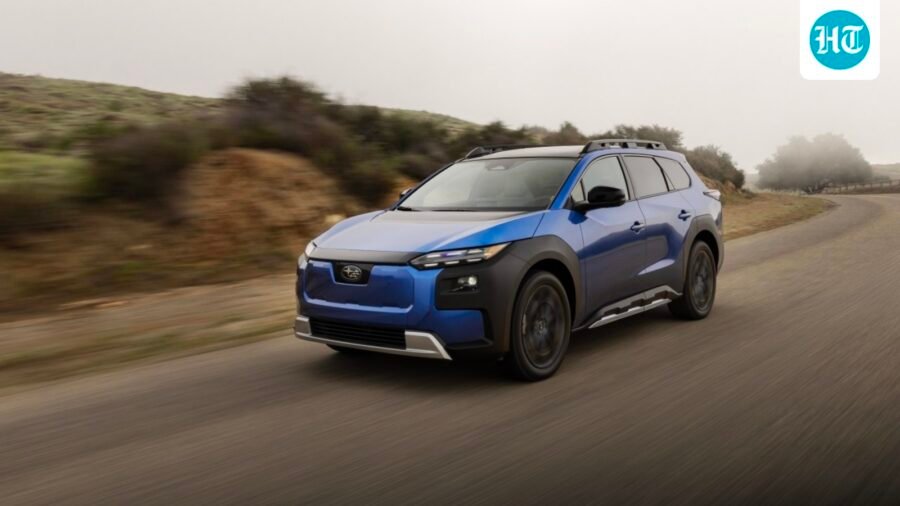
The 2026 Trailseeker blends Subaru’s rugged styling with Toyota’s EV architecture, delivering impressive acceleration and ride quality
Published on: Sep 19, 2026, 18:00:22 IST
Prefer HTon Google
Share via
Copy link
You might think electrification would be a natural fit for Subaru, a brand appealing to young families, weekenders and other active-lifestyle pagans. The problem is, the brand—and, to some extent, its management—is wed to a specific kind of go power: the charismatic flat-four engine and mechanically linked all-wheel drive. To generations of buyers and fans, the phrase “electric Subaru” is cognitively unstable, impossible to imagine, like “coal-fired toothbrush.”
For most of this decade, Subaru’s leadership has limited spending on in-house electrification programs, preferring to rely on partners and suppliers—most conspicuously, Toyota, which owns a 20% interest in Subaru Corporation. That brings us to our guest, the 2026 Subaru Trailseeker, a fraternal twin of Toyota’s bZ Woodland.
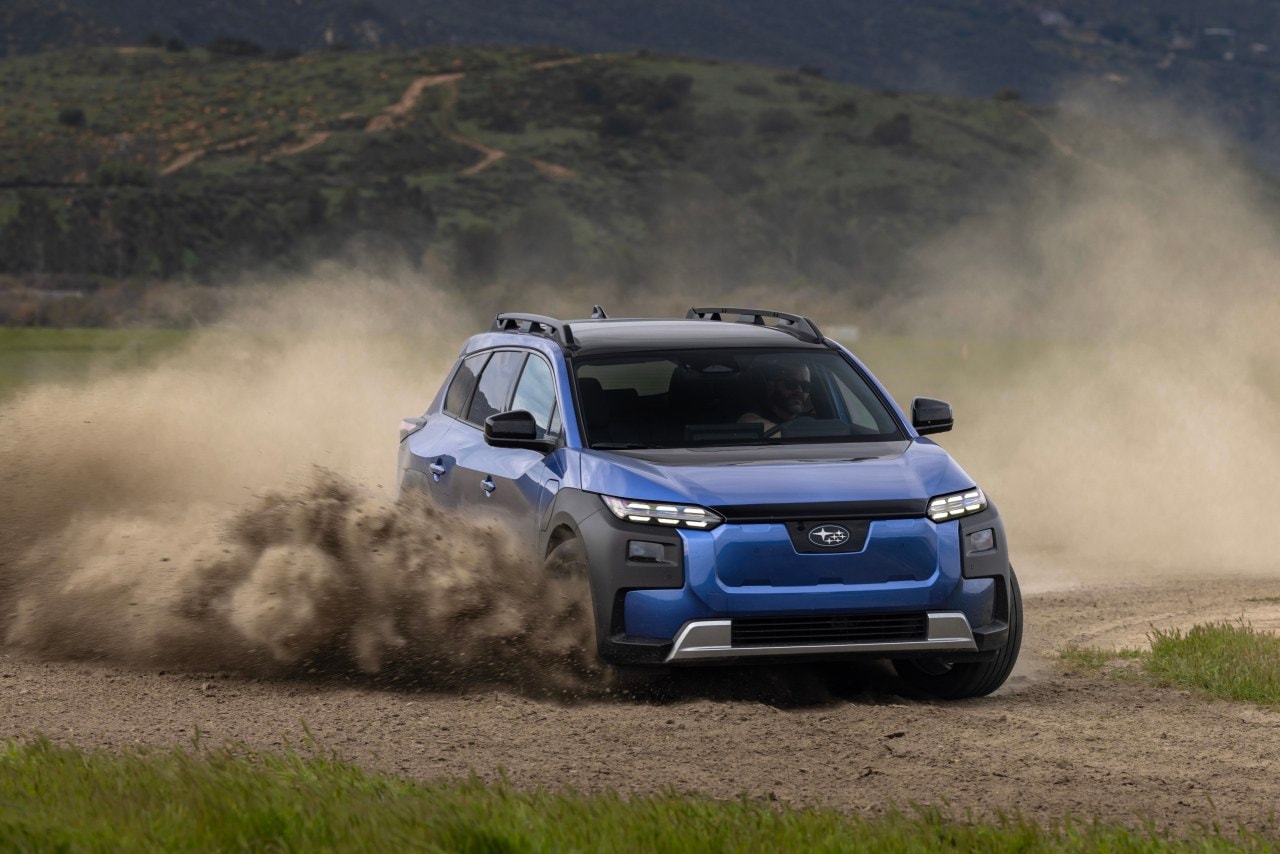
Among the few distinguishing features: The front and rear fascias are unique to the Subaru. The Trailseeker has a slightly longer roof and a more wagon-like hatch. Roof rails, rated at 176 pounds dynamic capacity, are standard equipment.
Trailseeker is one of four new Subarus that use Toyota’s EV template. The Uncharted compact SUV and midsize Solterra (SUV body style and four-door coupe, respectively) are already on sale. A three-row crossover called the Getaway is expected next year.
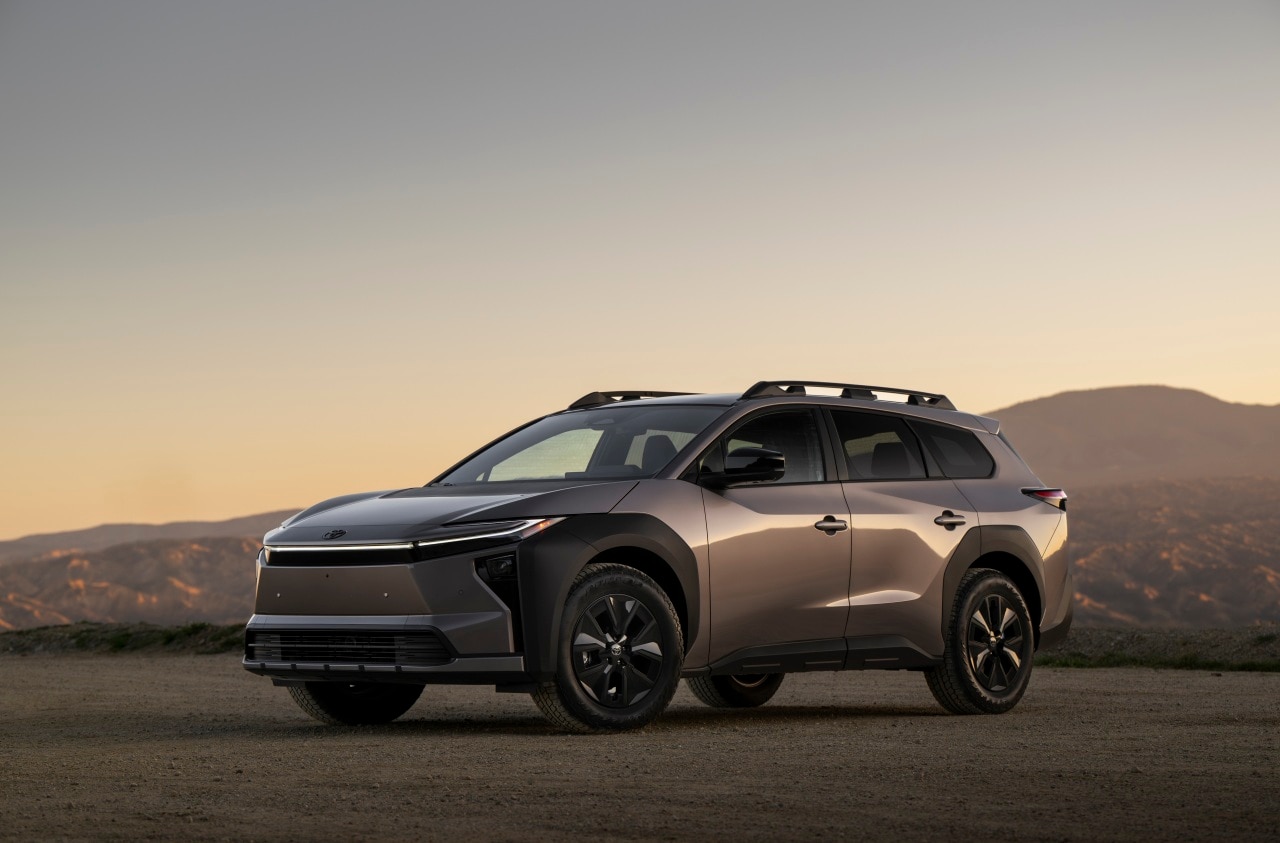
For a lot of consumers, the Toyota heritage will represent a net good. I get that. The Trailseeker feels stout and sturdy. The highway ride quality is excellent, as is the cabin isolation. It’s competitively equipped. The cold-natured among us can warm their cockles with the heated steering wheel, heated front and rear seats and radiant leg warmers built into the Touring package. The convenience of the hands-free, powered rear hatch is standard on all trims; ditto, wireless Apple CarPlay and Android Auto. The top-shelf Touring edition throws some lux the Trailseeker’s way, with panoramic roof and 20-inch alloy wheels.
Mechanically, however, the Trailseeker is one spec. All cars are kitted with dual-motor all-wheel drive (375 hp), a 74.7-kWh lithium battery pack and 400V charging system, the same as the bZ. It’s worth noting the Trailseeker’s price point and equipment list represent a $5,000 advantage over the bZ Woodland.
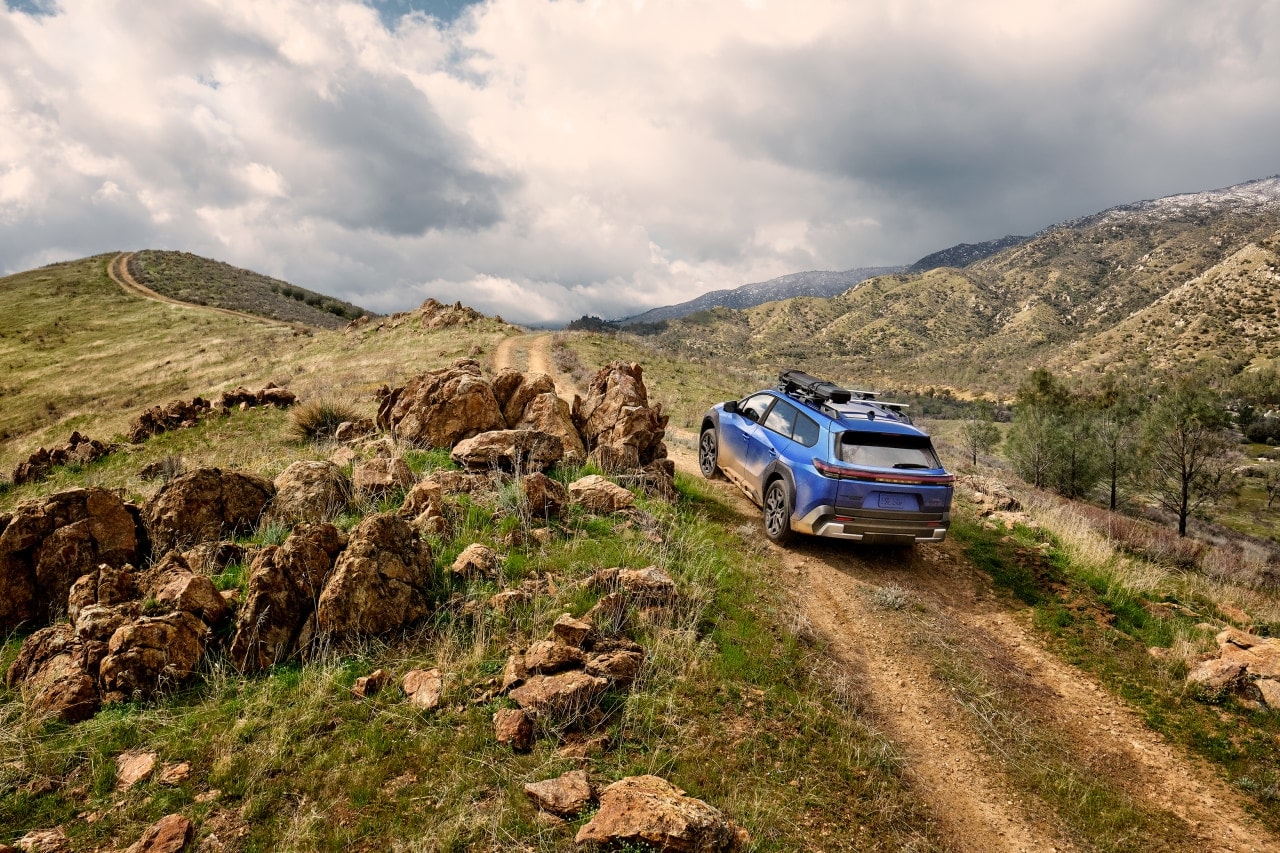
The broad strokes of dark composite cladding along the rocker panels, lower front and rear fascia, and around the wheel wells, signal its soft-road sensibilities—as does the 8.5 inches of ground clearance.
Attractive? When I think of beautiful cars I don’t think “scuff resistant.” I do like the Trailseeker’s front corners, skinned with dense, injection-molded plastic over sheet steel. Statistically, the front corners of a vehicle are the most likely to be damaged in the average collision. Heedless of this fact, automakers continue to place complex lighting and signal clusters in harm’s way, which is contributing to soaring collision-repair costs. The design-integrated buggy bumpers could suggest a way forward.
While joint-venture vehicles—badge jobs—are not uncommon in the mass market, rarely are they so brazen. Apart from the six-star emblem in the (overly complicated) steering wheel hub, the Trailseeker’s cabin practically screams Toyota. The touches and feels include the 14-inch center touch screen hosting a Toyota infotainment system of recent vintage, the two inductive charging pads in the center console and the push-to-turn gear selector in the console.
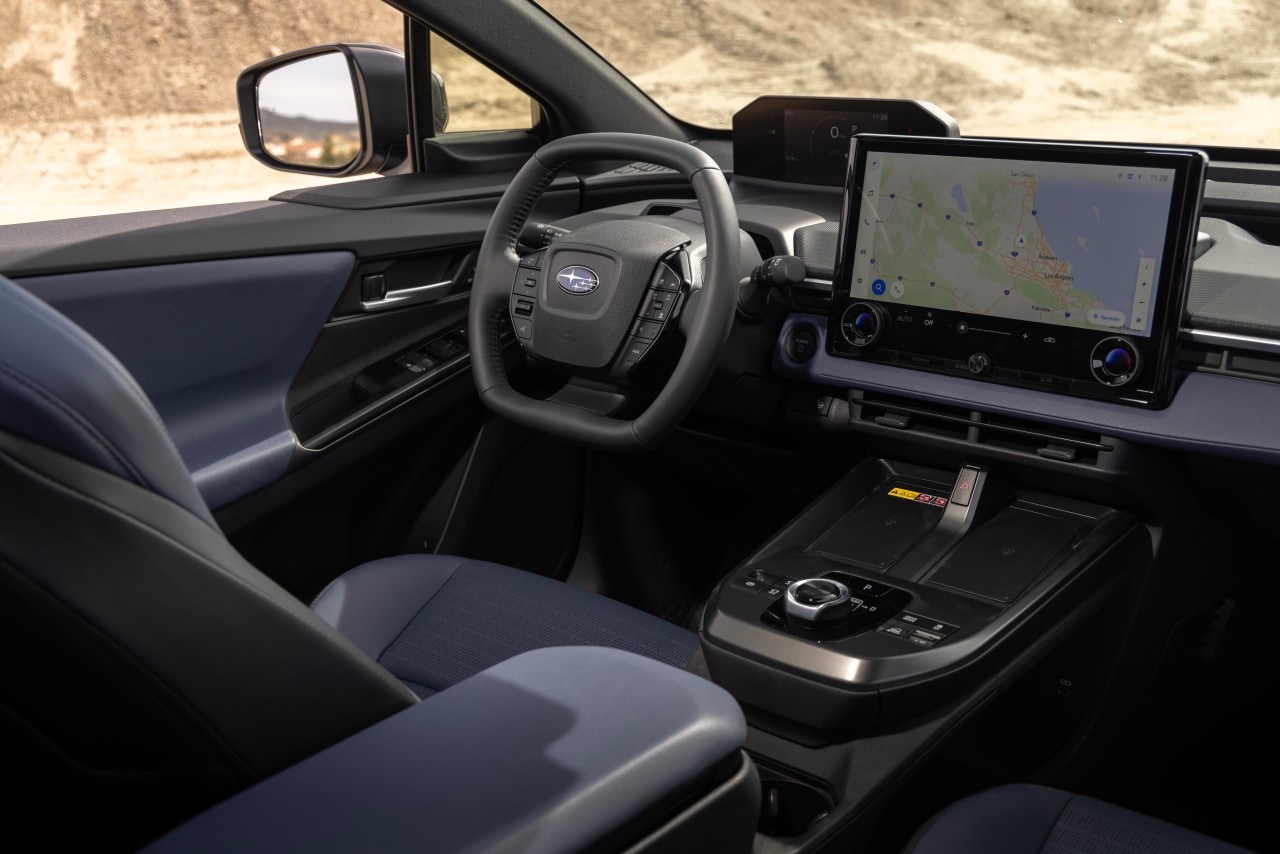
One part Subaru declined was the bZ’s round steering wheel, which in that car blocks the view of the instrument display at the base of the windshield. Subaru’s team elected to use a smaller wheel (14-inch diameter), flattened at the bottom and top, to improve ingress/egress and instrument sightlines. The new wheel is better in both respects; however, the upper rim still partially blocks the display.
There is no glove box—and thus no place to keep the enormous owner’s manual, except in the concealed stowage under the console, where I would normally put my purse. Why? On the other side of the firewall, in the space under the hood, a spiderweb routing of hoses (for two different kinds of coolant), condensers, pumps and assorted plumbing left no room for a glove box, to say nothing of a frunk.
A longer answer would involve Toyota’s own slow-walking of electrification. In many respects what we’re looking at is the ungentle amortization of Toyota’s last-generation global EV technology, rather than the next. This is reflected in the Trailseeker’s less-than-compelling range numbers—a maximum of 281 miles—and charging rates. Equipped with a Tesla-compatible NACS charge port, the Trailseeker has access to Tesla’s robust network of superchargers. But it might as well be drinking electrons through a straw. The max charging rate of 150 kW pencils out to a 10%-80% recharge in 28 minutes, under ideal conditions.
So, no glove box. Nor is there provision for a spare tire under the rear cargo floor—there’s a bunch of batteries under there. While this sort of good-enough packaging might have been acceptable in the first years of EV development, it is now clearly a telltale of compromise.
Subaru’s marketers were at least as busy as the engineers, figuring out how to rebrand the in-house technology. Somehow a pair of independently operating permanent-magnet motors, one on each axle, has been dubbed “symmetrical all-wheel drive.” Yes, the motors have the same output (224 hp each) so in that sense the propulsion could be called symmetrical. And I don’t doubt that the so-called X-Mode’s control logic can mimic the action of a center differential. But it’s not what the name suggests. Much like Porsche’s use of the word “Turbo” to denote its fastest electric cars, Subaru’s calling it “Symmetrical AWD” seems naff, even a bit underhanded.
Speaking of fast: As far as I can tell, the Trailseeker is the quickest-ever production Subaru. The team at Car and Driver cracked off a 0-60 mph acceleration pass of just 3.9 seconds, ahead of a ¼-mile elapsed time of 12.5 seconds. Not bad for something that looks like you could find at Bass Pro Shops, among the tackleboxes.
Verdict: The Trailseeker is a nice family EV, capable and comfortable, but pricey and underperforming compared to the relevant Tesla. Ironically, the limited range and charging speed make the Trailseeker incapable of the sort of unplanned explorations worthy of the name.
After Trailseeker, the notion of an electric Subaru still seems a little hazy.
2026 Subaru Trailseeker Touring
Price, as tested $48,005
Propulsion All-electric, front and rear permanent-magnet motors (224 hp each); 74-kWh lithium-ion battery; multimodal all-wheel drive.
System net power 375 hp
Length/wheelbase/width/height 190.8/112.2/83.4/65.9 inches
Curb weight 4,510 pounds
0-60 mph 3.9 seconds (Car and Driver)
EPA range 274 miles
Fuel economy 114/125/103 MPGe combined/city/highway
Cargo volume 72/30 cubic feet (2nd-row folded/up)
See Less

Apple’s newest iPhones and watches just hit stores. Should you upgrade?
By Sohail Khan · 19 Sep
Asus TUF Gaming 16 (2026) review: A tough new look with plenty of gaming power
By Sohail Khan · 19 Sep
Gemini hacked three companies in first known breakout by Google’s AI
By Sohail Khan · 19 Sep
Leave a Reply