Tata Sons’s move to grant Chandrasekaran another term short of shareholder math: A look at numbers
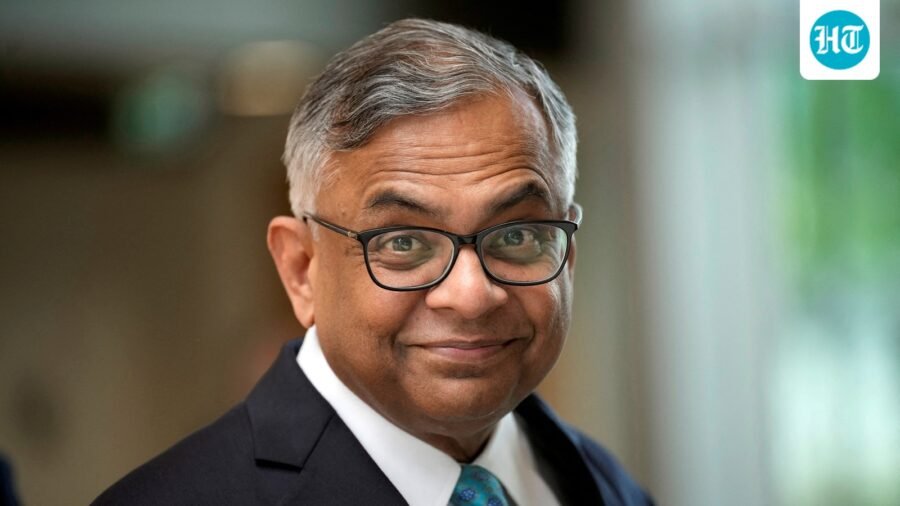
As the holding company’s annual general meeting remains shrouded in uncertainty, the cold numbers needed to approve Chandra's directorship simply do not add up.
Updated on: Sep 19, 2026, 07:30:35 IST
Prefer HTon Google
Share via
Copy link
The shareholding math required for N Chandrasekaran to retain his Tata Sons directorship appears heavily stacked against him, a day after the board revolted against the majority owner Tata Trusts to grant him a third term as chairman.
As the holding company’s annual general meeting remains shrouded in uncertainty, the cold numbers needed to approve his directorship simply do not add up, calculations showed. This is because the ongoing regulatory freeze on the Sir Ratan Tata Trust (SRTT) leaves only 72.61% of total shares eligible to vote, handing the Sir Dorabji Tata Trust (SDTT) bloc and Noel Tata—who oppose his reappointment—a decisive 53.6% majority of the active voting pool. To be sure, the two trusts cannot vote individually and must send a joint representative to the AGM, and that itself remains stuck since SRTT is barred from taking any decisions.
“No AGM or any general meetings of shareholders of Tata Sons can proceed without the presence of at least one representative jointly nominated by SDTT & SRTT as per Article 86 of the AoA of Tata Sons,” said a spokesperson for Tata Trusts. “We are hopeful that the restraint on SRTT shall be lifted soon,” the spokesperson said.
“No, he does not,” the spokesperson replied when asked whether Srinivasan, as Tata Trusts nominee, retains the right to decide how SRTT or SDTT exercises its AGM vote.
The math
Tata Trusts is an umbrella entity comprising 14 philanthropic entities, seven of which own shares in Tata Sons. SDTT and SRTT are the largest, owning 27.98% and 23.56%, respectively, totalling 51.54%.
SDTT oversees eight smaller trusts, of which three own Tata Sons shares. JRD Tata Trust (4.01%), Tata Social Welfare Trust (3.73%) and RD Tata Trust (2.19%). The SDTT alliance holds 37.91% voting rights.
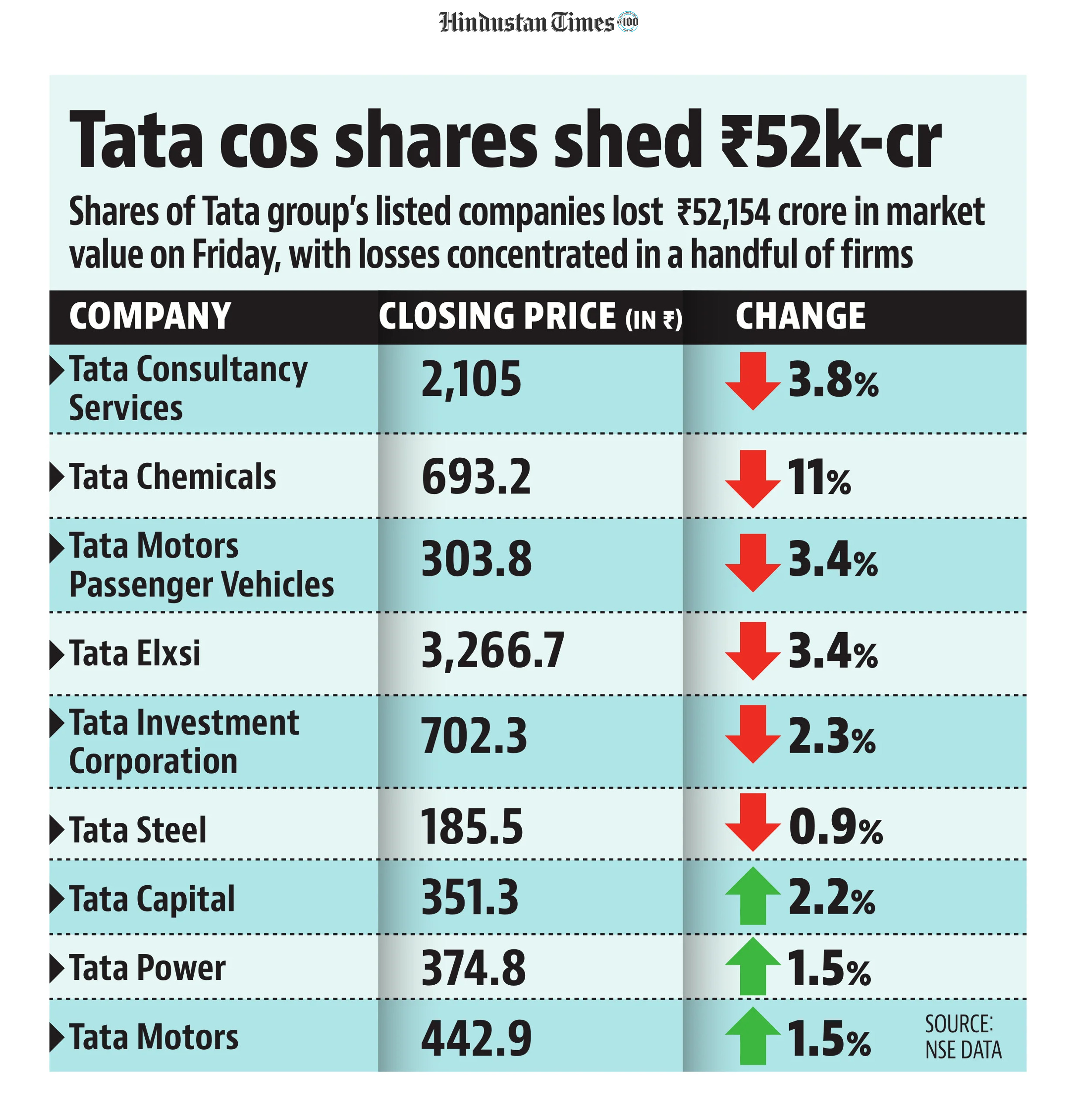
SRTT has four smaller philanthropic entities, two of which also own shares of Tata Sons—Tata Education and Development Trust with 3.73% and Sarvajanik Seva Trust with 0.1%. So, the SRTT bloc holds 27.39% voting rights.
Apart from these, a small philanthropic entity, MK Tata Trust, which is not part of Tata Trusts, owns 0.6%. Put together, all philanthropic entities own 65.9% of Tata Sons.
The Shapoorji Pallonji family owns 18.38%, while nine Tata Group companies own 12.86% of Tata Sons. Seven individuals own the remaining 2.87% of Tata Sons shares, bringing the total non-trustee shareholding to 34.1%.
Incidentally, Noel Tata is Tata Sons’ single-largest individual shareholder, owning 1% of the shares. Ratan Tata owned 0.83%, while his brother Jimmy Tata owns 0.81%.
For now, SRTT and its five related smaller trusts, together owning 27.39%, cannot vote following a recent order from the Maharashtra charity commissioner. This means only those holding 72.61% of the shares can vote on Chandrasekaran’s directorship, a resolution shareholders were expected to consider at the August 18 AGM. However, following the commissioner’s order, SRTT could not convene to decide on joint nominee with SDTT, and the AGM was deferred because not enough members were present.
Noel Tata opposed Chandrasekaran’s continuance on Thursday, while Tata Trusts termed the decision “illegal.” Noel’s 1% shares—along with SDTT’s 37.91%, add up to 38.91%. This means 53.6% of the voting pool is opposed to Chandrasekaran’s continuance.
Simply put, even if all the non-trustee shareholders back Chandrasekaran, the numbers are loaded against him.
The deadlock
A May 15 order by the Maharashtra charity commissioner prohibited SRTT from undertaking any business after Tata Trusts vice-chairman Venu Srinivasan, also a Tata Sons director, complained that the number of permanent SRTT trustees exceeded the new rules’ limit.
The commissioner had ordered on September 1 that the number of permanent trustees cannot exceed a fourth of the total trustees. Three of SRTT’s five trustees are permanent trustees. Tata Trusts maintains that all three —Noel Tata, Jimmy Tata and Jehangir HC Jehangir—were made permanent trustees well before the rule took effect.
“It is the understanding of the Tata Trusts that the said amendment is prospective in nature and does not affect the appointments of perpetual trustees made prior to its coming into force on September 1 2025. This is substantiated by both opinions and clarifications obtained by the Tata Trusts,” said Tata Trusts in response to Srinivasan’s petition.
Chandrasekaran’s reappointment needs approval from half of the voting shareholders, since it is a simple resolution. This means approval from 36.31% of the shareholders.
Against Chandrasekaran
“The Tata Sons board has violated the basic governance principle of shareholder supremacy. The mutiny of the board against the controlling shareholder is possibly a first, and not the right precedent for corporate India,” Institutional Investor Advisory Services, a proxy advisory, wrote in a note on Friday. “We are not arguing who is right, just that despite both Tata Trusts nominees not forming consensus, the board took decisions that may not carry if voted on, rather than having them deferred till consensus between the two Tata Trusts nominees was reached.”
However, this calculation depends on when Tata Sons holds its AGM, and if that meeting can happen without SRTT taking part.
For now, the corporate affairs ministry has given Tata Sons a three-month extension, meaning the privately owned company must hold a meeting before 18 November.
Tata Sons did not respond to queries on holding the shareholder meeting.
“The Tata Sons board has not fixed a problem today. It has created a much bigger one,” said Nitin Potdar, a Mumbai-based independent corporate lawyer. “A board owes a fiduciary duty to all its stakeholders: shareholders, employees and the public who trust the Tata name. Here, it seems to have acted in a hurry. Was it not worth discussing with the majority shareholder first? The damage to the group’s reputation is far too big, and those directors must take responsibility for it.”
See Less
India in touch with Russia over detained Unity crew
By Sohail Khan · 19 Sep
Shapoorji Mistry urges Tata Trustees to support listing
By Sohail Khan · 19 Sep
Trump’s $7 bn solar axe overturned by US judge
By Sohail Khan · 19 Sep
Leave a Reply