Supreme Court bars re-arrest of person after illegal arrest, mandates judicial oversight
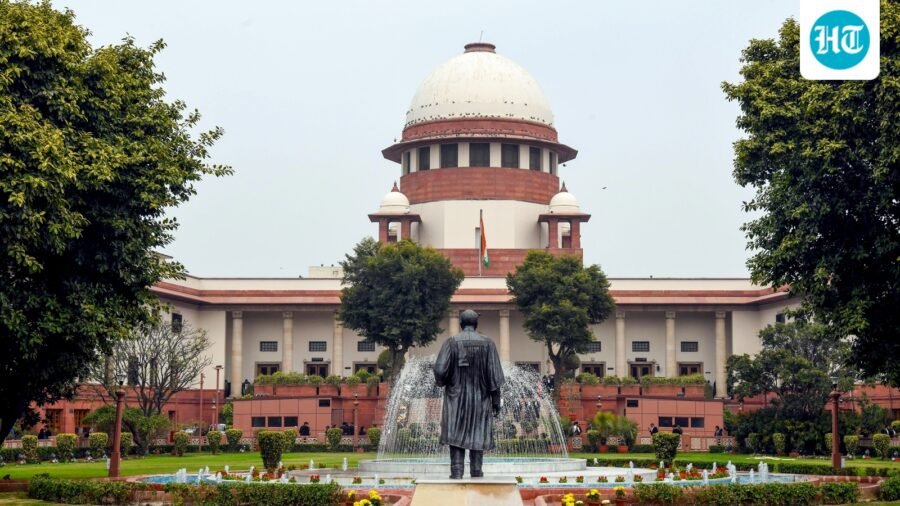
The court ordered written grounds, a superior officer’s endorsement and a fresh judicial review before an accused can be taken back into custody.
Updated on: Sep 22, 2026, 07:20:31 IST
Prefer HTon Google
Share via
Copy link
The Supreme Court on Monday barred investigating agencies from re-arresting an accused on their own after his arrest has been declared illegal for violating the constitutional right to be informed of the grounds of arrest, holding that any fresh arrest in such a situation must have the prior judicial imprimatur of a court.
SC puts judicial check on re-arrest powers
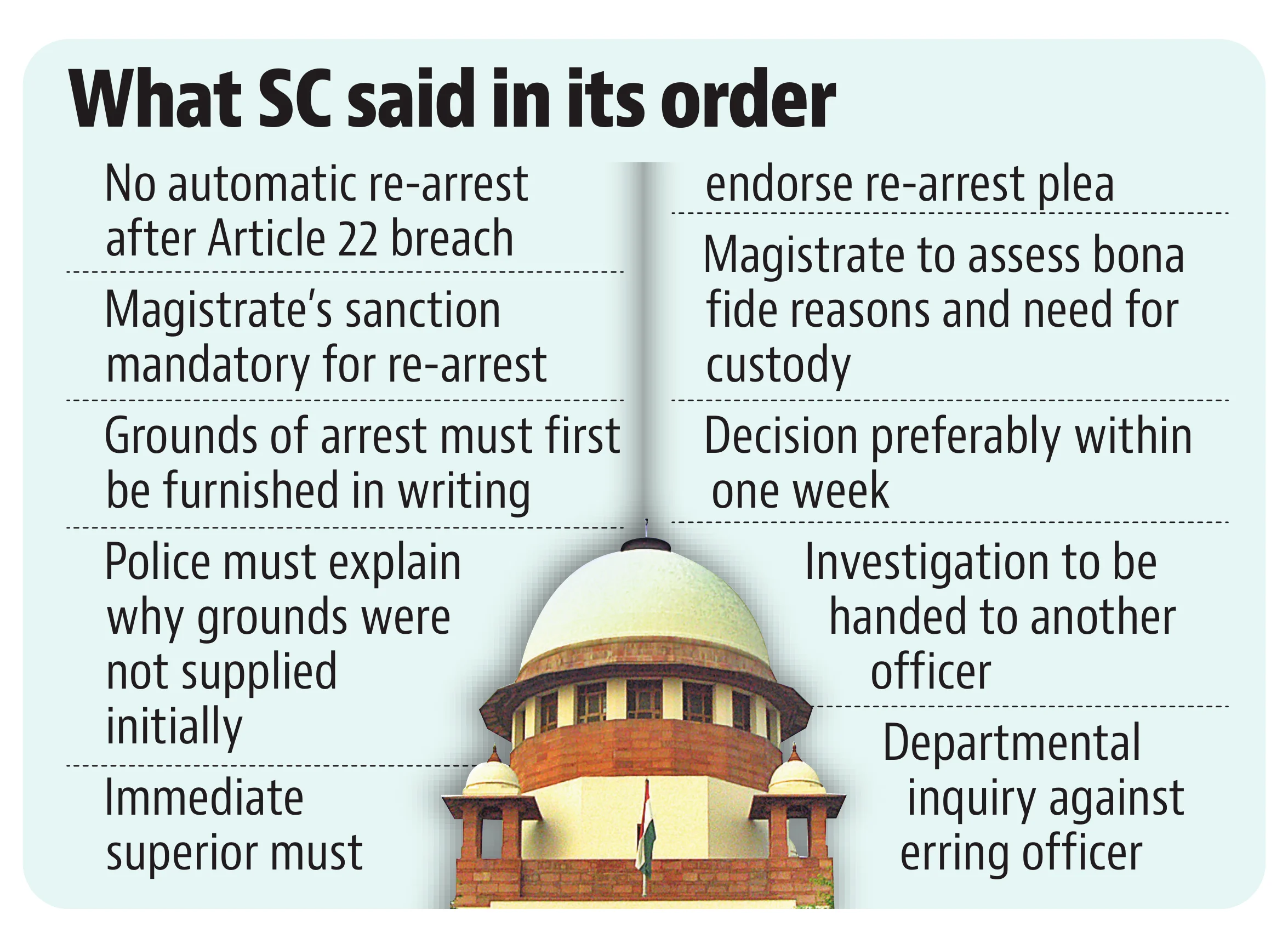
A bench of justices Ujjal Bhuyan and Atul Chandurkar laid down a detailed procedure to prevent the police from abusing the power of re-arrest after having themselves breached Article 22(1) of the Constitution. The court said that the investigating agency must first furnish the accused the grounds of arrest in writing and then move the jurisdictional Magistrate with an application explaining why the grounds were not furnished at the first instance and why his custody is now necessary.
The application must carry the endorsement of the immediate superior police officer, the bench said, making it clear that the power to re-arrest cannot remain with the very authority that had violated the accused’s fundamental right.
“Once there is a breach of Article 22(1) of the Constitution, the power to re-arrest the accused must not be left to the discretion of the very same authority who had violated the said provision of the Constitution. It must have the judicial imprimatur,” Justice Bhuyan, authoring the judgment, held.
Court sets conditions for fresh custody
A magistrate can permit re-arrest only after satisfying himself that there were bona fide reasons why the grounds of arrest could not be furnished initially and, separately, that the accused needs to be taken back into custody. The magistrate, it said, must decide the application expeditiously, preferably within a week, while adhering to the principles of natural justice.
The Supreme Court also directed that the investigation be handed over to another police officer once the superior authority receives the application seeking endorsement for re-arrest. A departmental inquiry must simultaneously be initiated into the original violation. If the inquiry ends in an adverse finding, departmental action must follow, with an entry made in the erring officer’s service record.
Article 22(1) safeguard applies to all offences
The bench made clear that furnishing the grounds of arrest is not a mere procedural formality. Article 22(1), it said, is a mandatory constitutional safeguard applicable across the spectrum of criminal offences, including those under special statutes. Once the provision is breached, the arrest and consequent custody become unconstitutional, and the accused is entitled to immediate release. He does not thereby get “bail”; rather, he is released from illegal and unconstitutional detention.
The court further underlined that an accused released for violation of Article 22(1) need not demonstrate any prejudice caused by the failure to furnish the grounds of arrest. The constitutional safeguard is fundamental in itself and cannot be diluted by requiring proof of prejudice.
“The gravity of the evil to the community resulting from anti-social activities can never furnish an adequate reason for invading the personal liberty of a citizen except in accordance with the procedure established by the Constitution and the laws. When a certain procedure is prescribed by the Constitution or the laws for depriving a citizen of his personal liberty, it is the duty of the court to ensure that such procedure is rigorously observed, howsoever, strange this might sound to some ears,” noted the bench.
The judgment is significant for preserving personal liberty and reinforcing the rule of law, by ensuring that a constitutional violation by the police cannot itself become the basis for an unchecked second exercise of the power of arrest. The court has effectively placed a judicial checkpoint between an unconstitutional first arrest and any subsequent attempt to deprive the accused of liberty.
Judgment strengthens 2025 safeguards
The judgment builds on the Supreme Court’s 2025 ruling in Mihir Rajesh Shah, which had directed investigating agencies seeking fresh custody of an accused released for failure to furnish grounds of arrest to approach the Magistrate. The present bench said it was strengthening those safeguards by prescribing the requirement of a superior officer’s endorsement, transfer of investigation and departmental inquiry.
The case arose from the arrest of Jaskaran Jeet Singh Deol, who was arrested in Punjab in May 2026 in a case involving allegations of sexual assault of a minor. A magistrate released him after finding that written grounds of arrest had not been furnished. The investigating agency subsequently sought to retain the possibility of taking him back into custody, leading to the constitutional question before the Supreme Court.
Frequently Asked Questions
Powered ByAsk
See Less

Traffic crawls as brief rain spell, idol immersion rush hit Hyderabad roads
By Sohail Khan · 22 Sep
Ethanol company sues Andhra farmer over pollution claims, seeks ₹1 crore compensation
By Sohail Khan · 22 Sep

Leave a Reply