Sooryavanshi’s new-ball problem meets an Afghan attack built to exploit it
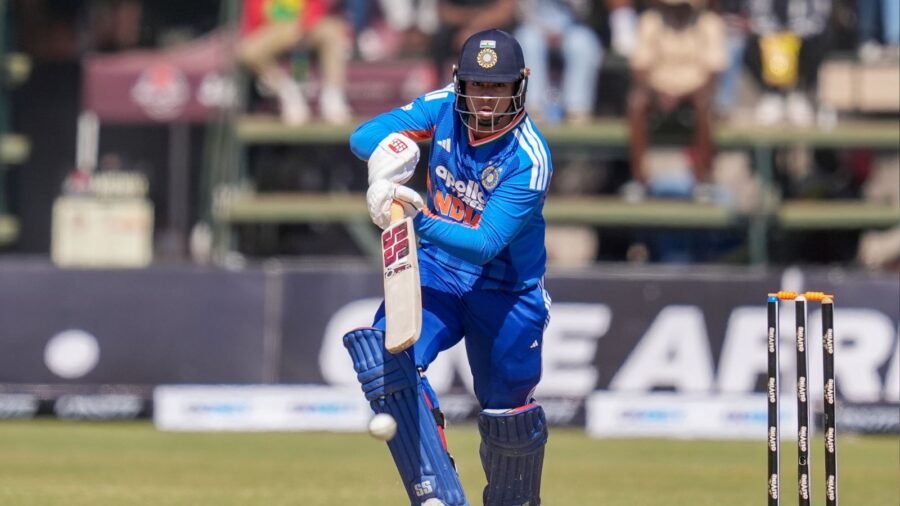
For Vaibhav Sooryavanshi, it is all in a day’s work. Or, at times, two.
The version on show at the Arun Jaitley Stadium on Friday bore no resemblance to what he had produced at this very venue four months earlier, a 21-ball 46 in the IPL in which neither Mitchell Starc nor Lungi Ngidi was spared. On Friday, he was beaten four times by Jasprit Bumrah, and twice apiece by Arshdeep Singh and Yash Thakur, in India’s training session ahead of the three-match T20I series against Afghanistan.
A few hours later, on Saturday, he was back to being Sooryavanshi. Among only three Indian cricketers who turned up for the optional session, the other two being fellow left-handers Abhishek Sharma and Tilak Varma, the 15-year-old batted for close to two hours at the nets.
Scratch that. Replace “batted” with “unleashed.”
Story continues below.
Subscribe to see fewer ads.
Whoever had the misfortune of holding the ball, granted, he faced only net bowlers, barring the odd over from Sharma, was treated with disdain. Most of the shots came back straight down the ground, keeping those in the old clubhouse on their toes. Among them were his father, Sanjeev, and his younger brother, Ashirvad, an aspiring cricketer himself.
Sunday will be harder than either of those two days. It will be Sooryavanshi’s first time representing India on home soil, even if India are technically the away side in a series where Afghanistan has been designated the home team for reasons of scheduling rather than geography. Two things stand in his way, and both of them arrive early.
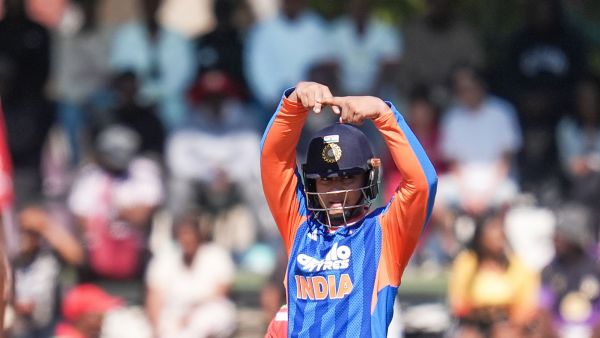 Vaibhav Sooryavanshi in action. (Faheem Hussain / CREIMAS for BCCI)
Navdeep Saini, drafted in as India’s net bowler for the series, has spent the sessions troubling the batters with how much the ball has swung. “From what I have experienced so far, there was movement on offer,” he told this newspaper. “With the new ball, the pacers can surely be effective. The ball was gripping a bit as well. Perhaps it is because the weather has been a bit cold, with the rain around. The runs will start flowing once the ball gets older, but we might see movement in the first few overs.”
The Delhi Premier League, which wrapped up less than a fortnight ago, told the same story. Across the last five full-length matches of that tournament, nine wickets fell inside the first three overs across all ten innings, for 229 runs, an average of 25.44 at a rate of 7.63 an over. New-ball trouble wasn’t a theory at the Kotla this season. It was the pattern.
Story continues below this ad
Afghanistan, for their part, have the attack to keep exploiting it. Naveen-ul-Haq, returning to the side for the first time in nearly two years, has taken his wickets at an economy of 6.65 and an average of 13.3 inside the first three overs, figures that loosen to 7.78 and 18.73 once the innings settles. Fazalhaq Farooqi, Sooryavanshi’s former Rajasthan Royals teammate, reads similarly early on: 6.02 and 17.3 up front, 7.02 and 20.2 after. Sooryavanshi, across a T20I career six matches long, has already fallen inside the first three overs three times.
Afghanistan captain Ibrahim Zadran sounded like a man who’d done the homework on both sets of numbers, his bowlers’ and the boy’s. “Vaibhav Sooryavanshi is a great talent,” he said. “He has been great at the IPL, and has been performing at all the different levels of cricket. We have thought about him, and we have knowledge about him too. There are guys in our team who have played against him in the IPL, and we have already watched his videos. We will try to just keep it simple and execute the right plans at the right time against him.”
What Friday and Saturday showed, side by side, is a batter capable of rebuilding overnight. He has done it before, across an IPL season built on exactly that kind of correction. What is left is to carry it from the nets into the middle, because if he survives the new ball at the Kotla, the pitch tends to pay back everything it took away from him early.
Speed Demon flagged: How Pranesh denied Nihal Sarin & Gambits a spot in GCL final
By Sohail Khan · 12 Sep
Leave a Reply