Seema wins Asian Games bronze her mother knows nothing about
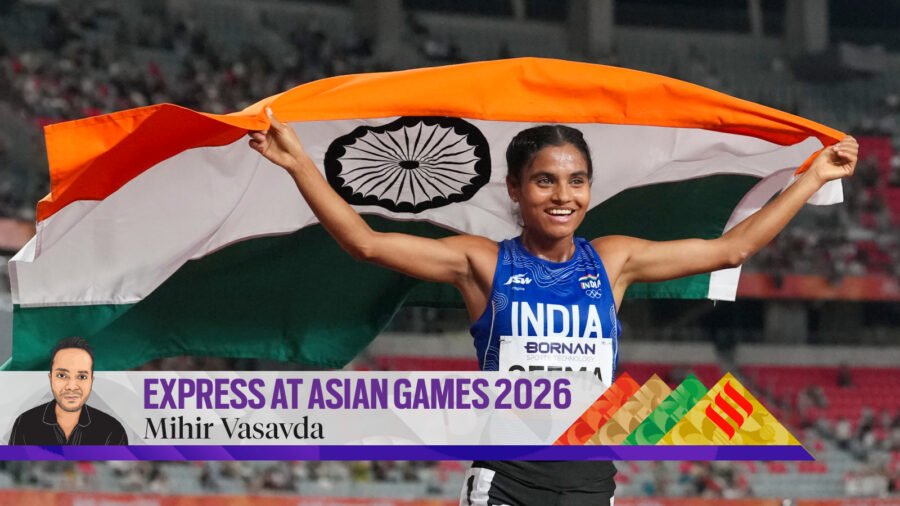
Seema’s mother thinks she is in India.
She has no idea her daughter is in Japan, or that on Thursday night Seema was standing on the start line of the biggest race of her career, alongside Olympic champion Winfred Yavi and Japan’s Nozomi Tanaka. “I didn’t tell her because she is old and gets very tense,” Seema said after winning bronze in the women’s 10,000m. “So she still thinks I am in India. Maybe, she will find out now.”
There was little time to think about home once the gun went.
Story continues below.
Subscribe to see fewer ads.
The first 400m took 83 seconds. Then came the surges and slowdowns, the kind of stop-start rhythm that can turn a 10,000m into a test of patience as much as endurance. The field went through 1,000m in 3:18 and 5,000m in 16:52, still a remarkably slow pace for runners of this calibre. From the stands, Seema’s coach Scott Simmons realised the race wouldn’t be fast, also because Yavi had two more events to run and Tanaka another race to come.
On the track, Seema had seen the same thing. She led for only a couple of laps before realising nobody wanted to take responsibility for the race. “I came to know that no one will lead the race,” she said. “Because the best runners will wait for the final stretch. So I also changed my strategy.” Simmons adds: “You just have to be fit to begin with, so then you can handle whatever happens.”
Seema stopped chasing every move and stayed with the pack. One runner would accelerate, another would ease off. The field would stretch, then come back together. It was less about running at a steady pace than surviving everyone else’s changes. “Players do that so that we get tired and no one can finish the race,” Seema said. “So we have to work out with that strategy. So we did that. That was more beneficial.”
That bronze-medal smile 🥉😊🇮🇳
Seema thanks the Indian fans in Nagoya after winning bronze in the Women’s 10,000m, 32:50.05 🔥
A wave, a clap and a flying kiss for everyone cheering her on 👋💙#AsianGames2026 #TeamIndia #IndianAthletics #Nagoya2026 pic.twitter.com/JRmGccqrXd
— Athletics Federation of India (@afiindia) September 24, 2026
By 8,000m, the group had begun to shrink. Seema was fifth with three laps left, and moved up a notch. She went past Ruth Jebet, the Bahraini great, and Daisy Jepkemei of Kazakhstan. Three women were left in the medal fight, and Seema was one of them. For a moment, she thought she could win it.
Then Yavi and Tanaka, backed by the sparse crowd, found another gear. “I felt that I can’t win the race,” Seema said. “I also pushed. But I couldn’t push as much as they did.”
She did not need to win it. She stayed with them as long as she could, then held on to third as the two leaders pulled away.
Her time was 32:50.05, nearly 48 seconds slower than the personal best she had set in March. Yavi kicked into an incredible pace in the final lap to take gold in 32:39.18. But this race was never really about the clock. It was about reading the race, surviving its swings and being there when the medals were decided. Seema was.
Story continues below this ad
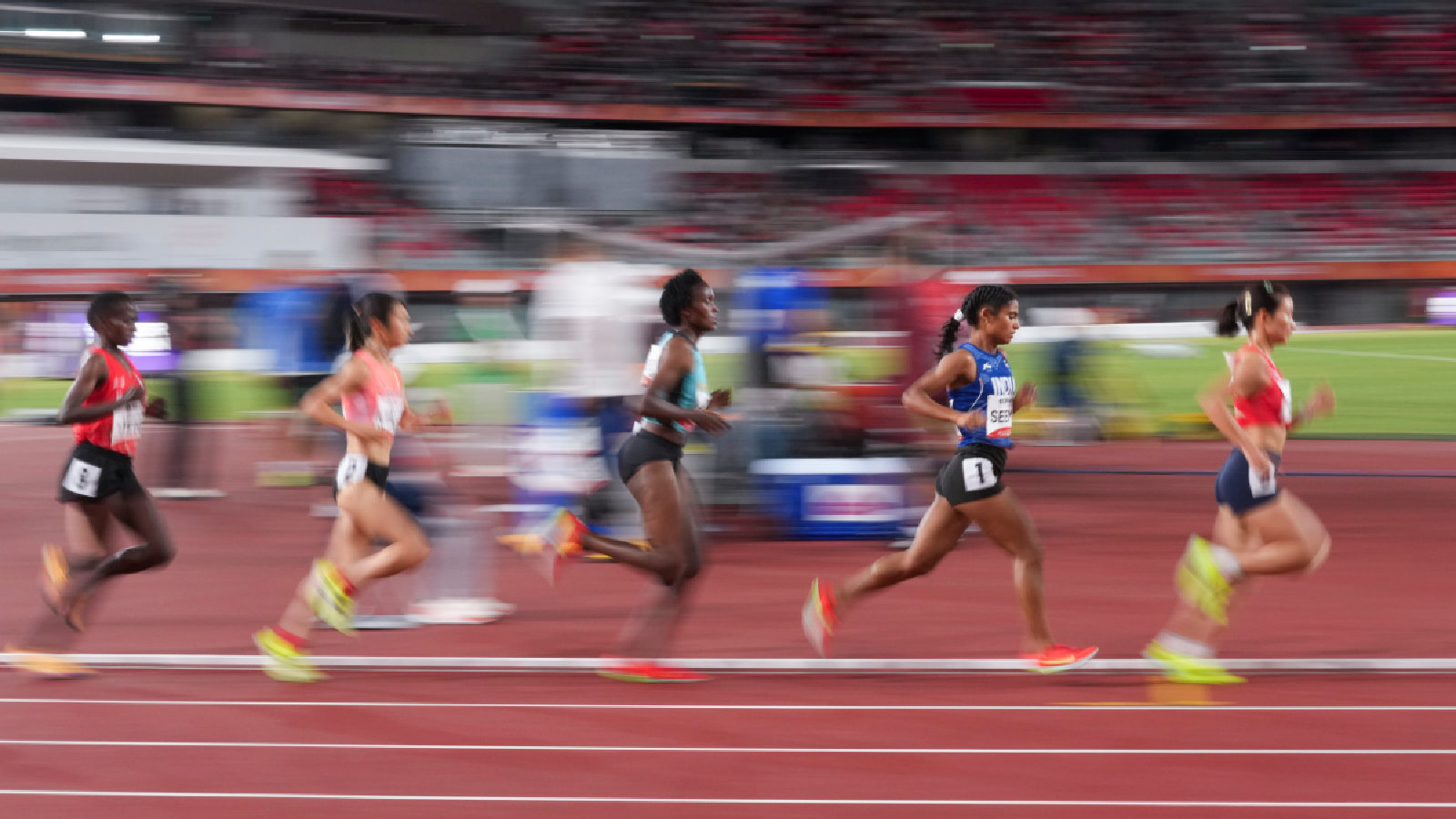 India’s Seema and others run in the women’s 10,000m final during the Asian Games 2026, in Nagoya, Japan, Thursday, Sept. 24, 2026.
…
She became India’s first women’s 10,000m medallist at the Asian Games since 2010. Simmons, she suspects, will be happier than she is. For three years, he has trained her at Colorado Springs, where she works in tough conditions alongside Olympic champions.
“He has always told me, ‘Seema, you are the best. You are the fighter,'” she said. “So today I thought that I will fight very well. And I did it till the end.”
The location has another significance. Los Angeles will host the 2028 Olympics, giving Seema a daily reminder of where she wants to be. “We train with Olympic champions. So our mindset is also the same. To compete.”
Her mother still thinks she is in India. Maybe now, finally, she will know she was in Japan all along.

Anchor leg runner Vithya Ramaraj on how India won the 4x400m mixed relay silver
By Sohail Khan · 24 Sep
Bronze medallist Suchika says ‘weird weight rules’ robbed her of Asiad MMA gold
By Sohail Khan · 24 Sep

Leave a Reply