Rs 493 crore spent, but Mumbai still can’t buy clean air
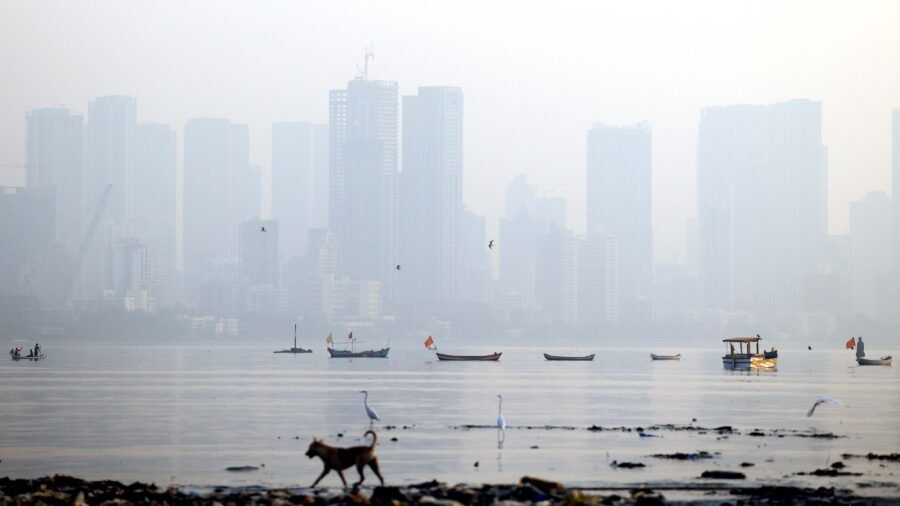
The latest figures, accessed by through documents obtained under the Right to Information Act, provide an update on the utilisation of the funds first reported by this newspaper in 2024. The FFC is a grant allotted by the Department of Expenditure (DOE) of the Union finance ministry to the Urban Local Bodies (ULB) across states for better air quality management.
Story continues below.
Subscribe to see fewer ads.
The FFC funds are disbursed to the ULBs on recommendations made by the union ministry of environment, forest and climate change (MoEFCC). At the time, the BMC had earmarked nearly 80 per cent of the grant for electric buses despite its own Mumbai Air Pollution Mitigation Plan, identifying construction and demolition dust, road dust and open burning of solid waste as the top three contributors to air pollution.
Of the Rs 620.11 crore received between 2020-21 and 2022-23, Rs 493.37 crore, or 79.56 per cent, was allocated to BEST for acquiring electric buses under a wet lease arrangement. By January this year, Rs 573.88 crore had been utilised, leaving Rs 46.23 crore with the civic body with Rs 21.47 crore earmarked for a waste processing plant, Rs 9.27 crore for scaling up green spaces and Rs 8.47 crore for installing piped natural gas lines at crematoriums.
However, relatively small amounts were spent on research and identifying pollution sources. The BMC earmarked Rs 50 lakh for expert and research services from IIT Bombay and spent Rs 36 lakh on identifying air pollution hotspots.
The BEST fleet, meanwhile, declined from 3,546 buses in 2021-22 to 2,532 in 2026-27. In March 2022, BEST had awarded a tender for 2,100 electric buses, with delivery scheduled to be completed by August 2023. According to BEST officials, around half of the consignment is yet to be delivered.
Story continues below this ad
A senior bureaucrat in the Union Ministry of Environment, Forest and Climate Change said there was no rule requiring a specific proportion of the grant to be spent on electric vehicles.
“There is no such rule that a certain proportion of the funds needs to be used for acquiring EVs only, our ministry had taken multiple follow-ups pertaining to the usage of funds with Maharashtra’s state government, and throughout the course of our communication, we have clearly maintained that if they are unable to acquire the buses, then the funds should be routed for some other work,” the bureaucrat said.
A civic official, however, said the administration had prioritised reducing vehicular emissions while the city underwent major infrastructure construction.
“In the past four years, several infrastructure works have been ongoing such as the Navi Mumbai Airport and Coastal Road. These activities maximised dust displacement, leading to dip in AQI. While the construction work period was a phase, the administration’s priority was to bring down vehicular emission, that’s why resources were deployed to acquire electric buses,” the official said.
Story continues below this ad
Atmospheric scientist Dr Gufran Beig said more resources could have gone towards identifying local pollution hotspots and developing localised solutions.
“To scale up the fleet of electric vehicles, there is already a transport ministry present at the union and state levels. Then why such a substantial proportion of air quality funds are being allocated for E buses procurement. Instead, these funds could have been utilised in terms of identification of local level hotspots and finding out localised solutions to mitigate the growing cause of pollution. More money should have been allocated towards research and design,” he said.
Navi Mumbai: Teen held for molesting 8-year-old sent to juvenile home
By Sohail Khan · 24 Sep
Leave a Reply