Room allocation delays, long travel, accred woes: chaos greets athletes at Nagoya
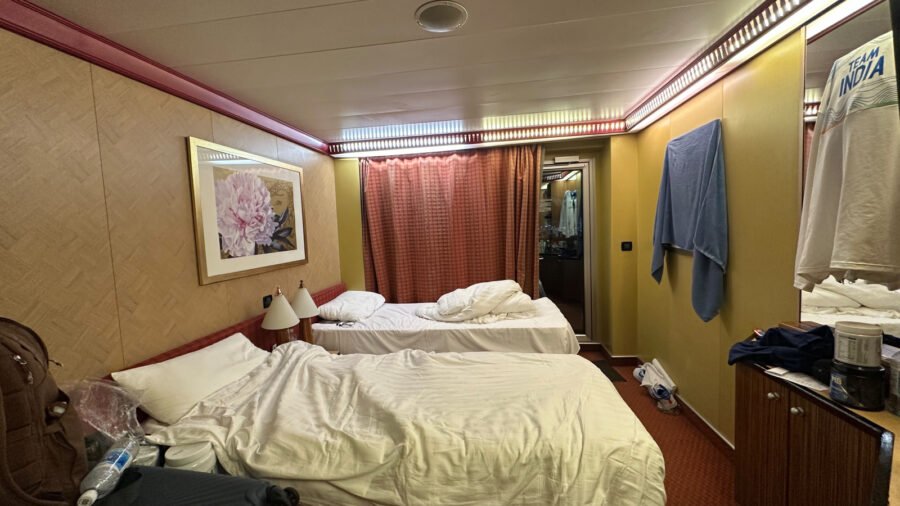
Japan’s reputation for meticulous planning and efficiency suffered a beating with athletes landing in the country for the Asian Games complaining about a spectrum of obstacles in the lead-up to the continental games. From waiting endlessly in the assembly area for room allocation to inadequate food options and hassle for commuting to distance from accommodation and training facilities, some of India’s top-notch athletes were left fretting in the country’s largest manufacturing and shipping hub of Nagoya.
For instance, after a chaotic Wednesday, when the shooting staff faced unprecedented delays and issues over the accreditation card of chief pistol coach Samresh Jung, the team ran into transportation bumps. Not only had they to travel 90 minutes in buses to reach the shooting ranges, but also were kept waiting for the buses.
“The hotels are about 50-60 kms away from the range. The bus could accommodate only 50 persons. The first bus came late, and the second bus too was late,” one of the members told . “It took us close to two hours to reach the range. It took less time on return. But such delays can be frustrating for shooters sometimes,” he added.
Story continues below.
Subscribe to see fewer ads.
At least, they were more fortunate than South Korea’s football team, who were playing Qatar. Instead of the football ground, they were ferried to the baseball arena, which was not scheduled for any games. Consequently, the team arrived at the stadium 30 minutes later than they had planned.
“While the wushu players had to wait for some time before they were sent to the cruise ship, we, coaches and the masseur had to wait for more than six hours at the assembly area,” said a coach.
A day after rowers were left stranded in the assembly area and had to pay for their food, a wushu practitioner, two Indian coaches and a masseur faced a delay of more than six hours before they could check into their room in the cruise ship, Costa Serena. “While the wushu players had to wait for some time before they were sent to the cruise ship, we, coaches and the masseur had to wait for more than six hours at the assembly area,” said a coach.
“We did not have anything to eat except water and snacks from the airport. We got our rooms in the cruise ship post 11pm (local time). We were so tired that we did not realise we were sleeping inside a cruise ship,” the coach added.
Earlier in the day, Varun Sanyal, one of India’s two mixed martial arts athletes, posted about inordinate delay for getting his room. “I can confirm this is true. I’m currently on 7 hours and counting,” Sanyal posted on a video showing Indian players waiting for accommodation to be given,” he wrote on X. In his video, athletes, not just from India, could be seen sleeping on the floor or leaning against the walls. After 10 hours of waiting he was assigned a room, but 30 minutes into the sleep, two other athletes woke him up because they were assigned the same room as well.
Story continues below this ad
South Korea’s basketball team found rooms without stress but found that they could hardly squeeze their frames into the cot, or stand without their head hitting the roof. “Based on my experience this is the worst it has ever been,” Jung Jae-Yong, vice president of the Korea Basketball Association, told AFP. Superstar basket-baller Byeon Jun-Hyeong, posted a video showing a leaking sink, with a caption: “Please help us”.
Compounding the mess, there had been instances of coaches, team officials, and athletes assigned the same room. In some cases, men and women were allocated the same room. One of India’s rowers, reportedly, had to share a room with a Hong Kong counterpart. Philippines’ athletes found some rooms in AirBnb after quick browsing,
One of India’s rowers, reportedly, had to share a room with a Hong Kong counterpart. Philippines’ athletes found some rooms in AirBnb after quick browsing,
Back-up accommodation
Japan’s deputy chef de mission Hisashi Mizutori admitted the inadequacies and reassured that the problems will be sorted out. “We are currently working to coordinate and negotiate adjustments wherever possible. For cases where that proves too difficult, we are considering using the backup accommodations that Team Japan prepared in advance as alternatives,” he told Japan Times.
The women’s cricket team did not have to endure such ordeals. “I think the accommodation is nice over here. I mean, we are pretty okay. I don’t think there are any complaints from our end. Just the check-in and everything was absolutely spotless and we were pretty happy about it,” said coach Amol Majumdar.
Story continues below this ad
The local organising committee (LOC) of Aichi-Nagoya 2026 has blamed the accommodation issues to some sports being added late to the Games program. The organisers were initially expecting about 15,000 athletes and officials for the Games. The sudden escalation of numbers broke their back, Mizutori admitted. “We had neither the manpower nor the budget to make the necessary arrangements” for extra participants,” organising committee president Hideaki Omura told reporters. “The host city agreement specifies a delegation of 15,000 people. We have not set aside a budget for any more than that. There is simply nowhere for them to stay,” Omura, who also serves as the governor of Aichi Prefecture, said.
The Organisers had set up temporary athlete accommodation to cut costs, hiring the Italian cruise ship Costa Serena for the event, rather than a more expensive Games Village, as has been the practice in the past.

Asian Games: Can Indian archers hold compound ground amid rising forces?
By Sohail Khan · 17 Sep
Abhishek Sharma shows Afghans no mercy in 30-ball ton
By Sohail Khan · 17 Sep
Mumbai club cricketer Vinay Iyer will coach Japan against India at the Asian Games
By Sohail Khan · 17 Sep
Leave a Reply