Raveena Tandon’s ‘I punched him back’ moment: The psychology of fighting back—and feeling shaken later
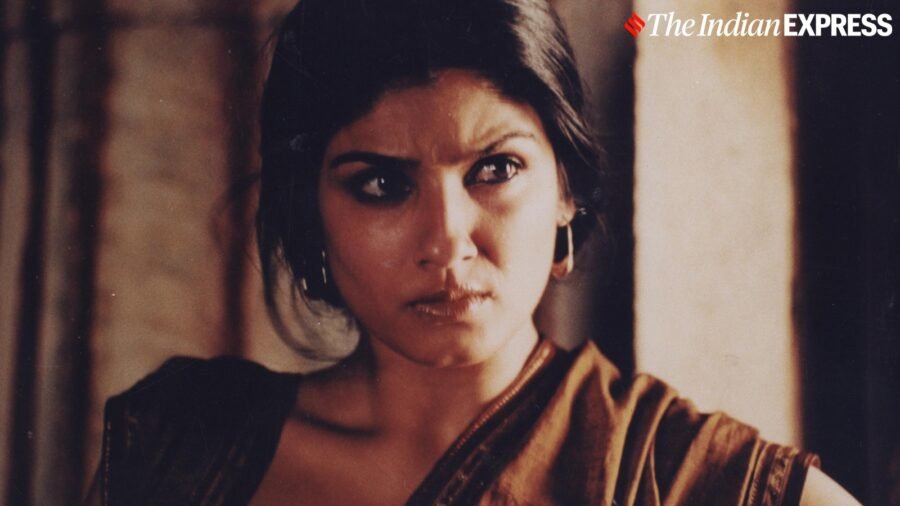
There are some moments that live with you—not because they were glamorous, but because they shook you. In an old conversation with Simi Garewal, Raveena Tandon recalled one such moment—not on a film set or under stage lights, but in a dark parking lot after an award show. She wasn’t playing a role that night. She was just a woman, alone, walking to her car.
She was followed. Then cornered. A group of men got “fresh,” as Simi put it. “Actually, I was quite in a state of shock. But yes, I did punch him back. I did,” Raveena told Simi on the latter’s show Rendezvous.
Simi, clearly moved by the memory, replied: “I mean… I was speechless with awe.”
Story continues below.
Subscribe to see fewer ads.
Raveena continued: “I guess self-defence just comes in as a reflex… very instantly. And I had to do that.”
What makes stories like Raveena’s important isn’t just the bravery—it’s the vulnerability that follows. That shaken feeling. The endless replaying of the moment, wondering what might’ve happened if the punch hadn’t landed.
Counselling psychologist Srishti Vatsa, who has worked with women navigating the aftermath of such experiences, says this internal chaos is common.
Story continues below this ad
“Women often feel a mix of anger and shame… because their space and dignity were violated,” she explains. “So many questions come up—Was it what I wore? Did I do something wrong?”
Even when the response is fierce and fearless, it doesn’t always feel like closure. Vatsa adds: “Even those who respond bravely, as Raveena did, often carry the moment long after it’s over. Some feel proud. Others feel shaken—or even guilty.”
 Raveena continued: “I guess self-defence just comes in as a reflex… very instantly. And I had to do that.”
The emotional cost of confrontation
There’s often a gap between what happens publicly—cheers, praise, awe—and what happens inside a person. Vatsa shares that many of her clients have said things like:
- “I slapped him, but then I felt scared about what could’ve happened next,”
- “I shouted at him, but later felt like I caused a scene,”
- “I kept thinking I should’ve just walked away.”
This isn’t weakness—it’s the weight of what it means to defend yourself in a world that still, somehow, makes women question their safety and their reaction to its violation.
Story continues below this ad
Strength looks different for everyone
For some, like Raveena, it’s a punch. For others, it’s walking away safely. Neither is more valid. What matters is that women are often left to carry not just the event but also its emotional processing—sometimes silently.
“There’s adrenaline,” says Vatsa, “but also fear, self-doubt, and sometimes guilt. Some women are proud that they stood up for themselves. The confrontation shakes others. A lot depends on whether they felt supported—or alone.”
And even if a woman defends herself with courage, she deserves space to feel everything that comes after: relief, rage, fear, pride, or even confusion. Because being brave doesn’t mean being unaffected. And healing starts by acknowledging both—the punch and the trembling that might follow.

Why have Imran Khan’s three sisters been detained for 30 days?
By Sohail Khan · 21 Sep
Alia Bhatt on her equation with husband Ranbir Kapoor: ‘Changed after we had a daughter’
By Sohail Khan · 21 Sep
How a Naga film secured entry to the Oscars, alongside India’s official selection
By Sohail Khan · 21 Sep
Leave a Reply