Oil prices surge above $107: Why Iran tensions and Trump’s diesel export ban could push fuel prices higher
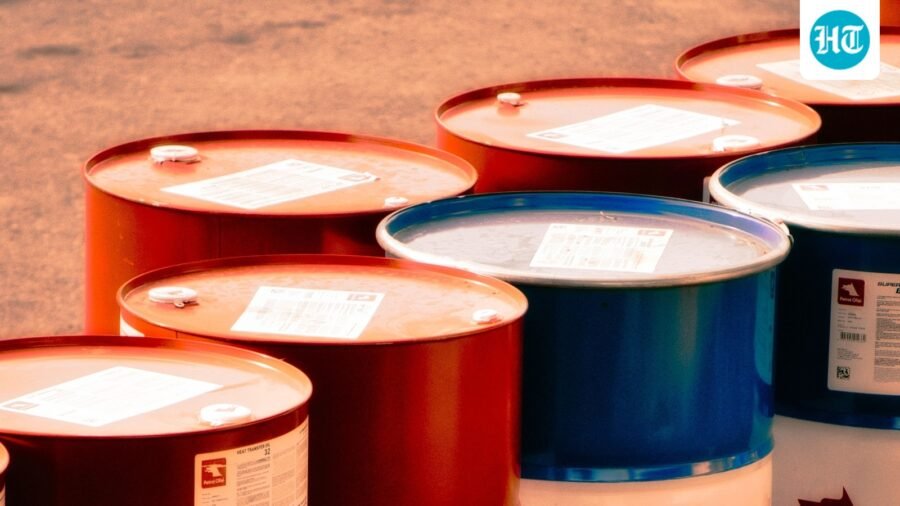
Oil prices rise above 7 as Iran tensions, Strait of Hormuz disruption and Trump’s possible 90-day diesel export ban raise global fuel price concerns.
Updated on: Sep 25, 2026, 00:05:34 IST
Prefer HTon Google
Share via
Copy link
Oil prices jumped sharply on Thursday as fresh comments from Iran and the US made the future of the conflict harder to predict. Brent crude, the global benchmark, rose more than 4% to trade above $107 a barrel. This reversed losses from earlier days, when Brent had fallen below the important $100 level.
US West Texas Intermediate (WTI) crude also climbed by around 4%. WTI was trading near $96 a barrel, showing that both major oil benchmarks were reacting to the latest developments around Iran and the US, according to Yahoo Finance.
Iran refuses to give in to US pressure
Comments from Iranian President Masoud Pezeshkian were one of the main reasons oil prices moved higher. Pezeshkian said Tehran would continue to refuse to bow to US pressure, raising fresh concerns about whether the two countries can reach a deal, according to Yahoo Finance.
Pezeshkian also said Iran remains committed to its nuclear programme. Iran has repeatedly said its nuclear programme is meant for civilian energy purposes. However, the US has made Iran's nuclear capabilities a major issue in the ongoing conflict.
President Donald Trump has repeatedly said Iran must not be allowed to have a nuclear weapon. This remains a key US position as Washington deals with Tehran during the conflict.
Trump expects a deal after US midterms
Trump has also indicated that he expects the US and Iran to eventually reach an agreement. Speaking at the United Nations, Trump said he believes a deal could come after the US midterm elections.
Trump said Iran may be waiting to see how the US midterm elections go before reaching an agreement. He said he believed a deal would make sense after the election, while also saying he had been considering extremely severe military action against Iran.
The comments from both sides have complicated hopes for diplomacy. Expectations of a possible diplomatic solution had started to return after direct military activity in the Persian Gulf became calmer. But the latest statements from Tehran and Washington have again created uncertainty over how and when the conflict could end.
Strait of Hormuz remains a major oil risk
The oil market is still facing serious supply problems even as military action in the Gulf has eased. The Strait of Hormuz remains largely blocked to consistent oil traffic, creating a major risk for global energy supplies.
The Strait of Hormuz is especially important because large amounts of oil normally move through the waterway. Continued disruption means traders remain worried that global oil supplies could become tighter if the situation gets worse.
Houthi attacks are also affecting Saudi Arabia's ability to move oil through the Red Sea. The attacks have disrupted another important route for energy shipments, adding to pressure on the global oil market, according to Yahoo Finance.
Russia's oil refining industry is facing another supply problem because of Ukrainian attacks. Ukrainian military strikes have caused further damage to Russia's refining sector, creating additional pressure on global fuel supplies.
Trump's possible 90-day diesel export ban adds another risk
The latest US development could put even more pressure on fuel markets. The White House is reportedly preparing a 90-day ban on US diesel exports. US fuel prices are already much higher than they were a year ago. Average US gasoline prices reached about $4.85 per gallon on Thursday, up 53% from a year earlier, according to Yahoo Finance.
Diesel prices have increased even more sharply. US diesel prices were around $6.51 per gallon, representing a 76% increase from a year earlier. A diesel export ban could initially help some US consumers by keeping more diesel inside the country. This could provide short-term relief, particularly in the Gulf Coast region, where a large share of US refining capacity is located.
But the ban could also create an unexpected problem for US fuel prices. If refiners lose access to overseas markets, they could decide to reduce how much fuel they produce. Lower refinery production could also reduce the amount of gasoline available in the US.
That could push gasoline prices higher instead of bringing them down. Market analysts and industry participants have warned that cutting diesel exports could therefore have unintended consequences for American consumers.
Europe could face an even bigger diesel shock
The impact would not be limited to the US. Since the Iran war began, the United States has become an important supplier of diesel to the global market. Removing US diesel exports could reduce fuel supplies in major European markets. Countries such as the UK, France and Germany could face stronger price pressure if American diesel is no longer available in international markets.
European consumers are already facing significant fuel-cost pressure. A reduction in US diesel supplies could make that situation worse by tightening the global market further. This leaves oil and fuel markets caught between several risks at the same time: uncertainty over the Iran-US conflict, disruption around the Strait of Hormuz, Houthi attacks affecting Red Sea shipments, damage to Russian refineries and the possible US diesel export ban.
For oil prices, the key question is whether these supply disruptions become worse or whether Washington and Tehran move closer to a deal. For now, the latest comments from both sides have increased uncertainty, while the possible diesel export ban adds another source of pressure to global fuel markets.
See Less

Xi invites 1,00,000 young Americans for exchanges, study in China
By Sohail Khan · 25 Sep


Leave a Reply