Octopus won’t let go of fisherman’s face: How to safely break the grip
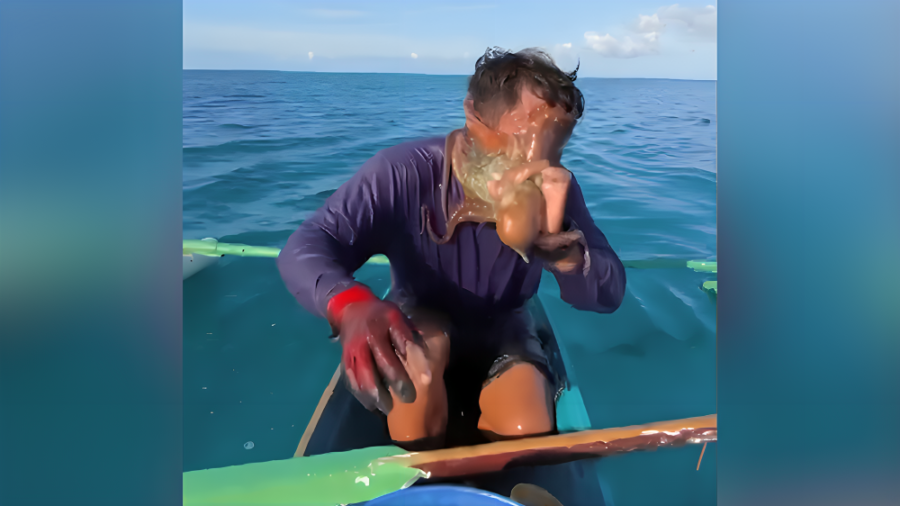
Jesser Cervantes, a fisherman in the Philippines, recently went viral on social media as he was seen struggling to get rid of an octopus that had suctioned to his face, with its tentacles wrapped all over. No matter how much he tried to pull the animal away, it held on tightly. Eventually, he grabbed a piece of cut bamboo and began hitting the octopus in an attempt to loosen its grip.
After several attempts, he managed to free himself from its grip and threw it back into the water. “The octopus I caught was very hard to handle. It almost ripped my face,” Cervantes said, as quoted by the New York Post.
Story continues below this ad
But when do octopuses attack?
Dr Deepraj Prajapati, senior veterinarian at RD Pet Hospital, Ambedkar Nagar, says, “Octopuses are generally not aggressive animals, and an encounter with a human does not typically trigger an attack. Their first response to a perceived threat is usually to hide, camouflage themselves, retreat into a den, or swim away quickly. An octopus may become defensive when it feels cornered, trapped, handled, stepped on or repeatedly disturbed. In such situations, it can change its colour and body posture, release ink, pull its arms away or use its arms and beak if the threat persists. These are primarily defensive responses intended to create an opportunity to escape rather than an attempt to hunt or attack a human.”
From a veterinary and animal-behaviour perspective, he suggests that the safest approach is to maintain distance and allow the animal an escape route. “An octopus that is changing colour, withdrawing, jetting away, displaying its arms or releasing ink is communicating that it is stressed or threatened,” he adds.
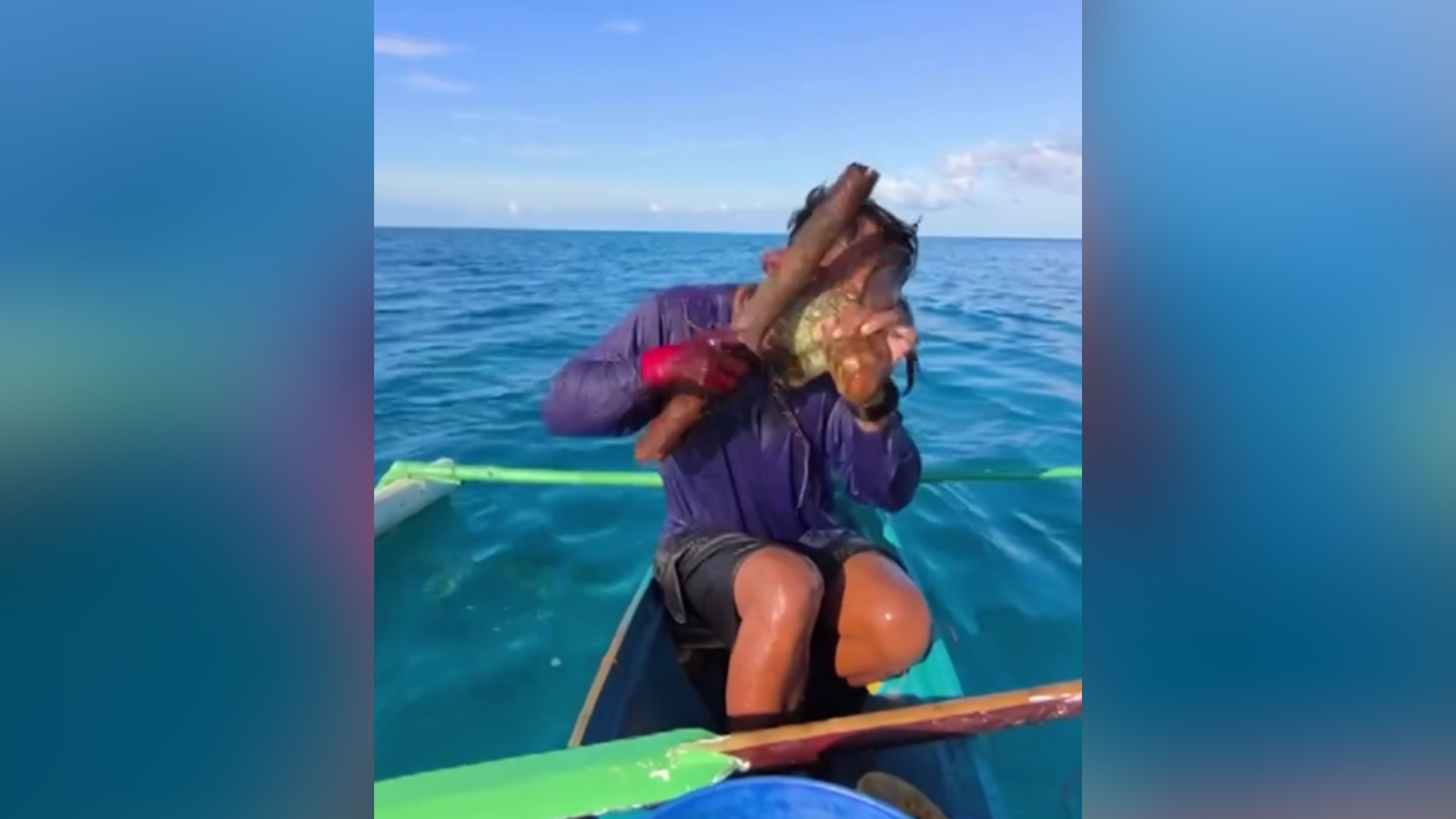 Fisherman’s face gets stuck in octopus’ grip
How can you get rid of an octopus if it has suctioned onto your face?
Unfortunately, if you come across a situation similar to Jesser Cervantes, the priority should be to remain calm and avoid forcefully pulling it away, says Dr Madan Kompal, MVSc(Vet Surgery & Radiology), Wildlife Veterinary advisor- zoos and Chief Vet, LeelaVet Multispecialty Hospital.
“If an octopus attaches itself to the face, trying to yank the animal off can cause skin injuries and may make it hold on more firmly. If the person is in water, they should move toward a safe, shallow area or shore while avoiding sudden movements, while another person can assist with the removal if available,” he says.
Story continues below this ad
The key is to figure out how to loosen the grip.
Dr Madan suggests, “The attachment can be loosened gradually by gently working at the edge of an arm or individual suction cups, rather than attempting to pull the entire animal away at once. Water can be used to help maintain visibility and control during removal.”
However, he points out that sharp objects or aggressive handling should be avoided because they can injure both the person and the animal.
“Following removal, any suspected bite, puncture wound, neurological signs, breathing difficulty, or exposure to an unidentified species should warrant prompt medical evaluation. If the species is unknown, medical evaluation is advisable because some octopuses can deliver venom through a bite,” he adds.
Story continues below this ad

TQWL on your train ticket: What it means, confirmation chances and boarding rules
By Sohail Khan · 29 Sep