No limestone mining for now, says Centre. And 130 Great Indian Bustards smile
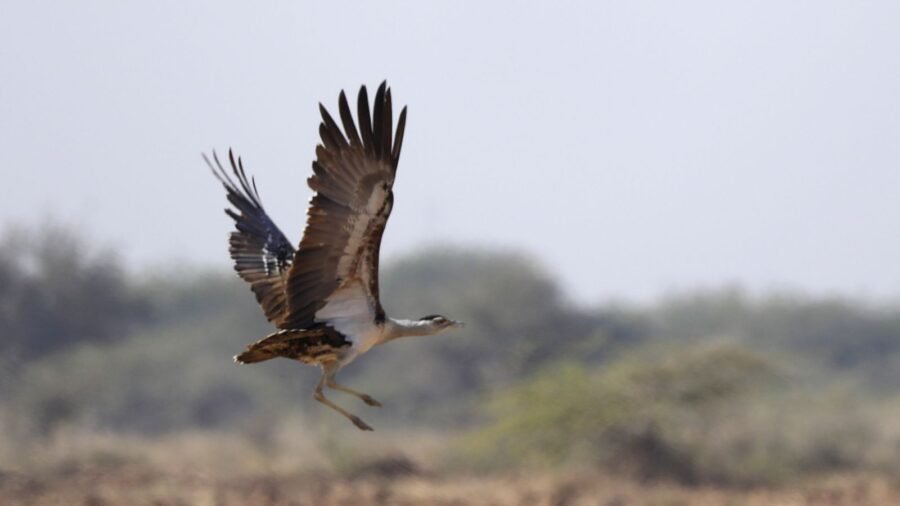
The Centre has deferred environmental clearance to a proposed limestone mine near a Great Indian Bustard habitat at Ramgarh in Rajasthan’s Jaisalmer. A critically endangered species, just about 130 Great Indian Bustards live in the wild in India currently.
An expert panel of the Ministry of Environment, Forest and Climate Change has put on hold the green clearance to a Dalmia Bharat Green Vision Limited limestone mine. The panel has sought a revision in the mining plan to match the approved production capacity.
The panel also said a detailed action plan is needed to ensure blasting activities in the mine do not adversely impact the safety of gas and water pipelines in the area, according to the minutes of the expert panel meeting on August 24.
Story continues below.
Subscribe to see fewer ads.
The panel also noted that the Wildlife Institute of India’s recommendations must be followed.
The project proposes to mine 5.4 million tonnes of limestone per annum over a 256-hectare mine in Ramgarh, Jaisalmer. The company has proposed a cement plant next to the mining block that will utilise the excavated limestone. Also, Steel Melting Shop grade limestone will be sold to the steel industry and occasionally transported by trucks via National Highway-68 to Sanu railway station.
As per the minutes of the meeting, the Indian Bureau of Mines had approved a mining plan for only 2.99 metric tonnes per annum, for which the Environment Ministry granted Terms of Reference, meaning a preliminary approval. Based on this, the expert panel noted that the approved mining plan was not in “consonance with the Terms of Reference” and directed that the information be revised.
A Great Indian Bustard habitat
The expert panel appraised the mine’s proximity to the priority conservation area of the Great Indian Bustard. The proposed mine site and cement plant area are located near the ecologically sensitive area, according to a Wildlife Institute of India (WII) study carried out on behalf of the company. The company engaged WII to assess potential direct and indirect impacts of proposed mining on the ecology, including the Great Indian Bustard habitat.
Story continues below this ad
According to official and company-provided information, the Great Indian Bustard priority area is situated about 1.77 km away from the proposed mining site. WII has said in its recommendations that the Ramgarh mine and its direct impact zone “lie outside the priority GIB area… and does not constitute critical GIB habitat”. “Therefore mining operations and GIB conservation can coexist in this area,” the WII has said. However, it has pointed out that the mine’s “indirect impact zone” falls within the priority area and includes habitats used by species associated with the Great Indian Bustard.
The WII proposed a focused conservation and mitigation plan. It called for compensatory conservation measures around Netsi, particularly, to offset mining disturbances, and steps for the protection of grassland and removal of invasive species.
The panel asked the company to follow the WII recommendation that suggests materials be transported using existing road infrastructure to minimise disturbance to suitable habitats in surrounding areas.
“While new roads may be constructed within the lease area as per operational requirements, it must be ensured that any proposed road alignment does not pass through or near any small grassland patches,” the WII has said.

Keralam to install Rs 10 sanitary napkin vending machines at public places
By Sohail Khan · 5 Oct