Nagaland film Angh wins TIFF Platform Prize, earns Oscars pathway
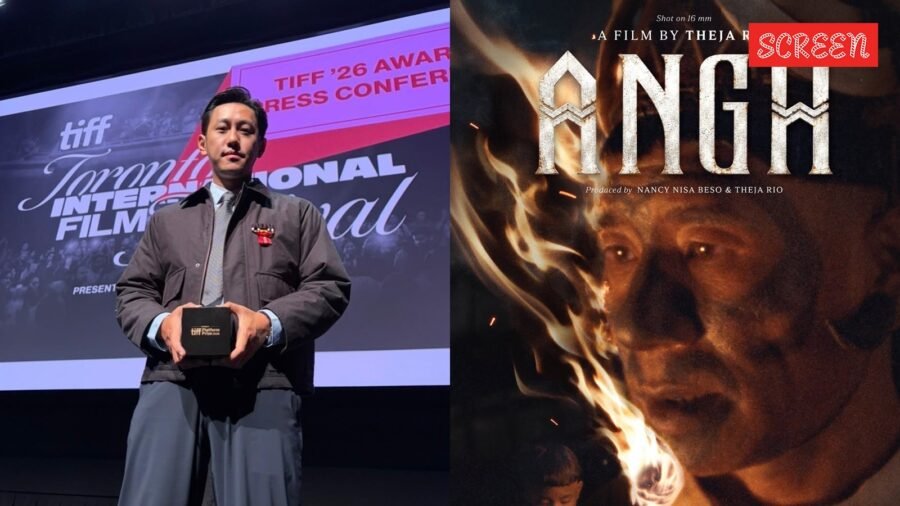
Kohima-based Theja Rio’s debut feature Angh has won the Platform Award at the Toronto International Film Festival (TIFF), securing a direct pathway to compete for the Oscars 2027 in the International Feature Film category.
Speaking about the landmark win, Rio said: “I’m aware that it’s rare for a debut film to receive this kind of recognition, and all I can say is that we made Angh with a lot of love for the place I come from, for my people and for our culture.”
By winning TIFF’s top prize, Angh, as per a new rule that allows non-English-language films to qualify for the Best International Feature Film category at the Oscars by securing a top award at one of six major international film festivals, bypasses the traditional single-country submission requirement.
Story continues below.
Subscribe to see fewer ads.
The news came soon after it was overlooked by the Film Federation of India, which chose Marathi film Gondhal as India’s official entry to the Oscars.
The Platform jury, headed by Pablo Trapero, in its statement said: “The Platform Prize goes to Angh. For its refreshing perspective, strength of filmmaking, and deeply resonant portrait of a world. We praise the filmmaker’s vision, audacity and courage.”
Set against the backdrop of 1960s Nagaland, Angh follows an ageing Konyak village chief and his son, who remain among the last people holding on to their ancestral faith and way of life as their world undergoes remarkable change. “At the heart of the film is the relationship between a father and son, but it is also about letting go, our relationship with home and the transient nature of life. These are some of the most universal emotions,” said Rio, adding that it was “deeply moving” that Angh connected with audiences beyond their own community.
While growing up in Nagaland, Rio started his creative journey writing songs, short stories and screenplays, gradually discovering that the stories he was writing could become films. “I wrote a lot of lyrics and raps. In my early teens, I started writing short stories and then eventually started writing screenplays,” says Theja Rio, who studied at the UK’s National Film and Television School (NFTS).
Story continues below this ad
Though Rio was initially against joining a film school after watching videos of Quentin Tarantino trashing film schools, after the lockdown, when everything was shut, he joined NFTS in 2022 seeking “a change of environment”. Counting this as one of the best decisions he made, Rio says: “So many people who I went to film school with are my collaborators in the feature film Angh and my short films.”
Rio first wrote Angh as a short film in 2018 and directed it the following year. The short travelled to festivals in 2021 and won several awards. This gave him the confidence to expand the story into a feature.
“Writing the feature came relatively easily because he already knew its world, characters and their conflicts,” says Rio. The longer runtime of a feature allowed him to explore the layers and nuances that a short film could not accommodate.
“In Nagaland, so many of the themes, stories and nuances that are present in the film are inherent because of what Naga people have gone through in the century. That experience gave birth to the idea of Angh,” says Rio, adding, “Even today, we’re having to juggle traditionalism and modernism in our everyday lives.”
Story continues below this ad
Interestingly, Angh is shot on 16mm and the cinematography is handled by Adam Pietkiewicz (Baby Reindeer fame), who also received the TIFF Variety Artisan Award. “In a project like this, when you’re shooting on film, you need to work very closely with your cinematographer. The pre-production process was very rigorous and we were very detailed in everything that we planned. We knew exactly where the shot was going to start and end,” Rio says.
They shot on 16mm to give the film the feel of archival footage of the Naga tribes from the 1950s and 1960s. “There’s something incredibly evocative about those images, like the textures, the grain and the sense that you’re looking into a world that is both familiar and distant at the same time,” says Rio, who mentions Akira Kurosawa, Abbas Kiarostami and Paul Thomas Anderson among his favourite filmmakers.
“Angh comes from a region that is so different, but thematically its story is universal,” says Rio, who chose non-professional local actors and the local Konyak language for the film. His next film is also shot on 16mm and set in Nagaland. “It’s a coming-of-age film and once again I am working with young non-actors,” he says.

S Thaman lost his dad at 10, built a career with LIC payout, friend defrauded him
By Sohail Khan · 21 Sep


Leave a Reply