Mumbai heading underwater? UN flags city at risk of permanent inundation
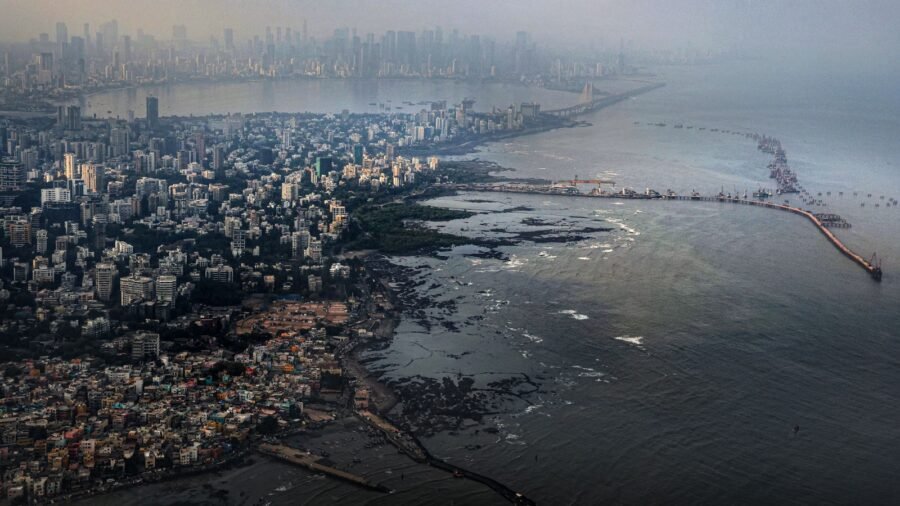
Mumbai is among the South Asian megacities facing a growing risk of permanent inundation from rising sea levels, with a new United Nations report warning that more than 14 million people across the region could be at immediate risk of losing their homes.
The report, Challenges related to sea level rise and ways and approaches to address, submitted to the UN General Assembly on August 31, identifies Mumbai, Kolkata and Dhaka as cities where the consequences of rising seas could be measured not just in economic losses but in large-scale human displacement.
The report says global sea levels rose at a record rate of 5.9 mm in 2024, compared with an average annual rise of 4.7 mm between 2014 and 2023. It projects at least 0.5 metres of global sea level rise by 2100 even under aggressive emissions reduction scenarios. Under worst-case scenarios involving instability of the West Antarctic ice sheet, the rise could reach up to two metres, making extreme sea-level events an annual occurrence in coastal areas.
Story continues below this ad
“In the low-lying deltas of South Asia, in cities such as Kolkata and Mumbai in India, and Dhaka, the defining impact is human displacement, with more than 14 million people at immediate risk of losing their homes to permanent inundation,” the report says.
For Mumbai, the risks are compounded by land subsidence and saltwater intrusion, which can contaminate freshwater aquifers and coastal wells. Storm surges could further put pressure on sanitation, housing and transport infrastructure, it says.
The UN assessment is also consistent with warnings in Mumbai’s Climate Action Plan (MCAP), released by the Brihanmumbai Municipal Corporation (BMC) in 2021. The plan had projected that 80 per cent of Mumbai’s island city could be submerged by 2050. It also estimated a sea-level rise of 0.1 to 0.3 metres along Mumbai and 11 other Indian coastal cities over the next three decades.
Climate scientist Raghu Murtugudde, emeritus professor at the University of Maryland and visiting professor at IIT Bombay, said Mumbai’s exposure was heightened by its geography and changing weather patterns.
Story continues below this ad
“Mumbai is surrounded by the Arabian Sea on three sides,” he said, adding that warming of the Arabian Sea was contributing to changes in sea surface temperatures and intensifying extreme rainfall and heat events.
BMC rainfall data indicates that the city is already experiencing changes in extreme rainfall. The average rainfall recorded during very heavy rainfall events has increased from 132 mm to 182 mm over the past six years. In the last decade, Mumbai has recorded 28 spells of very heavy rainfall lasting four hours or more.
Despite a forecast of below-normal rainfall this year, the city recorded three instances of more than 100 mm rainfall within 24 hours during the first eight days of July.
“Alongside erratic rainfall, high tidal waves also contribute to coastal flooding. The city’s rainfall pattern is changing drastically, while at the same time sea levels are rising,” Murtugudde said.
Story continues below this ad
The UN report calls for climate-risk assessments to give greater weight to human displacement and social impacts, alongside financial and infrastructure losses. It warns that nearly 500 million people globally live in low-lying coastal zones where rivers meet the sea, making investment in adaptation, resilience and loss-and-damage measures increasingly urgent.

Kalyan Crime Branch Raids Dombivli Shed, Seizes Liquor Worth ₹7.22 Lakh; 3 Held
By Sohail Khan · 30 Sep