Mumbai Consumer Commission Orders Axis Bank To Refund USD 30,570.70 Over Fraudulent Card Transactions

The Maharashtra State Consumer Disputes Redressal Commission has directed Axis Bank to refund USD 30,570.70 to account holder Nitin Uniyal over fraudulent card transactions, with 6% interest from the transaction date. The bank was also ordered to pay ₹50,000 compensation and ₹25,000 towards litigation costs.
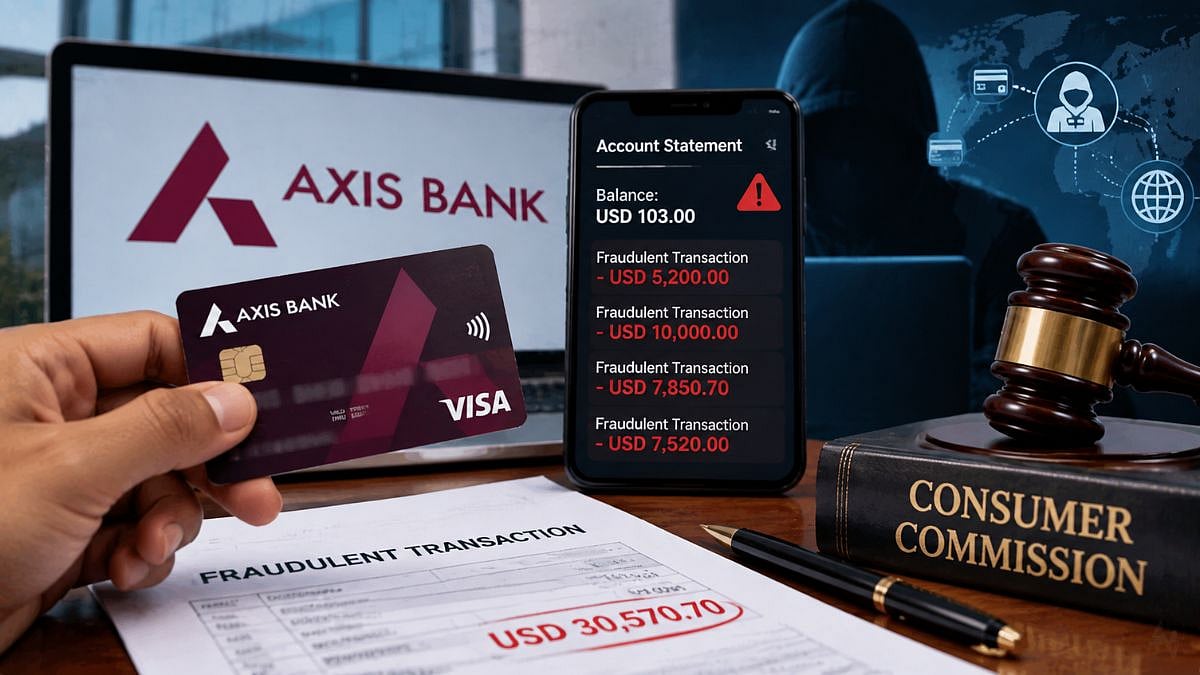
Axis Bank has been directed to compensate an account holder after the consumer commission found deficiency in service over unauthorised transactions | AI Generated Representational Image
Mumbai, September 23, 2026: The State Consumer Disputes Redressal Commission has directed Axis Bank to refund USD 30,570.70 to an account holder who was working in Riyadh, Saudi Arabia, after the amount was allegedly fraudulently withdrawn from his account in 2011.
The commission directed the bank to pay the amount along with 6 per cent interest from the date of the fraudulent transaction in 2011. It also directed the bank to pay an additional amount of Rs 50,000 towards compensation and Rs 25,000 towards litigation costs.
The order was passed on September 9, 2026, by a bench comprising Presiding Member Dr Nisha Amol Chavhan and Member Vijay C Premchandani in a complaint filed by Nitin Uniyal.
Fraudulent Transactions In 2011
`;
Nitin Uniyal, a resident of Uttar Pradesh, was employed with Pinion Infotech Services Pvt Ltd and was stationed in Riyadh, Saudi Arabia. In 2011, he was using an Axis Visa Dollar Card issued under his employer’s forex account.
According to the complaint, he maintained a balance of around USD 20,000 to USD 30,000 in the account. On February 16, 2012, he discovered that only USD 103 remained after USD 30,570.70 had been withdrawn through fraudulent transactions.
The bank denied liability and contended that the card could have been cloned after its details were captured through an electronic data capture machine. It argued that the fraudulent transactions were not attributable to any deficiency in its service.
Commission Rejects Bank’s Defence
Rejecting the defence, the commission observed that the bank itself had apprehended that the card might have been cloned, which amounted to an admission that a fraudulent transaction had occurred and money had been withdrawn from the account.
It said banks were required to adopt adequate technological and security measures to prevent card cloning, skimming and other unauthorised transactions.
“It is admitted by both the parties that the fraudulent transaction was carried out in the account of the complainant. The said fact has been admitted by the opponent no.1 (bank) in their written statement in para 6. The opponent has apprehended that the said card might have been misused and swiped in EDC machine, the details of the card might have been captured in some manner and the culprit involved would have made another card by copying the data on the magnetic strip of the card and once the card is cloned, the culprit could use the card anywhere in the world. Such apprehension amounts to admission on the part of the opponent no.1 that the fraudulent transaction has been occurred in the account of the complainant and the amount was withdrawn. The said fact has been proved by the complainant by way of filing statement of account along with affidavit of evidence,” the commission maintained.
Bank Faulted For Failing To Act
The commission further noted that the complainant had immediately informed the bank after discovering the fraudulent transaction, but the bank neither took appropriate steps nor reversed the amount.
Referring to RBI directions concerning unauthorised electronic transactions, the commission held that the bank’s failure to act amounted to deficiency in service.
The commission also rejected the bank’s objection that the complainant was not a “consumer” since the account was held by his employer. It held that although the company maintained the account, Uniyal was the beneficiary and user of the card and therefore fell within the definition of a consumer.
Also Watch:
The commission further held that the Maharashtra commission had territorial jurisdiction to hear the complaint as Axis Bank had its corporate office in Mumbai and carried on business there.
To get details on exclusive and budget-friendly property deals in Mumbai & surrounding regions, do visit: https://budgetproperties.in/

Add As a
Trusted Source 

Mumbai Consumer Commission Rejects Advocate’s Complaint Over ₹1,000 Shoppers Stop Vouchers
By Sohail Khan · 23 Sep
23-year-old stabbed to death by father after intervening in parents’ quarrel
By Sohail Khan · 23 Sep
Contractor, supervisor booked after labourer electrocuted at Malad site
By Sohail Khan · 23 Sep
Leave a Reply