Mumbai-Ahmedabad Bullet Train Corridor To Get Movable Crossings For 320 Kmph Operations, Improving Safety And Reliability
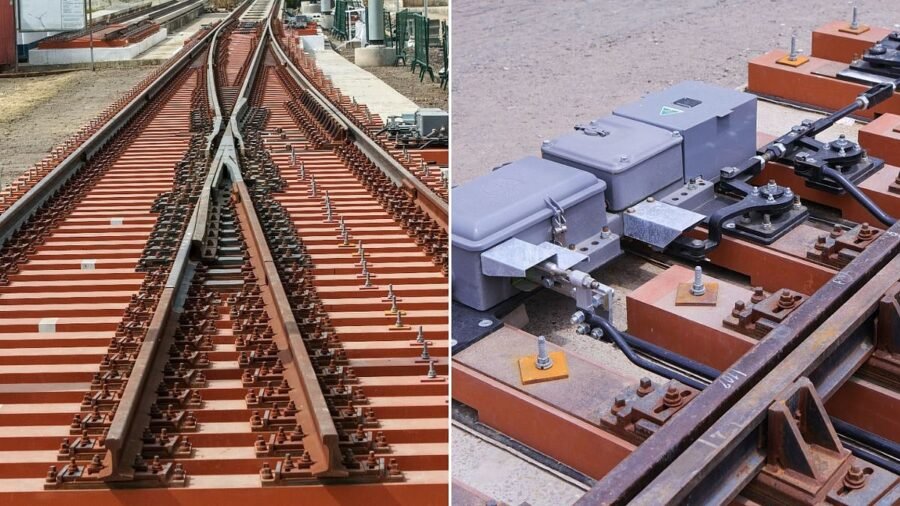
The Mumbai-Ahmedabad bullet train corridor will introduce movable, or swing-nose, crossings at high-speed turnouts to support operations up to 320 kmph. The system eliminates gaps in conventional fixed crossings, reducing impact, vibration and wear. Each turnout will use two point machines with signalling and interlocking checks for safe passage.
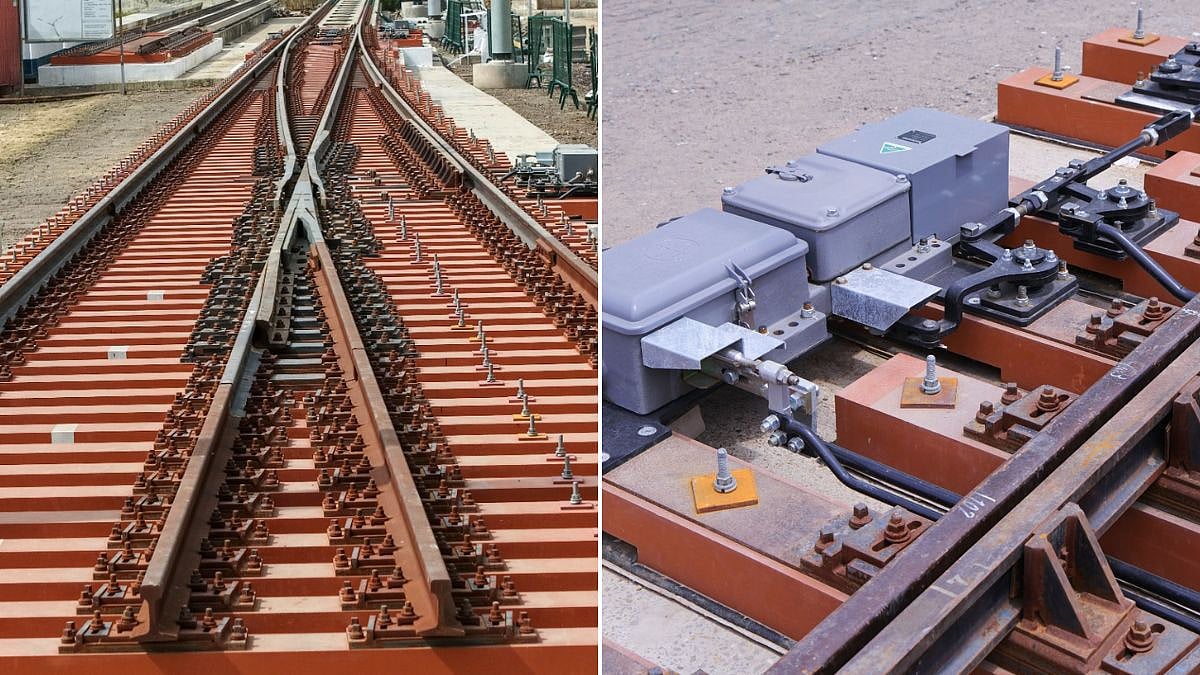
The Mumbai-Ahmedabad High-Speed Rail corridor will deploy swing-nose crossings to enable smoother train movement through high-speed turnouts | Representational Image
Mumbai, September 22, 2026: The Mumbai-Ahmedabad High-Speed Rail corridor will, for the first time in the Indian railway network, use movable crossings, or swing-nose crossings, at high-speed turnouts to enable trains to operate safely at speeds of up to 320 kmph.
Unlike conventional fixed crossings, movable crossings eliminate the gap in the rail at the crossing point. This is important at high speeds, where the wheel passing over a fixed crossing can create impact, vibration and additional wear on both the wheels and track. The movable crossing nose shifts along with the switch rails, creating a continuous rail surface for the train.
The technology is being introduced as part of the technical systems for the Mumbai-Ahmedabad High-Speed Rail (MAHSR) project. The corridor is designed for commercial operations at speeds up to 320 kmph, making smooth, precise movement through turnouts particularly important.
Two Point Machines For One Turnout
`;
Each high-speed turnout will have two independent point machines. One will operate and lock the switch rails, while the second will operate and lock the movable crossing nose.
Both machines will coordinate with the signalling and interlocking system. A train will be allowed to pass through the turnout only after the system confirms that both components have reached their correct positions and are securely locked.
The system will also have multiple detection and verification mechanisms to check the position and locking of the switch rails and movable crossing.
Technology Aims To Reduce Wear
According to the project brief, the arrangement is aimed at reducing dynamic impact, vibration and noise while lowering wear on the track and rolling stock. The high-speed point machines will also require precise positioning and locking because of the greater forces involved at 320 kmph.
Also Watch:
The introduction of movable crossings marks a significant technological shift from the fixed-crossing turnouts commonly used on conventional railway lines in India.
For the bullet train corridor, the technology is expected to play a key role in ensuring safe train movement through turnouts while maintaining ride quality and reducing maintenance requirements.
To get details on exclusive and budget-friendly property deals in Mumbai & surrounding regions, do visit: https://budgetproperties.in/

Add As a
Trusted Source 




Leave a Reply