Meta unveils $1,299 VR Glasses with cinema, workspace and gaming in a 100-gram design
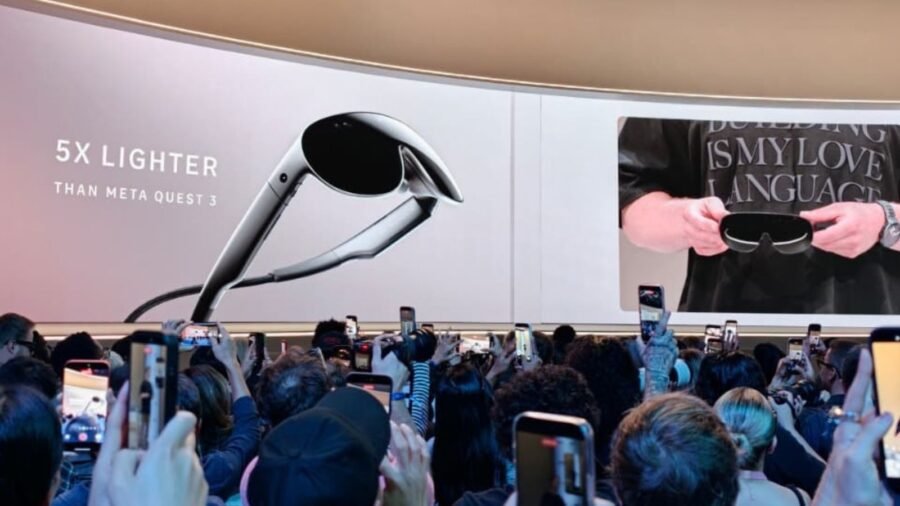
Meta’s approach is key here, as comfort has remained one of the biggest hurdles to making immersive computing a mainstream product. “Meta VR Glasses weigh about 100 grams. That is less than 1/5th the weight of Meta Quest 3, which is already much lighter than Vision,” Mark Zuckerberg said during the keynote, taking a swipe at Apple’s expensive and much heavier VR headset Vision Pro. To put it in perspective, the CEO said that 100 grams is about the weight of a deck of cards. This weight reduction was possible due to its split architecture. The new glasses separate the display and sensors from the computing hardware, essentially moving the processor, battery and storage into a small, lightweight rectangular box called a puck, which can be clipped to one’s pocket or bag.
A VR device with a headset that feels like a pair of glasses
The new VR Glasses are about five times lighter than the Meta Quest 3. It comes with a magnesium-alloy construction with an optical tether that connects it to the external puck. Perhaps the most eye-catching feature of the headset is its 5K Infinite Display based on micro-OLED panels, with 37 pixels per degree. According to Meta, the device has been designed to offer enough clarity for detailed context and text. To make the optical system practical and compact, Meta has used pancake lenses. The glasses also support Dolby Vision and Dolby Atmos spatial audio, essentially positioning them as much a portable cinema as a VR device.
Story continues below.
Subscribe to see fewer ads.
Meta VR Glasses feature a glasses-like design with built-in displays, sensors and audio components.
One major distinction when compared to traditional VR headsets is that the glasses have open sides and passthrough cameras. This is to allow the user to remain aware of their surroundings even when wearing them. This also means Meta is not simply pitching about escaping into an entirely virtual world; instead, it wants the device to sit between conventional computing and immersive entertainment. With the VR glasses, one could watch a movie on a large virtual screen, work with multiple displays on a plane, play games or simply interact with virtual content while still being aware of the physical environment.
Meta AI in VR
Meta said that it is building its Meta AI agent directly into the operating system. This means users can interact with the device through voice, eye movements, and natural hand gestures. The company said that the device will be able to launch apps, play movies, change their workspace, and allow the wearer to search for information without using physical controllers. The glasses are backed by Qualcomm’s Snapdragon Reality Elite processor, and Meta claims that the battery inside the external puck is rated for up to three hours of continuous high-resolution media playback, and it supports 45W fast charging.
In fact, one of the more interesting aspects of Meta’s design is the combination of an external compute unit with lightweight glasses. Instead of squeezing every component into the frame, Meta is effectively dividing the computer into two parts. Now, this comes with a trade-off, as users will have to carry the puck around. However, it allows the part resting on their face to become considerably smaller and lighter.
A close-up view of the Meta VR Glasses highlights the display lenses, sensors and integrated hardware.
It seems entertainment is a major highlight of the VR glasses. Meta said that the Meta VR Glasses will be the first IMAX Enhanced-certified VR device that will allow users to watch select films in IMAX’s expanded aspect ratio. The company also revealed that it is working with Disney on 3D content, and Disney+ subscribers will also be able to watch select films in 3D in supported markets with immersive environments inspired by franchises such as Star Wars, Marvel and Monsters, Inc. Besides, the company is also introducing VR Enhanced Cinema, where the environment around the viewer becomes part of the film. The company said titles including Avengers: Infinity War and Star Wars: A New Hope will eventually receive versions designed for this format.
Story continues below this ad
Meta VR Glasses are pictured alongside the external puck that handles computing, battery and storage.
The broader entertainment ecosystem will feature services like Amazon Prime Video, YouTube, DIRECTV, AMC+, Crunchyroll, Plex and Tubi. Peacock, HBO Max and Paramount+ are also bringing their 3D catalogues to the platform. Sports is also another key focus. The tech giant said that it is working with NBA, MLB, ESPN, NBC Sports, TNT Sports and UFC, with more than 100 immersive live sports events planned annually once the VR Glasses launch. The idea here is that instead of watching a match on a television, viewers could likely experience it from a virtual courtside or stadium position.
The demo of the VR glasses showed the next frontier in personalised entertainment, with live concerts, IMAX movies, and sporting events coming alive right in front of the eyes. The experience combines the high-resolution display with an interface controlled through eye movements and hand gestures, without requiring traditional controllers.
A lot more than entertainment
The demo of the Meta VR Glasses showed a lot more possibilities beyond entertainment. It can create a large virtual screen or several screens based on a user’s choice. It can connect wirelessly or through USB-C to a Mac or Windows PC, giving the user a personal, private place to work. The device allows users to turn any table or desk into a surface keyboard and touchpad, eliminating the need to carry extra hardware.
With support for hand-gesture controls for over 75 games at launch, gaming is another major use case. At the same time, the glasses will retain access to the wider Meta Quest catalogue and Touch Plus controllers. Xbox Cloud Gaming will also allow users to stream games directly to the glasses using a Bluetooth controller.
Story continues below this ad
Meta is also bringing its hologram technology to the device. The company said that Meta VR Glasses can create a photorealistic digital representation of the user, including facial expressions and reactions, for hands-free video calls. The hologram can appear in front of another person wearing the glasses, with spatial audio positioning the voice in the virtual space. Someone joining from a regular phone or computer would see the hologram on their screen. The technology will work across calling services, including WhatsApp and Zoom.
Meta is betting that the next stage of VR will not be about making headsets more powerful. It will be about making them easier to live with. The VR Glasses will go on sale in Spring 2027 in the US, availability in India and other markets are yet to be announced.

Zuckerberg unveils Muse’s path to personal superintelligence and a new keychain device
By Sohail Khan · 24 Sep
Anthropic says Claude AI helped discover novel enzyme system
By Sohail Khan · 24 Sep
AI leaders warn UN of security risks as systems grow more powerful
By Sohail Khan · 24 Sep
Leave a Reply