Manufacturing Share Remains Key Challenge For India’s Economy, Says NITI Aayog Vice Chairman
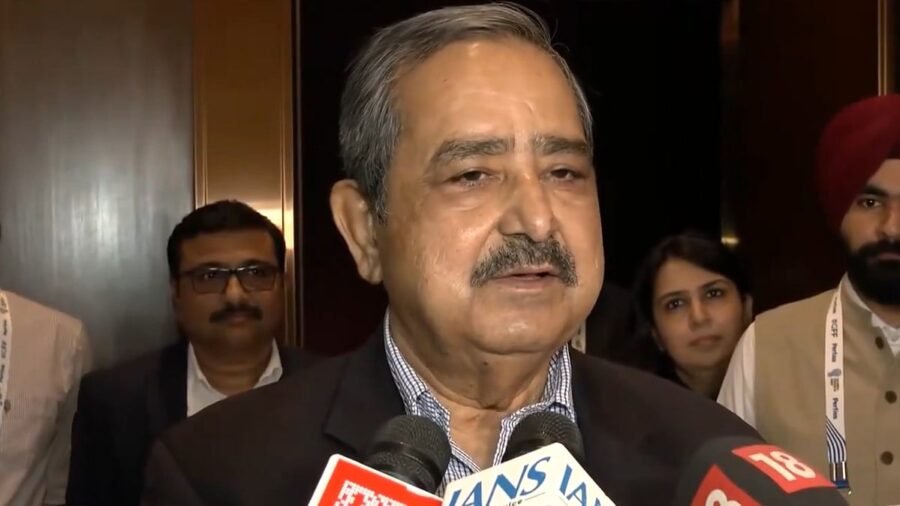
Manufacturing Share Remains Key Challenge For India's Economy, Says NITI Aayog Vice Chairman
NITI Aayog Vice Chairman Ashok Kumar Lahiri said India’s economy is performing reasonably well and will regain momentum with a return to current account surplus soon. He identified low manufacturing contribution as a key challenge and stressed the need for domestic savings, better credit assessment using UPI data, and growth in sectors like semiconductors, electronics and renewable energy.
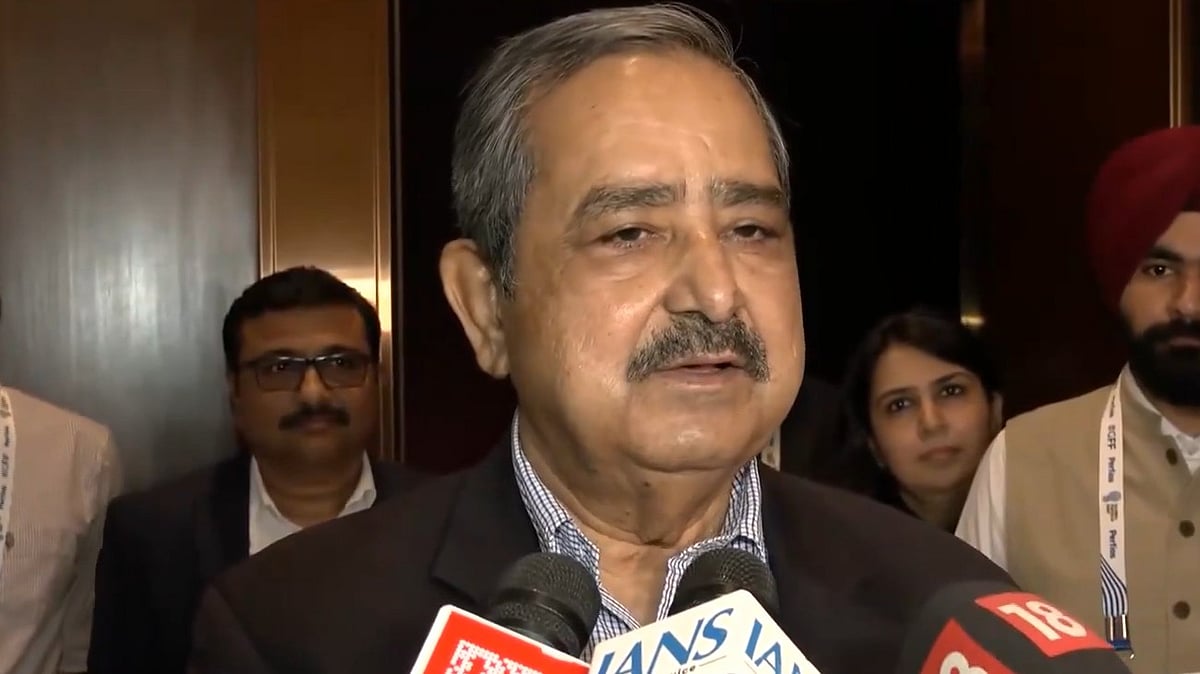
Manufacturing Share Remains Key Challenge For India's Economy, Says NITI Aayog Vice Chairman | IANS
New Delhi, Sep 9: NITI Aayog Vice Chairman Ashok Kumar Lahiri on Wednesday said the Indian economy has been doing reasonably well and that Asia's third-largest economy will regain its mojo and return to a current account surplus soon.
Economy to regain momentum
Lahiri further said the major challenge the Indian economy faces is the low share of manufacturing in India's overall GDP.
Mumbai, Maharashtra: NITI Aayog Vice Chairman Ashok Kumar Lahiri says, "… We have had an evolution of the payments technology. UPI has changed life. You guys don't even know what it was like 40 or 50 years ago to go to a bank to withdraw money. Now, you withdraw money from… pic.twitter.com/mKURqPDeuw
— IANS (@ians_india) September 9, 2026
"The Indian economy has been doing reasonably well. I will never say very well because I am a reformist," he said at the Global Fintech Fest 2026.
`;
India's economy grew at a faster-than-expected 7.8 per cent in the April-June quarter, showing resilience despite concerns that the war in Iran and resulting global uncertainty could weigh on domestic economic momentum.
Current account surplus outlook
On foreign investment in India, Lahiri said domestic savings, not foreign savings, must do most of the heavy lifting.
He explained that in the early part of the 19th century, the United States imported capital from Europe, while East Asia consistently ran current account surpluses because it had foreign direct investment and foreign portfolio investment, but most of the investment was financed by domestic savings.
"We will regain our mojo, and I think we will generate current account surpluses soon … we used to worry about the 3 per cent rule. If current account deficit exceeds 3 per cent of GDP, then all hell will break loose," Lahiri said.
For fiscal 2025-26, the current account deficit stood at USD 25.2 billion, or 0.6 per cent of GDP, compared to USD 22.9 billion, or 0.6 per cent of GDP, in 2024-25.
Manufacturing remains key challenge
He said that, normally, when GDP goes up, the share of agriculture goes down, and the share of industry, which includes, apart from manufacturing, some others, and services goes up.
"But if you look at the developed countries, manufacturing has gone down, but manufacturing has gone down at a much higher per capita income than what was threatening to be a problem," Lahiri said.
The NITI Aayog Vice Chairman pointed out that India's recent GDP data shows that the share of manufacturing in the GDP has gone up. "But we need much more manufacturing now," he said.
Also Watch:
Investment and banking reforms
Lahiri said foreign players coming into the country and the number of investments that are happening in the renewable side, data centre, semiconductor and electronic manufacturing system, is very positive.
Responding to a question on India's banking sector, he said credit appraisal, a major job of every bank manager, is tough. "I think credit appraisal can be done much more efficiently, whereby you can assess the risk and you can do a better risk pricing," Lahiri said.
The NITI Aayog Vice Chairman emphasised that bankers must find a way to use the rich data UPI is generating for credit appraisal and better risk pricing, and include the informal sector, particularly MSMEs, in the formal credit system.
(Except for the headline, this article has not been edited by 's editorial team and is auto-generated from an agency feed.)

Add As a
Trusted Source