Maharashtra drought: Monsoon not over, but Marathwada turns to tankers as water sources run dry
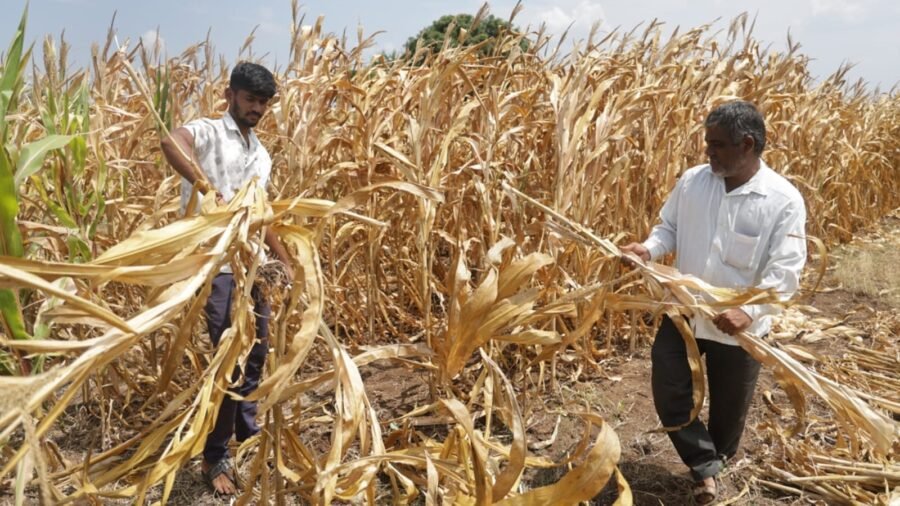
In Shahapur in Chhatrapati Sambhajinagar, 40-year-old farmer Badrinath Bharat is spending Rs 3,000 a day on two tankers to keep his ginger crop alive. The water is also used by his family and 10 cattle.
Story continues below.
Subscribe to see fewer ads.
“I have already lost all of the cotton and maize I had sowed. We have a well but it is dry. For the past 15 days, I am forced to spend on the tankers. I can do this for a month with the hope of some yield… after that I will discontinue,” said Bharat, who lost crops, including tomato, cotton and maize.
In Siddhanath Vadgaon village in Chhatrapati Sambhajinagar, farmer Sachin Bilwal has been buying tanker water for more than a month, mainly for his family and three cattle. He pays Rs 1,000 for a tanker, which lasts about a week.
“I am required to pay Rs 1,000 per tanker and it lasts me a week. We have requested the gram sabha to seek tankers from the government. Hopefully it will be arranged soon but so many villages are in a similar situation even before monsoon has ended,” Bilwal said.
Bilwal had cultivated cotton, maize and tur, but said the crops had yielded no output because of lack of rain. Like Bharat, he has a well but no water in it.
Story continues below this ad
The water stress comes after a poor monsoon across the region. Maharashtra received 18 per cent less rainfall than normal this year, while Marathwada recorded a deficit of 38 per cent. The deficit was higher in some districts, with Latur recording 48 per cent less rainfall than normal and Parbhani 43 per cent.
The scale of the emerging water crisis is reflected in the tanker deployment. In Chhatrapati Sambhajinagar, 77 villages are currently being supplied by 120 tankers, while 65 villages in Beed are receiving 127 tankers. Jalna has 22 tankers supplying water in villages.
Among the relief measures announced after the state declared drought in 265 of its 358 talukas is the deployment of tankers for drinking water wherever required.
In Jalna, the impact is also visible in fields where farmers had invested in irrigation systems, in the hope that the monsoon would provide enough water to sustain their crops.
Story continues below this ad
Abasaheb Dinkar Rathod, a farmer from Govindpur, planted tomatoes on an acre and coriander and ladyfinger on another plot. On Tuesday, he was left with little more than a few stunted coriander plants and a single cart of tomatoes, which he said would fetch less than Rs 100.
Rathod had installed drip lines beneath the plants and used mulching and protective covers for his tomato crop. But the rain did not come.
“This area depends majorly on rainfall. I had arranged for the drip hoping that with the rainfall, this will suffice for the tomatoes to grow. Nothing remains now,” Rathod said.
He plans to pull out the tomato plants and try another crop during the rabi season. But even that will depend on whether he can find water.
Story continues below this ad
“I do not have the courage right now. There is no irrigation option for farms. Even for personal usage, we have to depend on water from a local well, two kilometres from our home,” Rathod said.
Officials in Chhatrapati Sambhajinagar said there was no water shortage or water cuts in the district at present, and that additional tankers would be deployed if required.
Of the 277 tankers deployed for villages in the region, only three are owned by the government. The remaining tankers are operated by private owners and paid for by the state government.
The water shortage is also unfolding as work under the Jal Jeevan Mission remains incomplete in the region. According to data from the Marathwada divisional administration, only about half of the work under the scheme has been completed so far, with lack of funds and other reasons cited for the delay.



Leave a Reply