Maharashtra approves ₹1,826-crore plan for Hinjewadi, Chakan after public outburst about poor infrastructure
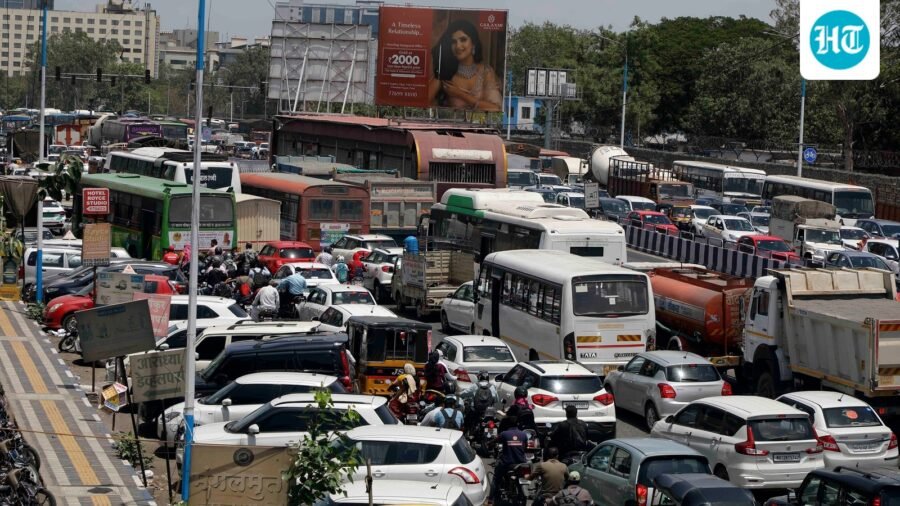
The government has also set a target to develop Pune as a growth hub with a 0-billion economy by 2036
Updated on: Sep 29, 2026, 10:13:30 IST
Prefer HTon Google
Share via
Copy link
Following the recent outburst among citizens, particularly IT professionals and the industry sector, over poor infrastructure and facilities in Hinjewadi and Chakan, chief minister Devendra Fadnavis on Monday gave in-principle approval to a ₹1,826-crore integrated infrastructure development plan for these areas in Pune district.
The government has also set a target to develop Pune as a growth hub with a $200-billion economy by 2036, which includes plans to expand the Pune metro railway network to 250 km and generate two million jobs in the next 10 years.
The developments took place at a meeting on the Pune region, where a presentation on the Pune Growth Hub was made to the CM. Fadnavis approved a provision of ₹1,826 crore, which includes around ₹1,400 crore for Chakan and ₹426.54 crore for Hinjewadi to ease traffic congestion. The plan includes upgrading roads, drainage systems, bridges, and improving water storage and other essential civic infrastructure in both industrial hubs.
According to the presentation, the economy of the Pune Economic Region is currently 68 billion dollars. The government, in accordance with the Viksit Bharat 2047 target, has set a goal to develop this to 200 billion to 220 billion dollars by 2036 and 600 billion to 650 billion dollars by 2047. It has a proposed investment of ₹9 to 10 lakh crore rupees and envisages the creation of 1.5 to 2 million additional jobs.
The Pune Economic Region currently contributes around 11% to 12% to Maharashtra’s income. Its real economic growth rate is estimated at 6% to 6.5%, which the plan seeks to increase to 10%. The plan covers the Pune and Pimpri-Chinchwad municipal areas and the Pune Metropolitan Region Development Authority region.
Manufacturing, automobiles and electric vehicles, engineering goods, defence, robotics and drones, electronics and semiconductors, and biotechnology have been identified as priority sectors. The government has also set a target of rehabilitating 90% of eligible slum-dwelling families by 2036. The region is estimated to require an additional 200 million litres of water per day. Measures proposed include seven TMC (thousand million cubic feet) of water from Mulshi, increased supply from the Bhama basin, water reuse, efficient distribution and desilting of water bodies.
Waterlogging in the Chakan industrial area has emerged as a major problem, with the flow of water obstructed by encroachments along nearly 78 km of natural drains. The plan proposes clearing these drains, creating storm-water drainage systems along both sides of roads, increasing the capacity of culverts and bridges, and constructing water-storage facilities at required locations. Around 70-80% of action against encroachments on the drains has already been completed while the remaining obstructions will be removed.
A study was conducted of 428 km of roads in the Chakan industrial area based on traffic density, industrial importance, freight movement, road condition, waterlogging, safety and connectivity. Around 75 km of roads have been identified for priority improvement. The works will prioritise separate pedestrian routes, monsoon water drainage, traffic facilities and road safety. Available road-right-of-way will be utilised to minimise the need for land acquisition.
Catch every big hit, every wicket with Crickit, a one stop destination for Live Scores, Match Stats, Infographics & much more. Explore now!
Stay updated with all the Breaking News and Latest News from Mumbai. Click here for comprehensive coverage of top Cities including Bengaluru, Delhi, Hyderabad, and more across India along with Stay informed on the latest happenings in World News.
See Less

Anupam Rasayan Acquires 22.5 Lakh Shares Of Bliss GVS Pharma For ₹162.74 Crore
By Sohail Khan · 29 Sep
Tata Motors Subsidiary Acquires 26% Stake In Mateshwari E-Smart Mobility For ₹2.60 Lakh
By Sohail Khan · 29 Sep

Leave a Reply