LSR is where I went to feel safe. I feel more unsafe in this city now
Advertisement
When I reached college, everybody had a similar story to share. Tips to stay safe. When to go out. A mental map that constantly ran through the head. What makes it worse is the normalisation. Nobody called it fear or an overreaction. It was stated as being sensible. It was called being “safe”.
I was just 18, three months into college, when I was flashed for the first time by a middle-aged man. I was taking a busy road that leads from my PG to the college. What stayed with me after was not the absolute horror and disgust that I felt in that moment but rather how ordinary it was. When I mentioned the incident to other girls, every one had their own versions.
Ever since then, I have got a knack for that kind of arithmetic. Can I go on the route alone? Booking an auto is better than booking a cab. Is it too late or too early? Is the road too empty?
Advertisement
In the scorching Delhi heat, it became my habit to think twice before wearing shorts, skirts and tank tops while stepping out of my place. Nobody ever taught me to do this. I just learnt to carry shirts, scarves and cover-ups, like the way you learn a language. By living in it.
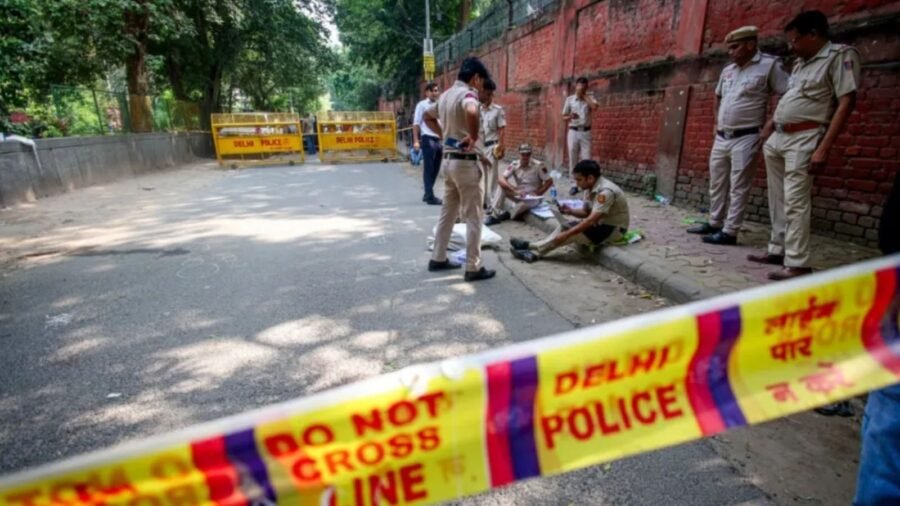
This week, when the news about a minor’s gang rape in Aastha Kunj Park (only 2 km from Lady Shri Ram College) and firing near the college’s back gate broke out, this arithmetic only got louder in my head.
The cruel part is that LSR is where I have not had to stay alert. It’s a place where the shirts and scarves come off, we dress as we like, girls exist loudly, stay late without explaining themselves and take up room without apology. It is a space that taught me how to be unguarded. A man accused of rape was found barely 50 metres from that very space’s back gate, as though the edge of a women’s college were somewhere he could disappear into. That wasn’t just a security lapse; it was a disrespect to everything that place stands for.
On Wednesday, when hundreds of girls from LSR and other DU colleges filled the road outside our gate, they came for every woman who has been raped, and for every woman who lives in the constant fear that she might be next. We shouted slogans on a road where I usually walk with my guard up, and for once, it felt like ours. It felt like reclaiming space. It felt like we were worthy of our own institution, which has a reputation for standing with women — it was where the Pinjra Tod campaign took off, where they refused to accept curfews as the price of being safe.
But solidarity cannot be all we have. I do not want a pepper spray in my bag. What I want are streetlights that work, police who patrol before a crime, not after it, media that states facts correctly, and a city that makes a girl’s walk to her lecture something she doesn’t have to mentally prepare for.
The question was never how women should stay safe because that has been answered a thousand times, in parents’ warnings and PG rules and shopping lists. The question is why a whole society has left that answer to us.
I will carry the spray tomorrow, because I still have to. But I have stopped believing this is what safety means. Safety is not a girl who is cautious about everything; it is a place where she never has to be cautious about everything, ever again.
The writer is a student at Lady Shri Ram College, University of Delhi

The Revolutionaries actor Gurfateh Pirzada talks about his muscular physique
By Sohail Khan · 25 Sep
Real question in IIT-Bombay student suicide case: Was a crime committed?
By Sohail Khan · 25 Sep
What is Bengal’s controversial anti-Goonda Bill, why did it go for assent to the President?
By Sohail Khan · 25 Sep
Leave a Reply