Lack of understanding about cross-border terror concerns impacts bilateral ties: Jaishankar on India-U.S. relations
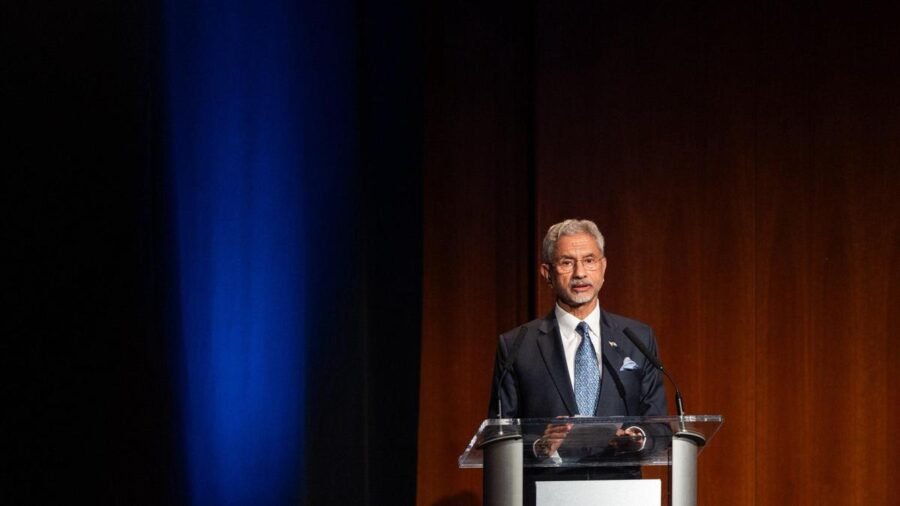
Terrorism emanating from its neighbour is one of India’s primary concerns, and if this is not fully appreciated by New Delhi’s partners, it affects bilateral ties, External Affairs Minister S. Jaishankar has said, alluding to India-U.S. relations amid an upswing in Washington-Islamabad ties.
Mr. Jaishankar addressed prominent members of the Indian-American and diaspora community, as well as policy experts, at a conversation hosted by the Asia Society, as the high-level week of the 81st session of the UN General Assembly (UNGA) concluded on Monday (September 28, 2026).
During a conversation moderated by Daniel Russel, a former American diplomat and distinguished fellow at the Asia Society Policy Institute, Mr. Jaishankar was asked about U.S.-India relations, particularly amid developments related to trade and tariffs over the past year, and what would have to happen to put the bilateral relationship on a “better track.”
“Well, I think if I stand back and look at the relationship… I note that much of the world has had a more difficult relationship with the U.S. I mean that may not be a consolation, but that’s a reality,” Mr. Jaishankar said.
He then referred to ties between the U.S. and Pakistan, which have seen an upswing over the past year, especially in the months after the second term of the Donald Trump administration began in January 2025.
One of the issues “pertains to the sensitivities of each country,” Mr. Jaishankar said. “What for us in India is particularly important is the issue of terrorism. That we feel that… as a country perhaps there are very few countries which have been subjected to the kind of terrorism that we have from a neighbour as part of a deliberate, conscious policy over many, many decades,” he said, referring to Pakistan.
“Now, if something which matters so deeply to us, there isn’t enough understanding or appreciation or empathy of that, I think that creates a problem too. That you know if… one of my primary concerns is not fully appreciated by my partner, then clearly there is an impact of that on the relationship,” he said, referring to India-U.S. ties.
Months into the second Trump administration, the India-U.S. relationship faced turbulence over issues including tariffs, trade, Russian energy purchases by Delhi, and Washington’s renewed engagement with Pakistan.
In May 2025, India had launched Operation Sindoor, targeting terror infrastructure in Pakistan and Pakistan-occupied Kashmir, in retaliation for the terror attack of April 22, 2025, in Pahalgam, Jammu and Kashmir, carried out by The Resistance Front, a proxy of the Pakistan-based terror group Lashkar-e-Taiba, in which 26 civilians, mostly tourists, were killed.
Through 2025, and as recently as his address to the UNGA last week, Mr. Trump has claimed he stopped the conflict between India and Pakistan. India has consistently denied any third-party intervention.
In June 2025, after returning from the G7 Leaders’ Summit in Kananaskis, Canada, which Prime Minister Narendra Modi had also attended, Mr. Trump hosted Pakistan’s Field Marshal Asim Munir for lunch at the White House. Pakistan Prime Minister Shehbaz Sharif and Field Marshal Munir met Mr. Trump again at the White House during the UNGA session in September 2025. Mr. Trump has publicly praised Field Marshal Munir on various occasions, calling him a “Great General. Great Field Marshal, a great guy.”
Mr. Jaishankar said India would certainly hope for and expect the relationship to move on an upward trajectory. “But I have to be real about the issues that we confront, and to the extent we are able to move ahead on some of these issues, I think we’ll have a better relationship,” he said.
SC cancels NSA order against Sambhal violence accused, slaps ₹10L cost on UP govt
By Sohail Khan · 29 Sep

Fresh Pocso case filed against granite baron R Veeramani in Tamil Nadu
By Sohail Khan · 29 Sep
Leave a Reply