Justice Nagarathna advises wider use of mediation to ease burden on family courts
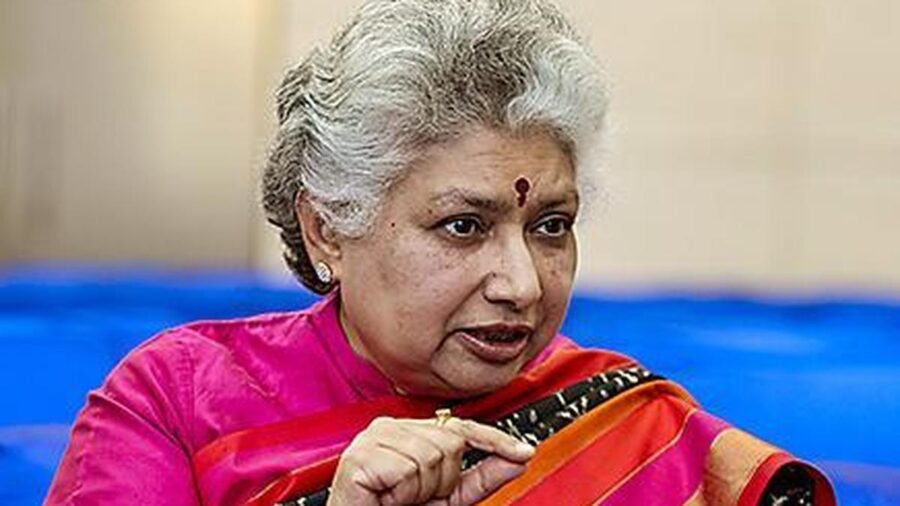
Supreme Court judge Justice B.V. Nagarathna on Saturday (September 26, 2026) called for greater reliance on alternative dispute resolution in family litigation, arguing that mediation and conciliation could deliver faster, less adversarial outcomes than prolonged court battles.
Justice Nagarathna was delivering the inaugural address on ‘ADR (alternative dispute resolution) versus Adjudication in Family Disputes: Challenges and Way Forward’ at the Eastern Zone Regional Conference of the Committee for Family Court Matters, Supreme Court of India, in association with the Gauhati High Court, in Guwahati. The Supreme Court judge told delegates that alternative dispute resolution was never intended to compete with the courts but to complement them, offering speed, privacy, and confidentiality that conventional litigation often cannot.
Justice Nagarathna, who chairs the apex court’s Committee for Family Court Matters, noted that many years pass between filing pleadings and a final judgment. By that point, “any semblance of subsisting familial bond” is often lost.
Such delay, she warned, tends to deepen existing inequalities within families, making reducing the backlog through alternative dispute resolution a pressing priority.
Citing data from the Department of Justice, she said the country had 822 functioning family courts as of October 2024. Among the eastern States, Bihar topped the list with 70,365 pending cases, followed by Odisha (36,792), Jharkhand (15,376), Assam (7,399), and Tripura (4,010).
‘Consolidated referral’
Justice Nagarathna underlined a series of proposals across five key areas. On cases involving overlapping issues of domestic violence and elder welfare, she recommended “consolidated referral”, under which related proceedings arising from a single household could be directed to one mediator with unified judicial oversight, since “it is the family and not the cause of action, which requires resolution”.
She also proposed dedicated geriatric mediation panels under District Legal Services Authority.
On matrimonial disputes, Justice Nagarathna said pre-litigation mediation should be promoted under Section 5 of the Mediation Act, and conciliation should be scheduled at the first hearing of contested divorce and restitution petitions, before written statements were filed.
“Where mediation converts a contested petition into a settlement for divorce, waiver of the statutory period of waiting should follow as a matter of course,” she said.
On child custody, the judge favoured embedding child psychologists directly in the mediation process, and adopting child-inclusive approaches that allow a trained professional to convey a child’s views to the parents, reducing reliance on adversarial custody battles.
Lump-sum alimony
On maintenance and alimony, she called for mandatory financial disclosure at the mediation stage, preference for lump-sum capitalised settlements over uncertain monthly payments, and prompt registration of property settlements to ensure enforceability.
Shifting focus to the status of women, Justice Nagarathna highlighted the disproportionate costs of protracted litigation in terms of finances, enforceability and dignity, noting that confidential mediation can help secure practical outcomes such as the return of stridhan (woman’s property) and provision of children’s education.
“However, I wish to emphasise that none of this applies where there is violence, coercive control or a serious imbalance of power. There, mediation is not merely inappropriate but could potentially be harmful or dangerous, and may result in further traumatisation,” she said.
Weaponising litigation
Justice Nagarathna also flagged the growing “weaponisation of litigation”, where the court process is used to humiliate and financially exhaust a party, stressing that this coexists with the far larger, underreported problem of genuine victims who suffer in silence.
Supreme Court judges Ujjal Bhuyan and N.V. Anjaria, the Chief Justice of the Gauhati High Court Ashutosh Kumar, and the Chief Justices of the High Courts of Calcutta, Jharkhand, Manipur, Meghalaya, Orissa, Patna, Sikkim, and Tripura are attending the two-day conference.

Man shoots sister, cousin in Haridwar over suspected relationship: Police
By Sohail Khan · 26 Sep
IDSFFK 2026: ‘Viraamam’ by Malavika VN dwells on the world of film projectionists
By Sohail Khan · 26 Sep
Leave a Reply