Just Like That: Reading Manusmriti and its many contradictions
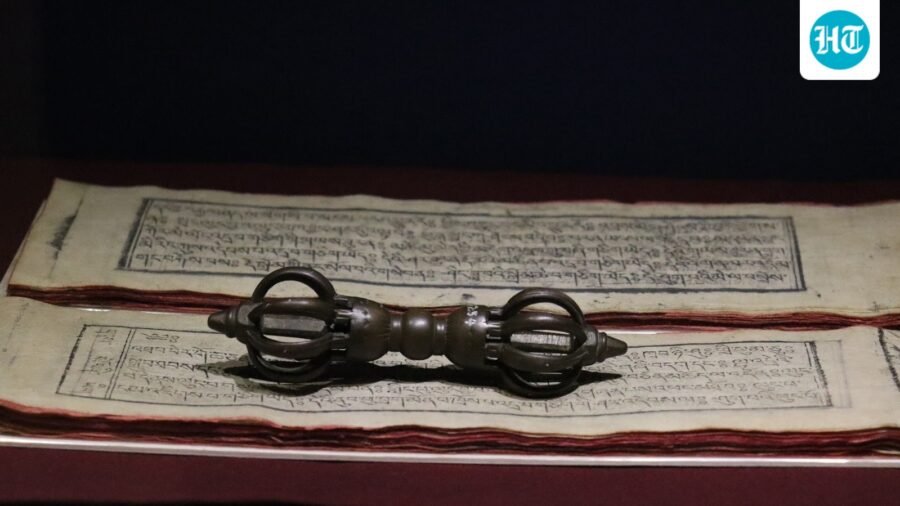
The Manusmriti is part of the normative tradition of Dharmaśāstras — a large body of Sanskrit literature concerned with dharma
Updated on: Sep 6, 2026, 07:02:08 IST
Prefer HTon Google
Share via
Copy link
These days, the Manusmriti is the subject of heated debate. The debate relates to whether the smriti sanctioned patriarchy and treated women as subordinate. The problem in evaluating Hindu texts, and the Hindu world view, is that simplistic condemnation or exaggerated counter claims are both unwarranted, because for every proposition made, an opposing one can be cited. This surface contradiction is not uncommon for such a profound, complex and ancient corpus of thought and practice which nurtured differences of opinion.
The first thing to understand is the difference between shruti and smriti. Shrutis are believed to be revealed texts, such as the Vedas. Smritis are texts which are remembered and then compiled. The Manusmriti belongs to the latter category, part of the normative tradition of Dharmaśāstras — a large body of Sanskrit literature concerned with dharma: Duty, righteous conduct, social obligation, ritual propriety, family relationships, kingship, inheritance, and judicial procedure.
Traditional Hindu understanding attributes the Manusmriti to the primordial lawgiver Manu. Modern scholarship, however, places its composition broadly in the period between the second century BCE and the second century CE. It is important to remember that the smriti is not a homogenous text, and contradicts itself often, indicating it had more than one author, and additions made over time.
On what it says specifically on the question of women, the evidence becomes decidedly uncomfortable for anyone wishing to place Manu neatly in either a pro-woman or anti-woman box. There are passages that appear to be unequivocally patriarchal. In verse 9.3, Manu famously declares that a woman should be protected by her father in childhood, by her husband in youth and by her sons in old age, and that she should not live independently. But in interpreting the actual Sanskrit text, there is debate on whether “independently” means under the supervision of men, or that men — father, husband, brothers or sons — are conjoined at every stage of a woman’s life to protect her independence.
This possibility cannot be completely dismissed because the same Manusmriti in verse 3.56 says: “Where women are honoured, there the gods rejoice; where they are not honoured, all rites are fruitless.” The verses surrounding this declaration instruct fathers, brothers, husbands and other male members of the household to honour women and adorn them. Another verse says that where women suffer, the family perishes; where they do not suffer, the family prospers. Manu even connects the happiness of husband and wife with the enduring welfare of the household.
Nor should Manu be mistaken for the whole of Hindu civilisation, for there is no single uncontested Hindu legal code. On the contrary, the Hindu intellectual tradition is astonishingly plural. The Brihadarayanka Upanishad recounts the episode where in a large assembly of learned men called by King Janaka of Videha, Gargi openly questions the most prominent and leading sage, Yajnavalkya, as does, later, the sage’s wife, Maitreyi. In the Mahabharata, the fiery Draupadi bluntly asks Yudhishtra what right he had to put her on stake?
The Satapatha Brahmana states that a woman is half her husband. This is in conformity with the concept of ardhanarishwara, where divinity is depicted as androgynous — half male and half female. There is also the powerful feminine principle of Shakti; goddesses who are not merely consorts but, in some texts, the supreme cosmic power; women poets, saints and rulers; and literary traditions in which women can be morally, intellectually and spiritually superior to men. The Arthashastra records that in Mauryan times, women could be bodyguards to the king, serve in the administration, choose an ascetic’s life, and donate to temples and monasteries using their own money.
Notwithstanding the above, the fact is that gender disparity and the oppression of women has been in existence for much too long in India. My own view is that entrenched male interests selectively chose some passages from the dharmashastras and elsewhere to legitimise their unilateral supremacy. It is this which needs to be questioned, dismantled, and punished. If the Manusmriti has to be castigated to achieve this goal, then there are, as cited above, categorical statements within it that are also pro-women. Holding it primarily responsible for gender oppression would be both inaccurate, and far too simplistic a way to confront the real challenge of today: the greater empowerment of women.
Pavan K Varma is an author, diplomat, and former member of Parliament (Rajya Sabha). The views expressed are personal
Get Current Updates on India News, Elections 2024, Lok sabha election 2024 voting live , Karnataka election 2024 live in Bengaluru , Election 2024 Date along with Latest News and Top Headlines from India and around the world.
See Less

Good foundation: on India’s strong industrial growth performance
By Sohail Khan · 1 Oct
Bitter pills: on Court’s intervention, drug pricing
By Sohail Khan · 1 Oct
Household debt, financing today against tomorrow
By Sohail Khan · 1 Oct