Jhiram valley Maoist attack: A verdict after 13 years but same questions linger on
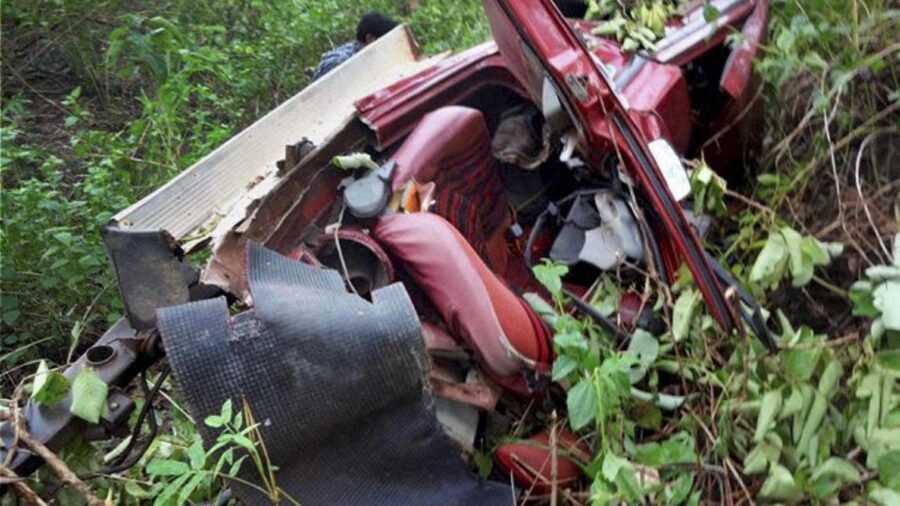
The story so far: On September 5, a special National Investigation Agency court in Chhattisgarh’s Jagdalpur found 10 accused guilty in the 2013 Jhiram Valley Maoist attack case in which at least 27 people – including senior Congress leaders such as Vidya Charan Shukla, Nand Kumar Patel, and Mahendra Karma – were killed and at least 30 others injured.
While the verdict marks the conclusion of a 13-year-long legal battle and comes months after the Central government’s declaration of India being free from Maoism, the victims’ families and top Congress leaders in the State have said that their quest for justice remains unfulfilled.
The dissatisfaction hinges on broadly three points: the profile of those convicted, a purported political conspiracy that they claim wasn’t probed by the NIA and fixing the accountability of the then Bharatiya Janata Party government in Chhattisgarh at a time when the Opposition Congress leaders and security personnel were attacked by a large group of Maoists. These questions, however, have not emerged after the judgment and have hovered around throughout the course of the investigations and trial.
The incident
According to the NIA, a convoy of about 20 vehicles carrying Congress leaders was attacked by members of the banned Communist Party of India (Maoist), who first triggered a landmine blast, the impact of which blocked the route of the vehicles of Parivartan Yatra, a political campaign.
This was followed by indiscriminate firing, grenade lobbing, and incarcerated killing, resulted into spot death of 24 innocent persons and grievous Injuries to over 35 persons. Senior Congress leaders Nand Kumar Patel, Mahendra Karma, Uday Mudaliyar, Dinesh Patel and 10 police personnel on duty were amongst the deceased.
Later, three victims, that included former Union Minister and veteran politician V.C. Shukla, succumbed to their injuries at different hospitals. During the course of the attack, Maoists looted nine AK-47 rifles, seven INSAS rifles, tw SLR, four 9mm pistols, along with magazines and ammunitions from deceased injured police personnel as well as personal belongings of victims and fled away.
The motive
The main target of the attack, the Maoists later communicated through a press release, was Mahendra Karma, a former leader of the Opposition in the Chhattisgarh Assembly, for his role in Salwa Judum, a state-backed movement against Maoist insurgency which involved arming of local youths.
The movement that began in 2005 was reportedly backed by the State and was banned by the Supreme Court, which said that it violated the rights to equality and life and personal liberty granted by the Constitution. Additionally, it led to internal displacement of tribals from certain pockets who were caught between the special police officers backed by the State and Maoist insurgents. Despite the backlash from human rights activists, Karma garnered political support from across the spectrum for his role in Salwa Judum.
Even before Salwa Judum, Karma had led non-violent campaigns against Maoism and had survived earlier attacks on his life as well. However, in May 2013, he was tied and taken some distance away and then shot in the temple, according to eyewitnesses. While Karma started his political journey with the Communist Party of India and later switched to the Congress, since his death, his family legacy has been carried forward by his wife, a former MLA, and three of his nine children.
Who was convicted
Pramila Modiyam, Chaitu Lekam Urf Munna, Sumitra alias Sumitra Punem Modiyam, Mukka Mandvi, Kosa Kavasi alias Kosaram, Aayata Markam, Madkami Deva, Joga Madkami, Banjami Snna alias Chamru alias Denga, and Mahadev Nag – all mostly either lower-ranked commanders or armed guerillas – are the ten convicted. A detailed copy of the judgment is awaited.
Why the controversy
Senior Congress leaders such as former Chief Minister Bhupesh Baghel, as well as the victim families, including Karma’s children, have said that their concerns have not been fully addressed by the NIA. The party has over the years maintained that a massive political conspiracy lay behind this incident, which the NIA never investigated.
When Mr. Baghel was the Chief Minister, Jitendra Mudaliar—son of Congress leader and former MLA Uday Mudaliar—filed a complaint, based on which the Chhattisgarh Police registered a second FIR. However, the NIA objected to this FIR and moved the Supreme Court against it. The Supreme Court delivered its verdict in November 2023, dismissing the NIA’s objection. But by then the BJP had returned to power in the State and the case wasn’t probed further he claims.
More twists and turns
They have also raised questions about the judicial inquiries in the Jheeram Valley case. Mr. Baghel claims that the mandate of the commission of inquiry constituted by the Raman Singh-led BJP government in the immediate aftermath of the incident was limited to investigating ‘security lapses’ rather than securing convictions in a ‘criminal case.’
The report of the commission, headed by Justice Prashant Mishra, was submitted directly to the governor and not handed over to the government in November 2021 when the Congress was in power.
The then State government, led by Mr. Baghel, deemed it incomplete and restructured the Commission under Justice Gulam Minhajuddin. Dharamlal Kaushik, the then-state president of the BJP, challenged this new commission in the High Court, and a stay order was issued against it based on his petition. This has led the Congress to claim that the BJP leaders do not want an investigation done.
On the other hand, BJP leaders such as Chief Minister Vishnu Deo Sai now say that if the Congress leaders had any evidence, they should have handed it to the NIA. They also point out that the case was handed over to the NIA when the Congress-led United Progressive Alliance was in power.
Another question being asked by the victim families is why no top leader of the Maoists was convicted. The NIA took over the probe into the case and charged 39 cadres of the banned outfit. Thippiri Tirupathi alias Devuji and Barse Deva, two high-ranking Maoist leaders who surrendered in the recent past, were also among those chargesheeted but have been shown as wanted.
They are among the many top Maoist leaders who have either surrendered or been gunned down by the security forces since 2024, when the Centre set a March 31, 2026 deadline for the elimination of Maoism from the country and intensified ground security operations in the entire Bastar region of Chhattisgarh.
There are those like Chhavindra Karma, the son of the late Karma, who have also demanded the narco test of those responsible for the security arrangements for the rally, even the then Chief Minister or the erstwhile DGP. Some say that, at the very least, there was an administrative lapse but no accountability was fixed.
What next
While the detailed judgment is yet to come in public domain and the quantum of punishment will be declared on September 16, the question of top Maoist leaders escaping responsibility for such attacks because of surrender may linger on. Unlike the political conspiracy angle, which has elicited political response from the ruling party, there is no official comment on this aspect by either the state government or the NIA.
However, government sources say that surrender does not automatically result in the withdrawal or closure of a criminal case. Any withdrawal from prosecution has to be undertaken in accordance with the applicable law and remains subject to the approval of the competent court, they add.
MPSC exam paper leak: Aspirants protest in Pune; NCP (SP), Cong leaders back agitation
By Sohail Khan · 7 Sep
International Vulture Awareness Day observed in The Nilgiris
By Sohail Khan · 7 Sep

Leave a Reply