Is China Stealing American AI? Why ‘Distillation’ Has Washington Up in Arms
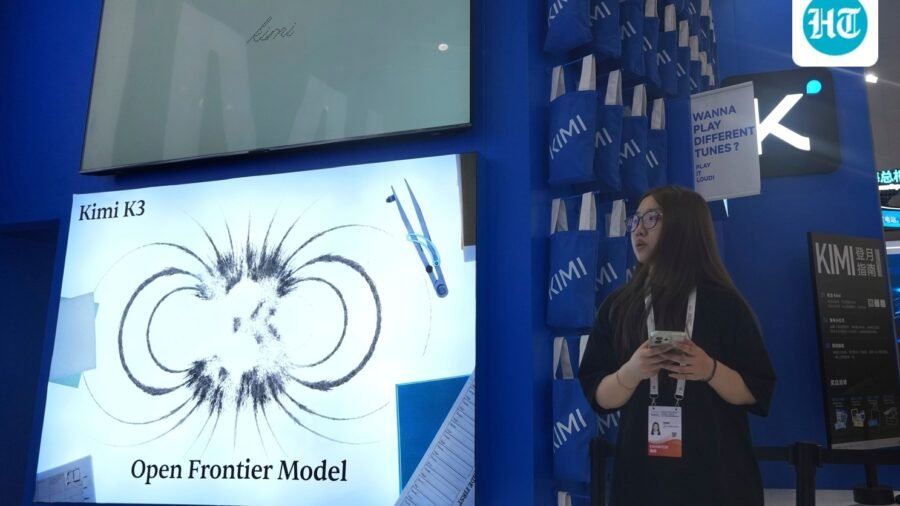
U.S. security agencies accused six Chinese AI companies of systematically exploiting American models to train their own systems.
Published on: Sep 10, 2026, 13:10:19 IST
Prefer HTon Google
Share via
Copy link
U.S. security agencies on Tuesday accused six Chinese artificial intelligence companies of systematically exploiting American AI models to train their own systems. The agencies, including the National Security Agency and the Federal Bureau of Investigation, said the Chinese companies have engaged in “aggressive, malicious, and targeted distillation activities at an industrial scale.”
The key word is “distillation,” a technique by which a new AI model taps the expertise of an existing one. Here is a guide to the issue and how it will affect the U.S.-China race for supremacy in AI, with President Trump set to meet Chinese leader Xi Jinping this month.
What is distillation?
Start with the basics of building an AI model. Developers such as Anthropic and OpenAI gather all the materials they can find from the internet and books, throw it into a big blender with fancy math, and build a neural network modeled on the human brain. This network links words through connections of various weights. A model trained this way can produce natural-sounding sentences by stringing one word after another.
After initial training, the model is like a math student who has read every math textbook ever written but has never been taught to converse about math or answer questions in a natural way. The raw model needs to polish its abilities by learning from an expert. Often a human expert gives the model questions and ideal answers, or grades and guides the model’s answers until it can respond properly.
To supplement the humans’ work and reduce costs, AI engineers can prompt an AI “teacher model” to give answers to questions and explain its answers. The engineers use those question-answer-reasoning sets to fine-tune their “student model” and adjust its weights. This process of using an existing model to fine-tune a new one is called distillation.
Are Chinese AI developers distilling U.S. models?
The U.S. security agencies said the Chinese companies have engaged in millions of exchanges with frontier U.S. models including Claude, ChatGPT, Gemini and Grok.
How much has distillation helped China?
In July, an Anthropic executive said distillation had helped China narrow the gap with the U.S. from 12 to 18 months down to roughly six to nine months. The U.S. agencies said the scale of the Chinese campaigns showed distillation was “the critical core” of China’s AI development, not just a supplement.
China sees it differently. The accused companies haven’t directly denied distillation, but an executive at Beijing-based Moonshot AI told local media in July after releasing Kimi K3 that the model’s “breakthrough performance” relied on fundamental innovations, not distillation or copying. An official at China’s foreign ministry said in July that foreign countries were hyping the concept of distillation from malicious motives.
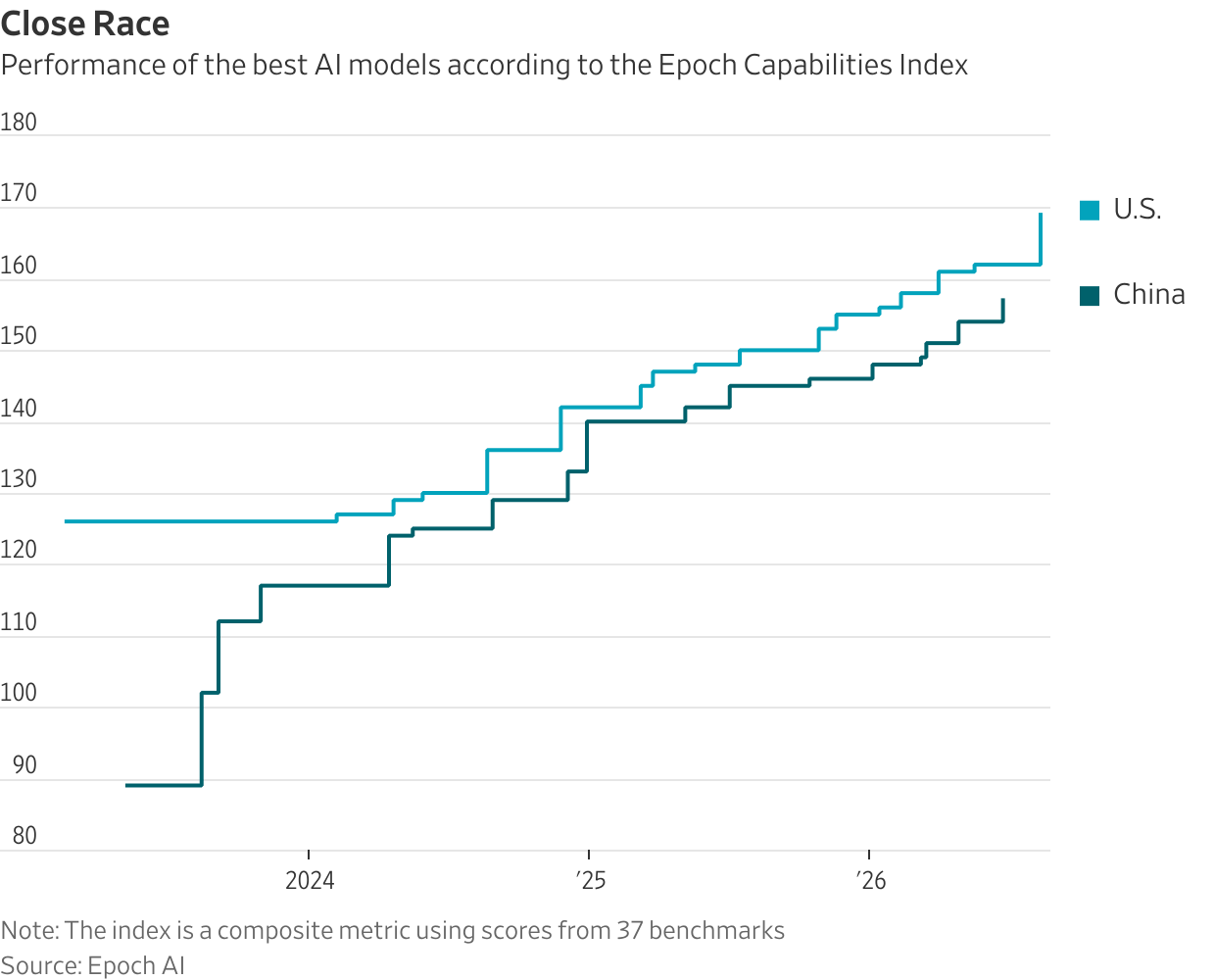
Some U.S. researchers, including OpenAI executive Dean Ball, say distillation might have helped Chinese companies earlier in the AI race but isn’t the main reason for their recent advances.
Is distillation stealing?
Everyone agrees that some types of distillation are fine—for example, when a company such as Apple distills its own model to produce a streamlined version usable on smartphones. Distilling open-weight models, which are generally free to download and modify, is also widely accepted.
When AI developers distill closed models such as Claude, it is a tougher question. By itself, this distillation probably falls short of theft, according to some legal specialists. They say the output of AI models is unlikely to be considered intellectual property akin to a book or a movie. Even if it were, distillers aren’t directly copying that output, just using it to learn, like an aspiring writer reading books.
But the U.S. says Chinese methods of distillation are illicit. Anthropic in February said Chinese companies used “fraudulent accounts and proxy services to access Claude at scale while evading detection.”
What is the U.S. government doing about the issue?
Treasury Secretary Scott Bessent suggested in July that the U.S. might punish Chinese AI companies by putting them on a U.S. blacklist.
“When PRC [People’s Republic of China] firms conduct covert, industrial-scale distillation attacks that cross the line into IP theft, sanctions and Entity List designations will be on the table,” Bessent wrote on X.
The U.S. security agencies called on companies and the government to cooperate better to defend themselves against large-scale distillation, but didn’t discuss specific sanctions on China.
Could U.S. companies sue their Chinese rivals?
Anthropic’s terms of service prohibit Chinese companies from using Claude, with other U.S. companies setting similar rules. Some companies say in their user policies that distillation for developing competing models isn’t allowed.
Some lawyers advising AI companies say American companies could sue Chinese rivals for breaching the terms of service. The American companies could argue that their sales are damaged by Chinese distillation, since distillation could allow Chinese rivals to develop competitive models at lower cost.
However, gathering conclusive evidence would be difficult, especially if the Chinese companies conducted their distillation through overseas middlemen. Meanwhile, prolonged court battles offer little upside in an industry moving at breakneck speed, they say.
What is the impact of the distillation debate?
AI issues may come up at the Trump-Xi meeting set for late September in Washington. If Bessent follows up on his threat to blacklist Chinese firms, U.S. and other users might find their access to Chinese models blocked. U.S. sanctions or lawsuits could hurt Chinese developers.
A July open letter by companies including Nvidia and Microsoft cautioned against “sweeping restrictions on techniques that play an important role in AI innovation,” and said any unlawful distillation “should be addressed through targeted legal and commercial frameworks.”
Write to Raffaele Huang at raffaele.huang@wsj.com
See Less
Indian-origin couple gets AI college named after them in US, donates $20 million
By Sohail Khan · 10 Sep
Leave a Reply