India’s round-the-clock Asian Games medical duty: 2am calls, 120kg of medicines, 450kg of equipment
“It’s like a war zone. You’ve got multiple fronts at multiple areas, and you have to have real-time monitoring.”
This is how Dr Dinshaw Pardiwala, India’s chief medical officer (CMO), describes the challenge he and his six-member team — including two more doctors — face when monitoring 700 Indians at the Asian Games, including the athletes and officials.
Pardiwala has his hands full as there is no athletes’ village — where everyone is under one roof — at these Asian Games. Instead, India’s best are in hotels across Nagoya, the Aichi prefecture and Tokyo.
Story continues below.
Subscribe to see fewer ads.
For the most scattered Asian Games in history, India has taken to Japan 450 kg of recovery and physiotherapy equipment, and 120kg of medicines. “It’s a bit of a challenge. It’s impossible for three doctors to be evaluating those patients and handing out medicines,” says Pardiwala, who has treated some of India’s top athletes, including Virat Kohli, Jasprit Bumrah, Mirabai Chanu, PV Sindhu and Vinesh Phogat.
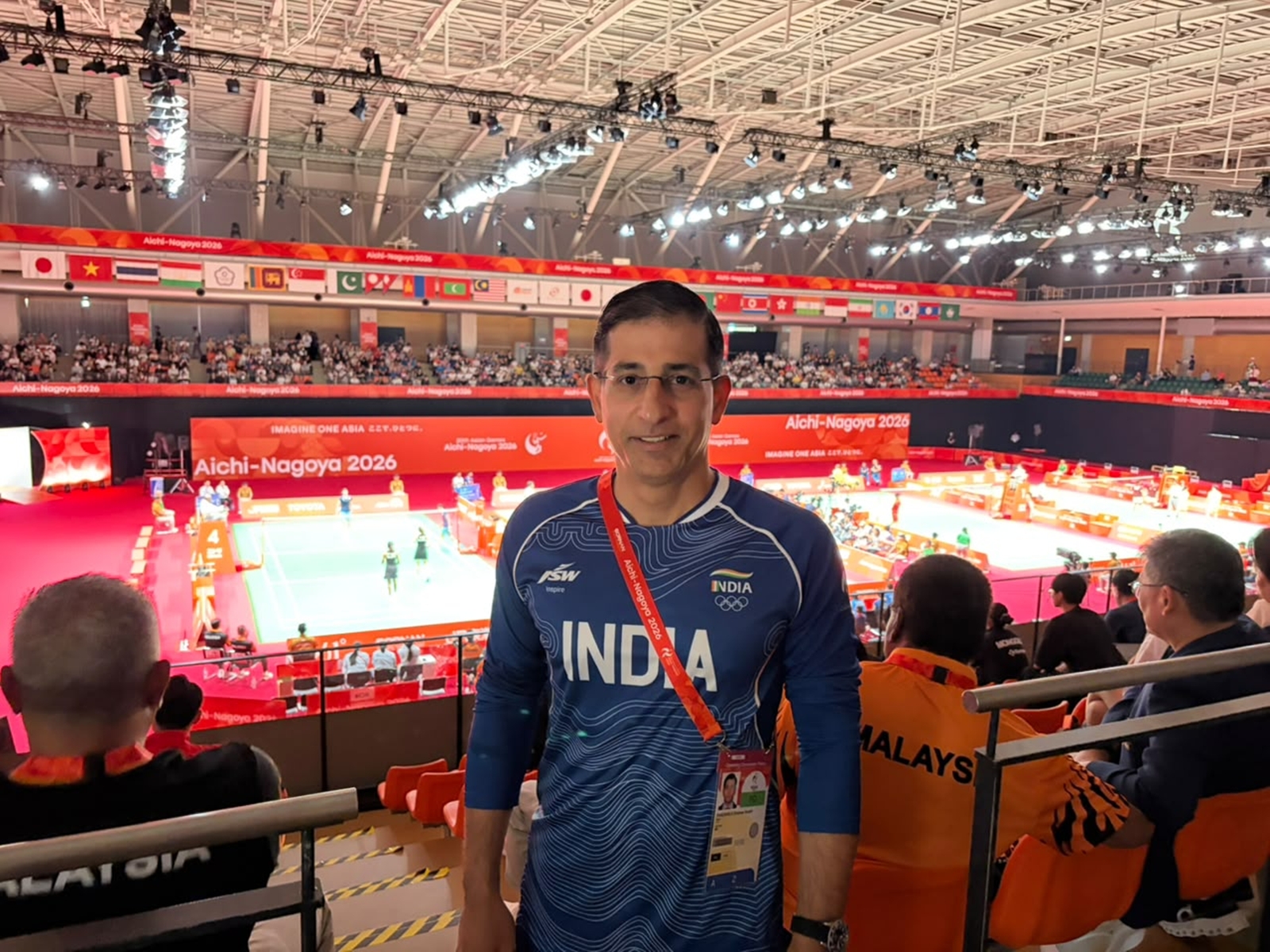 Dr Dinshaw Pardiwala, India’s chief medical officer (CMO) at the 2026 Asian Games.
“We’ve got medicines for a broad range of problems to cover the entire contingent of 700-plus. For aches and pains, for upper respiratory tract infection, for GI (gastro) upsets, we’ve got stuff for gynecological issues,” Pardiwala, whose day starts early and ends after midnight, says.
At 9 pm every day, India’s CMO joins a virtual meeting with around 45 people — chef de mission and deputies, team leaders from different sports, doctors and physiotherapists.
“All of the events of the day have been discussed. What’s going to happen the next day is discussed, what challenges have been faced, and immediate resolution of those challenges also needs to be done,” Pardiwala says.
Story continues below this ad
By then, the six-member medical team may already have dealt with 15 or 16 athletes — the average calls per day here during the Asian Games. The night is not necessarily quieter. Pardiwala has had calls at 2am. Doctors are conducting tele-consultations with athletes in different parts of Japan, medicine starter packs have been distributed to teams and physiotherapy equipment is being moved from one location to another.
The initial plan, Pardiwala adds, was to have a central recovery room at the Athletes Plaza, where the Indian Olympic Association’s (IOA) organisational spaces are located. But last-minute accommodation requirements meant that space had to be converted into rooms. The recovery room was gone, and the medical team had to be spread out to cater to the needs of different Indian teams.
To help with the recovery of the contingent, there are four folding physiotherapy beds and a fifth portable one that can be moved between teams. Five portable ice baths have been brought to Japan, including single-person baths set up in Tokyo for the swimmers.
Three devices provide cryocompression, combining cold therapy and compression to help with painful joints and muscles. One is kept at the central location, while two are moved to wherever they are required. There are six Normatec air-compression devices for upper and lower-limb recovery, along with therapeutic ultrasound and electrotherapy equipment.
Story continues below this ad
The logistics do not end with getting the equipment into Japan, which itself cost approximately Rs 50 lakh according to an IOA official. It has to be also brought back home for using it at future Games.
Carrying medicines presented a particular challenge. Japanese regulations require them to be kept under lock in one central location. So while the recovery equipment is spread around, India maintains a central medical store at the container accommodations at Garden Pier. The doctors too have to get temporary licences.
Respiratory infections
Pardiwala and his team keep an eye out for symptoms of respiratory infections. Previous ‘medical surveillance’ at major Games, he says, has shown upper respiratory tract infections to be the most common ailment among athletes, followed by aches and pains and then injuries. “It’s surprising. You think that it’s going to be injuries and muscle aches. But if you look at every contingent, not just the Indian contingent, the number one illness is upper respiratory tract infection.”
The medical team has mapped hospitals across Aichi and Nagoya according to where the athletes are staying and competing. But even that is not as straightforward as knowing the nearest hospital.
Story continues below this ad
“As per the prevailing rules, we cannot go there directly. If we have to go to a hospital, we have to inform the Asian Games Central Medical Committee, then they will get the appointment and tell us where to go,” Pardiwala says. “Since we have already identified hospitals, we tell them that we are at this place, and this is where we need to go.”

I don’t believe in age, I believe in science: Shruti Vora
By Sohail Khan · 22 Sep
A pleasure to play against stronger teams: Khalid Jamil
By Sohail Khan · 22 Sep
Asian Games hockey: India thrash Sri Lanka 16-1 for second big win
By Sohail Khan · 22 Sep
Leave a Reply