India’s pastoralists deserve a new tale to tell
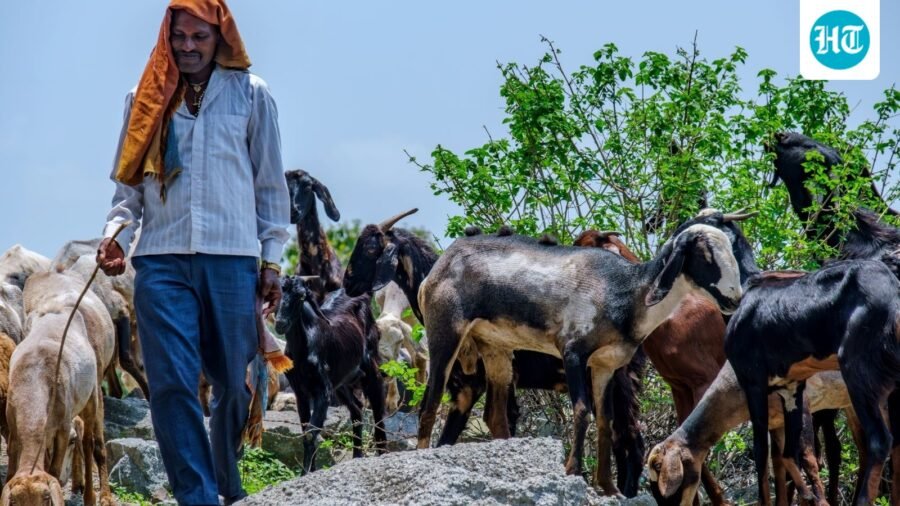
Pastoralists are environmental stewards of the lands their livestock grazes on, not just extractors of value
Published on: Sep 3, 2026, 09:35:53 IST
Prefer HTon Google
Share via
Copy link
All in all, it’s been a good year for a sector that has remained largely invisible. After decades of neglect, the issues facing pastoralist communities and grasslands have finally come into sharper global focus — 2026 has been declared the International Year for Rangelands and Pastoralism, with the goal of improving land governance, encouraging investment in the ecosystems that make pastoralism productive, and strengthening market linkages. For India’s nearly 60 pastoral castes and ethnic groups, this is a real morale boost.
The just-concluded United Nations Convention to Combat Desertification (UNCCD COP17) in Ulaanbaatar, Mongolia, followed up with commitments, including a $1.3 billion finance package for land restoration and drought resilience, and a $1.2 billion Rangelands Flagship Initiative for pastoralist livelihoods. As part of this, India’s environment minister recently launched a guide to the country’s grasslands and other open natural ecosystems.
This encouraging news took me back to a field trip with my team to understand what is happening on the ground to the country’s grasslands, and to the lives and livelihoods of the pastoralists who depend on them.
We were driving through Pune district, the new highway cutting through harvest-ready fields with ripened bajra swaying gently in the breeze.
We soon came upon a herd of goats and sheep, loosely corralled around makeshift tents put up by Dhangar pastoralists. They were on an increasingly uncertain, unmapped journey from Baramati, where their families are anchored, to the Konkan coast — or wherever shelter, fodder and water could be found. Here, they had camped on a friendly farmer’s land, in exchange for the rich fertiliser their animals would leave behind before the group moved on. A few women tended to the animals; the men cooked on an open fire. We settled down under the open sky with the Kokre family, and soon shared a hot cup of tea boiled with freshly drawn sheep milk.
Our hosts told us many stories, some hopeful, some heartrending — echoing tales we’d heard from herders on the Himalayan slopes and in the deserts of Jaisalmer and Kutch. The good news: Meat and milk still fetched decent prices. The sad news: It was ever harder to find greener pastures to live life on the move. There were the old threats of predators and shrinking commons, and the newer threat of solar and windmill plants fracturing grazing corridors. “Every night, we worry about where we will set up safe camp,” said Sampath Kokre. “It is hardest for the women.”
Hidden from the gaze of urbanites, there are anywhere between 10 and 12 million pastoralists in India. For the first time, pastoralist livestock was counted separately as part of the five-yearly livestock census, so better data will soon emerge. Found across 24 states and Union Territories, pastoralists are often denied access to grazing lands and water bodies, treated with disrespect, and struggle to be recognised as sustainable, highly productive contributors to a climate-resilient economy. There has long been an assumption that pastoralism would dwindle as settled agriculture grew. Luckily, that hasn’t happened — testimony to the resilience of these communities, and to the fact that, as a production system, pastoralism makes both ecological and economic sense. It is sustainable and profitable, which is why pastoralists have adapted to shifting political, market, climatic and regulatory conditions.
Not many people realise that these nomadic communities manage 30% of India’s livestock, generating an annual turnover of about $11 billion. With more than 500 million animals, India has the largest livestock population of any country. Pastoralist herds include cattle, buffaloes, camels, yaks, sheep, goats, ducks, pigs, and donkeys. In drylands such as the Thar desert and high-altitude ecosystems such as Ladakh, where settled agriculture cannot succeed, they convert water and soil into meat, milk, wool, hide, and manure. Pastoralism contributes 10-12% to India’s dairy and 70% to its meat economy. The next time you feast on biryani or enjoy a milkshake, think of where the milk and mutton might have come from.
Then, there are the other animal products. India is the world’s second-largest wool producer, producing 35 million kg a year, 95% of it from pastoralist herds. Sheep’s wool is excellent for acoustic and thermal insulation, and sought after worldwide for its biodegradable, sustainable properties — Mercedes-Benz, for instance, blends sheep’s wool with polymers for seat upholstery and sound/thermal insulation. Deccan wool has properties similar to styrofoam and could replace environmentally harmful packaging materials. Wool is also high in phosphorus, and a substantial share of India’s agriculture depends on organic fertiliser from pastoralist livestock dung.
Yet, the animals need grazing lands. Sixteen million hectares of grassland cover just 5% of India — an area roughly the size of Bangladesh. Once dismissed as wasteland, grasslands are slowly being understood for the many ecosystem services they provide, including the sequestration of carbon at a significant scale. These open natural ecosystems (ONEs) harbour migratory and endemic bird species such as the critically endangered Great Indian Bustard, and are home to iconic animals such as the blackbuck, snow leopard and rhino, along with smaller creatures like the jungle cat and numerous reptiles and insects.
It is now widely acknowledged that pastoralism and grazing sustain the ecological functioning of grassland ecosystems — maintaining grass diversity, recycling nutrients and keeping invasive species at bay. Pastoralists are environmental stewards of the lands their livestock grazes on, not just extractors of value.
Will the developments of this year deepen our understanding of — and respect for — the vital role rangelands and pastoralism play in sustaining biodiversity, storing carbon, and bringing food and fabric to our homes? If so, the Dhangars, like their counterparts, will have a different story to tell.
Rohini Nilekani, chairperson, Rohini Nilekani Philanthropies, is the author of Samaaj, Sarkaar, Bazaar – A Citizen-first Approach. The views expressed are personal
Get Current Updates on India News, Elections 2024, Lok sabha election 2024 voting live , Karnataka election 2024 live in Bengaluru , Election 2024 Date along with Latest News and Top Headlines from India and around the world.
See Less

TQWL on your train ticket: What it means, confirmation chances and boarding rules
By Sohail Khan · 29 Sep