India’s bowling attack paid the price for not having a wicket-taker
Story continues below.
Subscribe to see fewer ads.
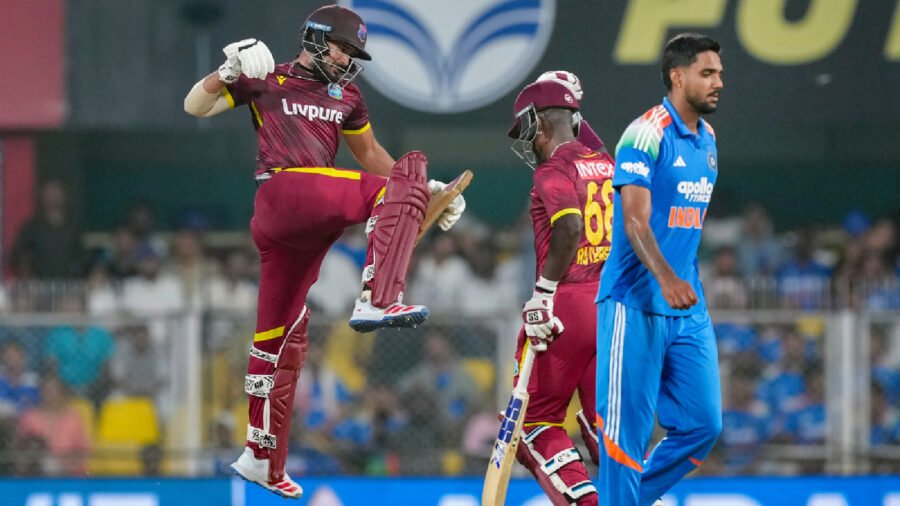
Agreed that the firm was without their two most lethal seam acts. Jasprit Bumrah in Asian Games and Mohammed Siraj benched for reasons best known to the team management. They were sans their most trusted spin-bowling all-rounder, Axar Patel. The surface was flatter than a slab of marble; the heat and humidity were exhausting. Yet, for all the considerations, the Guwahati run-bath was another damning verdict on India’s shallow bowling depth, their lack of smarts and cunning on a surface that showered little kindness on them, a year away from the World Cup.
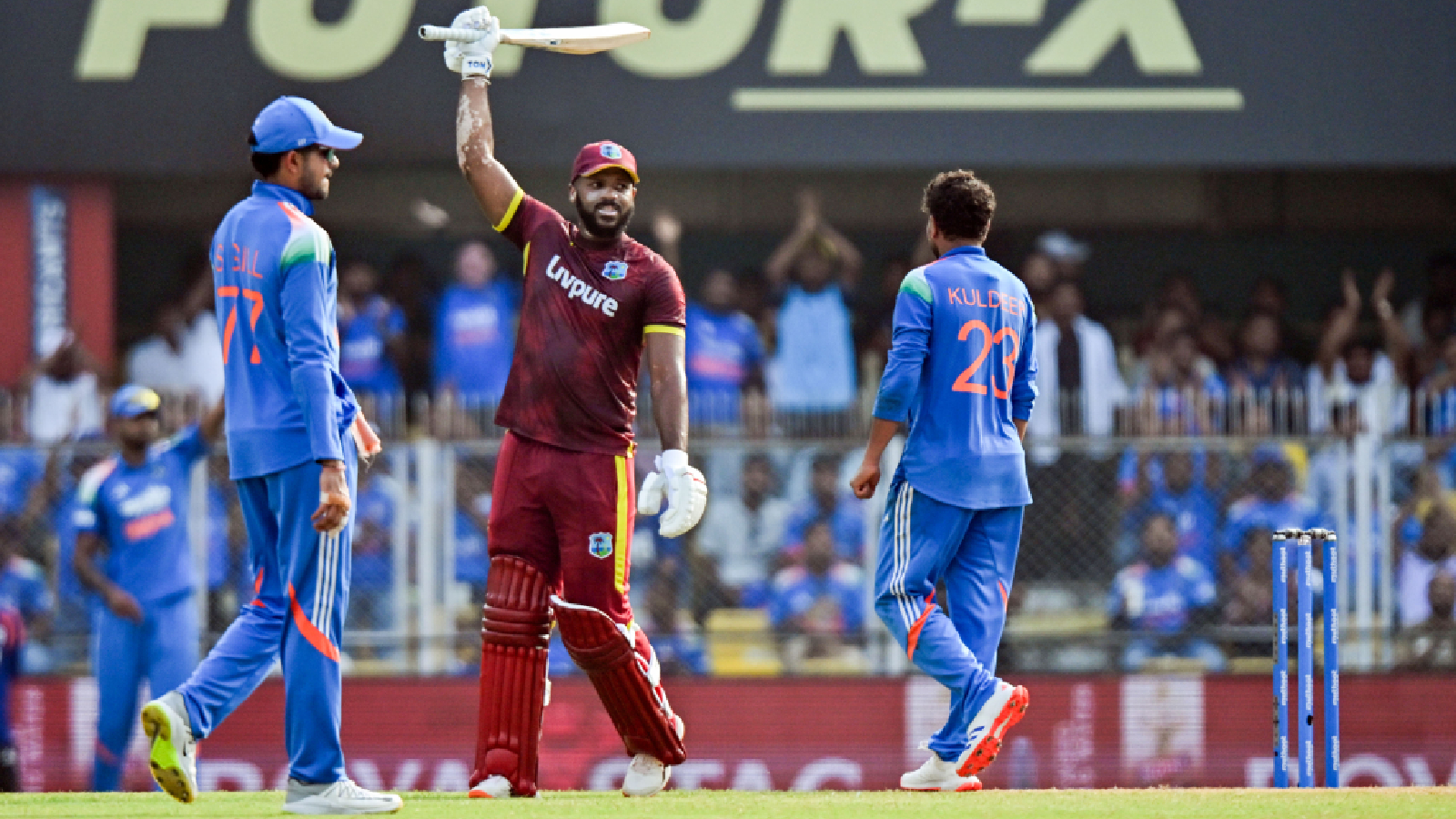 West Indies’ John Campbell celebrates his 65-ball century during the 2nd ODI match between India and West Indies at ACA Stadium, in Guwahati on Wednesday.
No improvisation
The bowlers did not improvise their preset plans. Prasidh kept mixing his formulaic lengths, too full when he bowls full, or too short when he trades the shorter length. John Campbell read him like a soothsayer; he biffed the short ball, he bludgeoned the full balls. A ploy was devised to lay the short-ball snare. But the bouncers were so wayward that Campbell simply flayed them through the gaps without much ado. For all his height and the steep bounce Prasidh could generate, he splurged them with his utter lack of discipline. He is at best a three-decent-overs-a-spell bowler. Anything more his lengths go awry. Unsurprisingly, Campbell smashed him for 22 runs in the fourth.
It was an over that presumably shifted the game’s tempo. From the fourth gear, Campbell struck the supersonic mode. He and West Indies knew there would be little resistance on their road to a mammoth total, Kuldeep Yadav’s twirlers aside. Debutant Auqib Nabi, in search of elusive movement, fed full balls that begged to reach the fence. When the conditions don’t align and he doesn’t purchase swing in the air or seam movement off the deck, he becomes a boundary-spitting outlet. His first three overs in international cricket cost him 35 runs. His death-over spell was commendable, but figures of 8.5-0-84-0 barely fuels optimism.
Under the scorching Guwahati sun, India’s think tank froze. Virat Kohli and captain Shubman Gill were engaged in long chats. Ravindra Jadeja and KL Rahul chimed in with their counsel. But Campbell’s march continued to a 65-ball hundred, an exhibition of muscle as well as an improvised late-cut. Barring Kuldeep, none barely made him rethink his methods.
Story continues below this ad
Gurnoor Brar coerced bounce and lift, but bowled a yard shorter to trouble Campbell, or later Shai Hope. Brar hustled a tiring Campbell into a mistimed pull to the hands of Naman Dhir. But the glut of runs did not stop. Brar looked the most promising of them, a diamond in the rough, even though he narrowly escaped a humiliating century (10-0-96-2).
Dhir put in an earnest shift—letting 6.16 runs an over, he was India’s stingiest bowler. But India required a wicket-taker. And there was none until the visitors lost wickets in search of quick runs after the 40th over.
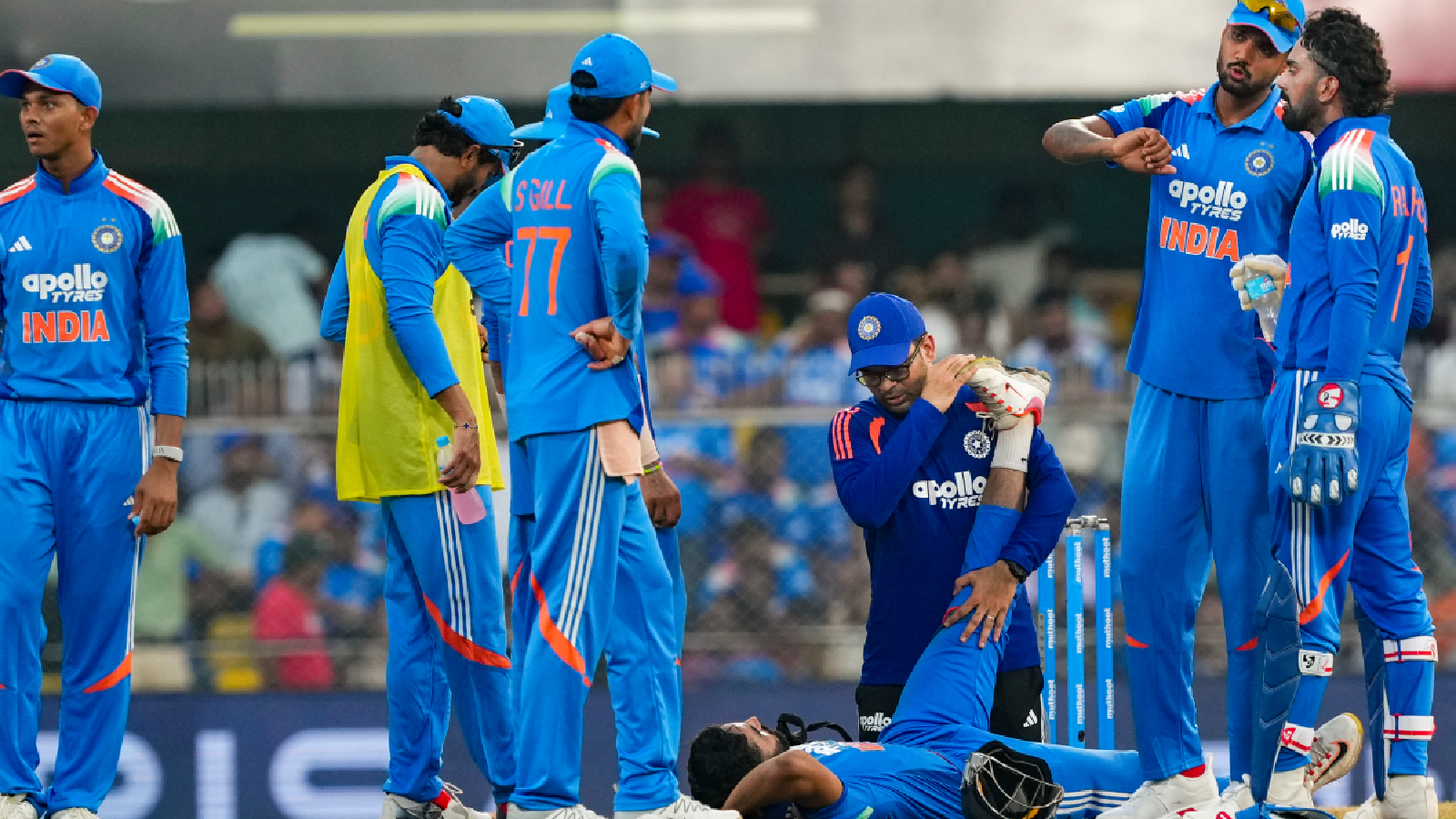 India’s Naman Dhir stretches during the second One Day International (ODI) cricket match between India and West Indies, in Guwahati, Wednesday, Sept. 30, 2026.
The departure of John Campbell made little difference to the game’s tempo. Hope and Amir Jangoo took over. The technically-sturdy West Indies captain pulled and cut Brar with elan. He needn’t necessarily err on the shorter side for Hope to pull him. When he overcompensated with the fuller ball, he drove deliciously on the rise. The skies over the arena darkened, and as did the mood on the ground and in the stance. The pair stitched an 82-run stand that shut out hopes of India’s comeback. Jangoo soon completed a pugnacious hundred himself.
Most damaging was that India couldn’t wrestle control at any stage of the game. The first 15 overs yielded 136 runs; the middle phase cost them 193 runs (in 25 overs); the last ten bled 76 runs, a relatively comforting period. A graver cause for introspection was India’s blandness, their ineptitude in executing variations. Not that they didn’t try cutters or yorkers, but the execution was so horrible that they shelved the plans altogether. The field setting was reactive and ponderous. Even Kuldeep, whose variations still confounded the batsmen, was not handed an attacking field.
Story continues below this ad
The worst India’s management could do about this game is to call it just another day. Or an aberration. It was not. But a prognosis of gross incompetence that should be reviewed and revisited.

Barbed wire, sniffer dogs and 40 years of waiting: Srinagar readies for Irani Cup
By Sohail Khan · 30 Sep
India grind out semi-final win to set up Asian Games hockey final with China
By Sohail Khan · 30 Sep
Maximum stakes in one-sided rivalry: India face Pakistan in semis
By Sohail Khan · 30 Sep
Leave a Reply