In conflict with the Houthis, Saudi Arabia is facing a two-strait dilemma
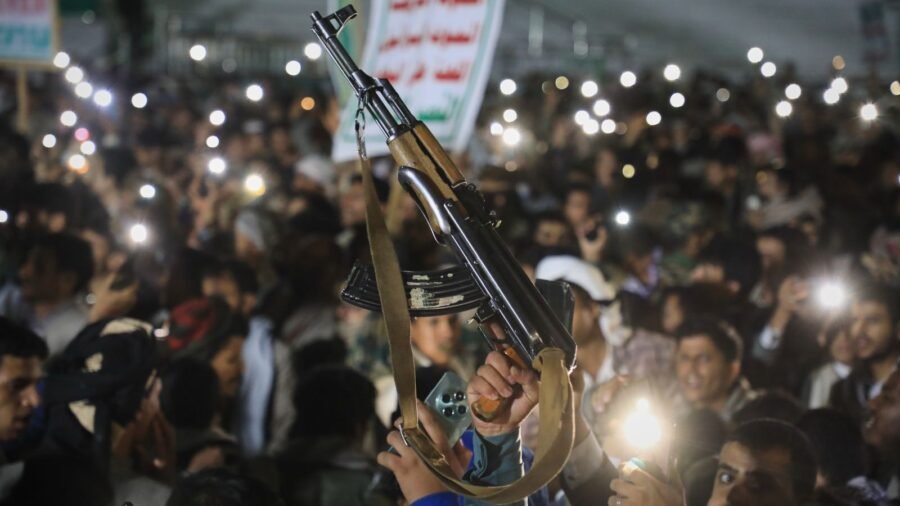
Yemen’s civil war, which commenced in 2014 in the aftermath of the Arab Spring, has flared up with renewed intensity. The latest offensives by Ansar Allah, widely known as the Houthis, have resulted in their control of the Red Sea coast of Yemen, including the strategic port of Mocha, from which, incidentally, café mocha originates. The Houthis now also control the vital islands across the Hanish–Zuqar archipelago between Yemen and the Horn of Africa. In short, the Bab el-Mandeb Strait is now under effective Houthi firepower.
The Bab el-Mandeb , situated at the mouth of the Red Sea, is the sole gateway to the Suez Canal from the Arabian Sea, carrying roughly 12 per cent of global trade. At its narrowest point between Yemen and Djibouti, the strait spans about 29 kilometres,While the Houthis have threatened the waterway with long-range weapons in recent years, occupying Perim Island provides them an unobstructed line of sight over commercial traffic, placing them within direct range of artillery and short-range missiles from the coast.
Advertisement
The roots of the Saudi-Houthi confrontation trace back to the aftermath of the seven-year war with the Saudi-led coalition that began in 2015. The Houthis remained deeply frustrated with the terms of the UN-brokered truce in 2022. While the truce eased previous conditions, it still imposed restrictions, requiring flight clearances to be granted by the internationally recognised Yemen government based in Aden, as well as strict inspections on all maritime cargo destined for Houthi-controlled areas. More importantly, the Houthis were aggrieved that they were unable to get any share of Yemen’s oil revenues, and so, for years, they have not been able to pay their civil servants. Though the truce officially ended after six months of its implementation, the Houthis did not have any choice but to endure the restrictions and grew increasingly frustrated with the “no war, no peace” stalemate and the lack of progress toward a political settlement.
That dynamic shifted dramatically when cracks within the anti-Houthi alliance widened. The rift between Saudi Arabia and the UAE, which culminated in Abu Dhabi completely withdrawing its presence from Yemen early this year, sharply exacerbated tensions between rival local factions. This friction between the UAE-backed forces controlling Mocha and key strategic islands and their Saudi-backed counterparts ultimately provided a critical opening for the Houthis.
The last straw came in mid-July when Saudi fighter jets attacked and damaged the Sana’a airport runway to prevent an Iranian plane from landing without the requisite clearance. This led to the Houthis declaring a naval blockade on Saudi Arabia, followed by regular attacks on Saudi tankers in the Red Sea as well as its oil-related facilities. By the end of August, the Houthis initiated heavy fighting that culminated in the capture of Mocha and the strategic islands in the strait on September 10 and 11. The lack of support from Saudi-backed forces, aggravated by internal infighting with the UAE-aligned factions that were deployed along the coast, enabled the Houthis to seize the Bab el-Mandeb with minimal resistance.
Advertisement
The capture of the Bab el-Mandeb has major implications for Saudi Arabia and the Asian economies that import Saudi crude. Following the disruption in the Strait of Hormuz, Saudi Arabia has relied primarily on oil exports from its Red Sea port of Yanbu, supplied by the 1,200-kilometre East-West pipeline from its eastern oilfields. Nearly 70 per cent of this oil was transported to Asia through the Bab el-Mandeb prior to the Houthis’ naval blockade in July. Since then, flows through the Red Sea strait have dwindled sharply as the Saudis increasingly rerouted Asian shipments through the Suez Canal and around the African continent.
In fact, Saudi Arabia was compelled to curtail its crude oil production to the lowest level in August this year to 6.2 million barrels per day (bpd), compared to over 10 million bpd in January. Compounding the crisis, following their capture of the coastline, the Houthis issued an explicit warning: While general commercial traffic through the Bab el-Mandeb will be spared, all Saudi-linked vessels will be targeted. As a result, Riyadh will have little choice but to reroute Asian-bound crude around the southern tip of Africa. The resulting increase in freight costs and voyage delays leading to storage constraints could soon pressure Saudi Arabia to further cut its oil production.
Facing such dire prospects, the Saudi Crown Prince was reported to have spoken to President Trump seeking direct US military intervention. While promising intelligence, Trump was said to have refused immediate direct involvement. The US does not wish to open another front in its ongoing confrontation with Iran, already constrained by depleted arsenals and naval resources stretched thin in enforcing the maritime blockade against Tehran. In addition, any direct American or Western intervention is bound to lead to the Houthis broadening their strikes, with immediate repercussions for global oil markets. Trump is keen to avoid more spikes ahead of the US midterm elections in November, especially with Brent crude already trading at about $108 per barrel.
As for the Mecca pact partners, both Pakistan and Turkey seem reluctant to get involved militarily in Yemen, reserving their position only in the event of an actual territorial invasion of Saudi Arabia. They are also concerned about the prospect of provoking the Houthis further. Recall that in 2015, Pakistan refused the Saudi request to take part in the Yemen war, with Pakistan’s parliament unanimously voting against any involvement, notwithstanding the 1982 bilateral security agreement between the two countries. Adding to Riyadh’s predicament, operations along the East-West pipeline have now been temporarily suspended following a long-range missile strike by Iraqi militias.
Thus, Saudi Arabia is once again confronting the reality of US reluctance to come to its rescue, a dynamic that will have profound implications for the regional security architecture that emerges in the future. The Houthis have proved themselves to be hardy and resilient fighters. When the US targeted them in 2025, they were reported to have shot down several American drones and nearly hit a number of fighter jets, as well as a Turkish drone operated by the Saudis. Though Israeli strikes killed their prime minister and several top civilian administration officials in August 2025, they quickly recovered. Neither the Saudi-led coalition in 2015 nor the US strikes last year succeeded in subduing the Houthis, with both campaigns ultimately ending in ceasefire arrangements. In addition, the Houthis have developed their own supply networks, are no longer solely dependent on Iran, and are now benefiting from military equipment abandoned by the factions that previously controlled the coast.
While the Houthis have taken control of the Bab el-Mandeb to force Riyadh into conceding to longstanding demands of lifting all air and maritime restrictions, granting a sizable share of Yemen’s oil revenues, and securing de facto recognition, the Saudis are unlikely to yield easily. Emboldened by recent successes, the Houthis have already started moving to capture Marib, east of Sana’a, the centre of Yemen’s oil and gas industry, to further strengthen their bargaining position. The takeover of Bab el-Mandeb has dramatically strengthened both Houthi and Iranian leverage by complementing control over two of the world’s critical maritime chokepoints on both sides of the Arabian Peninsula. Iran has added ending the “blockade of Yemen” as one of its conditions for a lasting settlement with the US.
Facing a reluctant US, hesitant Mecca agreement partners, and two-sided maritime chokepoints, Saudi Arabia may have to concede to Houthi demands that it has resisted for years, unless its counterattacks are swiftly able to succeed.
The writer is former ambassador to Egypt and former Permanent Representative to the Arab League


Kishau Project: Why was the 660 MW dam delayed, and what changed?
By Sohail Khan · 15 Sep
United no more? How the UK came together, and may come apart
By Sohail Khan · 15 Sep
Leave a Reply