In 2019, Los Angeles announced a test of a road mix of old asphalt and plastic bottles to repave without new asphalt
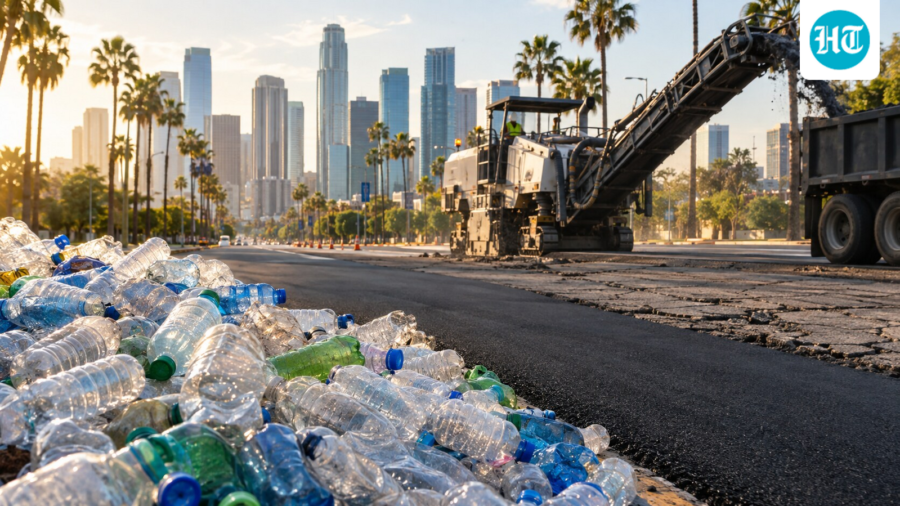
In 2019, Los Angeles announced a test of repaving streets with old asphalt and recycled plastic bottles, adding no new asphalt and aiming for tougher roads.
Published on: Sep 30, 2026, 19:15:07 IST
Prefer HTon Google
Share via
Copy link
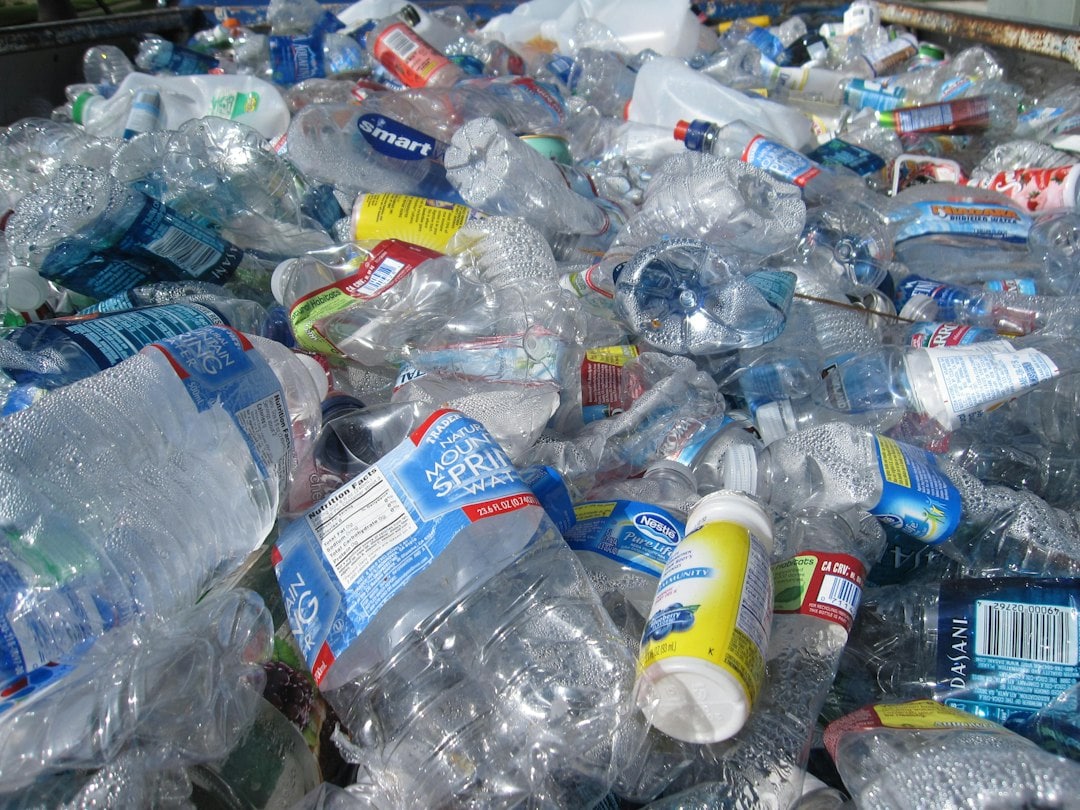
A plastic water bottle takes a few seconds to use and a long time to break down. A 2021 review in Sustainability by researchers at Universiti Putra Malaysia and Misurata University notes that PET (polyethylene terephthalate), the plastic used in drink bottles, is not biodegradable and is a real environmental hazard. So what do you do with that waste? Some engineers say the answer might be under our feet.
A road made from its own past
In 2019, Los Angeles announced a pilot project to introduce a new way to fix worn-down streets. The material was first laid in December 2020 on a stretch of 1st Street between Grand Avenue and Hope Street downtown. The process was developed by TechniSoil Industrial, according to Caltrans. It involves the use of recycled PET instead of bitumen, the residue product of oil refining that binds asphalt. A special machine known as a recycling train grinds the top few inches of road surface, crushes the materials, and mixes them with liquid plastic. The finished road is laid down at the back in one continuous process, and no new asphalt is added. Before this, according to TechniSoil, only underlying layers could be reused, since recycling the uppermost layer made it lose strength. The plastic is intended to provide extra durability.
What the company says
According to Sean Weaver, TechniSoil's founder and CEO, speaking to Fast Company in 2019, recycling a road using the process would reduce its overall carbon footprint by 90 percent. He also pointed to trucks. While the conventional paving method removes 42 truckloads of old material and brings 42 truckloads of new asphalt for each lane mile, this process avoids that hauling. In lab tests, the company calculated that roads could last eight to 13 times longer than standard ones. Later, Caltrans and the company put the estimate at two to three times longer. These figures come from the company, so real streets will have to prove them. Fast Company reported that the city might extend the process to busy truck routes near the Port of Los Angeles, but no such expansion appears to have been publicly reported. TechniSoil also planned to expand to other cities; Caltrans tried the process on a roughly 1,000-foot stretch of highway in Oroville in 2020.
What research says about plastic in roads
Roads deteriorate over time due to high traffic that causes rutting on the road surface, as well as cracking. According to the Sustainability review, the use of PET in asphalt increased its performance against these two issues. Most studies in the review found that small amounts, 2% to 4%, improved rutting resistance. PET was used as an additive or a fine-aggregate replacement, and not a replacement for bitumen, so its findings may not carry over directly to the Los Angeles project. There are also limitations, as the review points out. PET has a melting point of around 250 degrees Celsius, which makes it difficult to blend into asphalt binder using the wet process. It is also not always effective at adding elasticity, especially during sudden temperature drops.
The issue of microplastics
Plastic in a road can be a cause for concern. Microplastics are pieces of plastic less than 5 millimeters in size. Researchers from Chongqing Jiaotong University and Central South University, in a 2025 review in Materials, pointed to toxic emissions during production, microplastic formation, and ecological contamination. PET and polystyrene are more prone to breaking down into microplastics than other plastics, it says. The authors recommend using a balanced approach and monitoring microplastics in stormwater and soil. The authors also cite a life-cycle assessment, which indicated that PET combined with reclaimed asphalt helped cut down on carbon dioxide equivalent emissions up to 26.2 percent. However, it’s worth noting that the figure comes from a different kind of analysis than TechniSoil's 90 percent claim, so the two cannot be compared directly.
What this could mean for cities
It is an appealing concept: making use of the existing road and reused bottles. However, long-term field data on the project appear limited. Lab results are promising, but long-term results on real streets will matter most. Until those results are available, the 1st Street stretch is best viewed as a pilot.
See Less

Iran indicates it’s received an official US response to its latest offer on ending the war
By Sohail Khan · 30 Sep


Leave a Reply