I wore a smartwatch for 10 days, and it changed the way I move, work, check my phone and notice my surroundings
Editorial independence is core to our work. Some links may earn us a commission, without influencing our opinions.
I wore a smartwatch for 10 days, and it changed the way I move, work, check my phone and notice my surroundings
I wore a smartwatch for 10 days to separate genuinely useful features from gimmicks and found several that made everyday tasks simpler and less distracting.
Published on: Sep 16, 2026, 09:00:44 IST
Prefer HTon Google
Share via
Copy link
Our Picks
FAQs
Our Picks
| Product | Rating | Price |
|---|---|---|
OnePlus Watch 2R with Wear OS 4 by Google,Snapdragon W5 Chipset,Upto 100hrs Battery Life,1.43’’ AMOLED Display,100+ Sports Mode,Dual Frequency GPS,5 ATM,IP68 & BT Calling [Gunmetal Gray]View Details
|
₹11,999 |
|

|
Check Offers | |
| Samsung Galaxy Watch 7 (44mm, Silver, BT) with 3nm Processor | Dual GPS | Sapphire Glass & Armour Aluminum | 5ATM & IP68 | HR, SpO2, BP & ECG MonitorView Details
|
₹18,745 |
|
|
|
Check Offers | |
| Amazfit Balance 2 Smart Watch 47mm AMOLED Sapphire Glass Display, Dual Band GPS, 21 Days Battery, 170+ Sport Modes, Hyrox Mode, Accurate Readings, for Android & iPhoneView Details
|
||
|
|
Check Offers | |
| Google Pixel Watch 4 (41mm) – Smartwatch – Lemongrass Active Band – Wi-FiView Details
|
₹39,800 |
|
|
|
Check Offers | |
| Apple Watch Series 11 GPS + Cellular 46mm Rose Gold Aluminium Case with Light Blush Sport Band – M/LView Details
|
₹56,999 |
|
|
|
Check Offers |

Research-Backed Choices
Every product we recommend is chosen through a combination of Primary Research and Secondary Research.
A smartwatch can seem like a gadget you wear simply because it is convenient, but its usefulness becomes clearer when it stays on your wrist every day. I wore one continuously for 10 days to see which features became part of my routine and which I barely touched. Instead of focusing on specifications or the number of features packed into the watch, I paid attention to how it affected everyday tasks, workouts, notifications, and my general awareness of activity. Some features proved genuinely useful because they saved me from reaching for my phone, while others felt more like things I could live without. After 10 days, the experience gave me a clearer picture of what a smartwatch can realistically add to my daily routine.
1. It made me more conscious of loud environments
I did not expect noise monitoring to be one of the more useful features, but I found myself paying closer attention to how loud my surroundings were once the watch started flagging excessive noise. At a concert, in a particularly noisy workplace, or even near heavy traffic, it is surprisingly easy to underestimate how loud things have become. Having the watch quietly monitor sound levels and warn me when they crossed a potentially harmful threshold gave me a reason to step away or reduce my exposure. I didn't check it constantly, but that was precisely the point. The feature worked in the background and only demanded my attention when necessary.
2. It gave me a better idea of what my heart was doing
Heart-rate tracking was another feature I found more useful over time than I expected. Rather than treating the smartwatch as something I had to interact with, I could simply wear it and let it record my heart rate during workouts, rest, and everyday activities. Alerts for unusually high or low readings added another layer of awareness, particularly because I might not otherwise think to check my heart rate during the day. I would not treat a smartwatch reading as a medical diagnosis, but having this information readily available gave me a better sense of my usual patterns and how my body responded to different activities.
3. It gave me an easy excuse to pause
I have tried meditation apps before, but the biggest problem was remembering to open them. A smartwatch removes that friction. When I needed a short break, I could start a guided breathing exercise directly from my wrist, rather than reaching for my phone and risking distraction. I found this particularly useful during busy periods of the day when I did not want to commit to a lengthy meditation session. A few minutes of guided breathing won't transform my routine overnight, but having something this simple available made it easier to pause, slow down, and reset.
4. It made my lack of movement harder to ignore
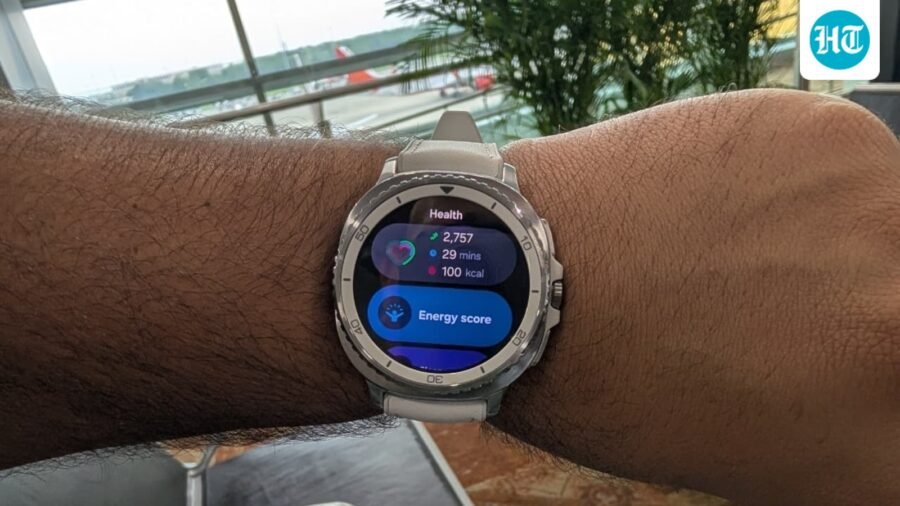
Activity tracking is hardly a new smartwatch feature, but wearing the device throughout the day changed how much attention I paid to it. Seeing my steps and general activity levels made me realise how easily a busy day could pass with very little movement. The reminders to stand up or move after sitting too long were sometimes annoying, but I also appreciated them after hours at a desk. I did not suddenly become a fitness fanatic because of a smartwatch. Instead, it gave me small nudges that made everyday movement more noticeable, whether that meant taking a short walk or simply stepping away from my desk.
5. It reduced my need to carry my phone everywhere
This ended up being one of the biggest practical advantages for me, especially with a cellular-connected smartwatch. There were plenty of situations where I wanted to stay reachable but didn't want my phone in my pocket. Going for a walk, working out or spending time outdoors became easier when I knew I could still receive important calls and messages from my wrist. More importantly, I liked feeling connected without having a smartphone constantly within reach. The phone could stay in my bag or somewhere nearby while the watch handled the things I genuinely needed. That small change also helped me avoid the temptation to pick up my phone just to check one notification.
Loading Suggestions…
Loading Suggestions…
Loading Suggestions…
Loading Suggestions…
6. It changed how I dealt with notifications
This was probably the feature I noticed most often during the day. A smartwatch lets me glance at a notification, decide whether it matters, and move on without unlocking my phone. That sounds like a minor convenience, but I found it removed a surprising amount of unnecessary phone checking from my routine. I could handle a message or call from my wrist while dismissing less important alerts. The distinction matters because picking up a phone to check one notification can easily turn into opening social media or another app. With a smartwatch, I could stay informed without automatically falling into that cycle.
7. It made the useful parts of my phone less intrusive
After wearing a smartwatch continuously, I realised its biggest advantage was that it didn't give me another screen to stare at. It helped me decide when I actually needed a screen. Health and activity features worked quietly in the background, while notifications, calls and messages were available when I needed them. Instead of constantly reaching for my phone to check what was happening, I could let the watch filter some of that information. That made the device feel less like an accessory and more like a practical extension of my daily routine. The features I valued most weren't necessarily the flashiest; they were the ones that saved me a few seconds, encouraged better habits, or helped me stay connected without becoming more distracted.
Q1. Should you choose a premium smartwatch for health tracking or everyday convenience?
If you mainly want to monitor workouts, activity, sleep and heart-related metrics, prioritise a smartwatch with comprehensive health and fitness features. If you want the watch to reduce your reliance on your phone, look for strong notification handling, apps, calling and connectivity. Premium models increasingly combine both, so focus on the features you'll use every day.
Q2. Should you buy a GPS/Bluetooth smartwatch or pay extra for cellular connectivity?
Choose a GPS/Bluetooth model if you normally keep your phone with you, since it can handle supported notifications and connected features through the phone. A cellular model makes more sense if you regularly want to leave your phone behind while still making calls, sending messages and staying connected. Keep in mind that cellular functionality requires a compatible mobile plan.
Also Read:
MacBook storage filling up fast? These 1TB external SSDs offer the space and speed to keep your files moving
I reviewed 5 laptops for office work to see which ones are actually worth carrying every day
Tired of Flat Hi-Fi audio? These 5 soundbars are built strictly for music lovers
FAQs
If you want advanced apps, frequent notifications, calling and deeper smartphone integration, a premium smartwatch with shorter battery life may be worth the trade-off. If you dislike frequent charging or plan to wear the watch continuously for health and sleep tracking, choose a model with longer battery life.
Choose a smartwatch with built-in GPS if you regularly run, cycle, hike or exercise without carrying your phone. If you usually keep your smartphone with you during workouts, connected GPS may be sufficient and can help you avoid paying extra for a feature you may rarely use.
It is one of the first things you should check before buying. Some watches are designed specifically for iPhone or Android users, while others work across both platforms with varying levels of functionality. Choosing a watch that fits your phone's ecosystem can ensure you get access to its full set of features.
See Less


What the new ‘Meta One’ subscription service offers AI power users, creators, businesses
By Sohail Khan · 16 Sep
iPhone Duo is an Air Jordan. The 18 Pro? A Gel-Kayano. Anand Ahuja explains
By Sohail Khan · 16 Sep
Leave a Reply