‘I won’t eat from your hands’: Chef hits back at skin-colour troll
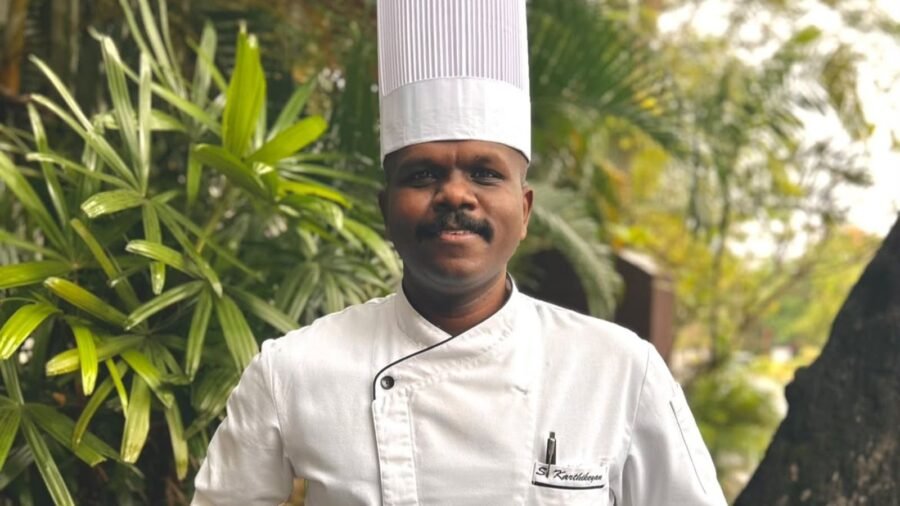
When a racist comment targeted Chef Karthikeyan Selvaraj for his skin colour, he refused to let it slide. Instead of deleting the abuse or responding in silence, he put the comment in the spotlight and answered with the weight of a remarkable career—one that has seen him cook for presidents, prime ministers and royalty. More than a personal response, his message was clear: racism and bullying should never be normalised, ignored or quietly endured.
The culinary wizard, who specialises in South Indian traditional cuisine, told indianexpress.com in an exclusive interaction, “The intent for sharing the post on social media is to bring awareness that bullying or racist comments will not be taken kindly. It should also serve as an example for other creators or anyone aspiring to be one. These types of comments or actions by any individual or group should not be met with silence. It needs to be brought up on social media so that people won’t repeat it again and again. Most importantly, the skin colour/height/weight or looks of an individual should not be a deciding factor of what they can be in their life.”
Story continues below.
Subscribe to see fewer ads.
Responding to the hate comment, which loosely translates to ‘I won’t eat from your hands…your hands are dark…’, the 36-year-old, who believes in the quote, ‘The only time you should look down on someone is just to admire their shoes’, had written on social media, “Well, well, this dark-skinned chef has served the following,
1. A couple of heads of the Government in India
2. A couple of Presidents of India
3. Prince Charles
4. King of Belgium
5. Very kind-hearted guests across the globe”.
“Well, the list is too big…it won’t fit in the description,” he added.
Indeed, his career is remarkable. Chef Karthikeyan, who started with the Taj Group of Hotels as a management trainee in 2008, grew into an executive chef and worked at hotels in Chennai and Madurai in Tamil Nadu, and Kochi in Kerala. “The values and social commitments of the Tata Group and Taj Hotels inspired me to be a better person both professionally and as a person and trained me to be a good chef and proud to be known as their product. And had great opportunities to work with one of the finest chefs in the country, which made me what I am today,” he shared.
For years, people experiencing bullying have been told: Ignore it. Don’t give them attention. Be the bigger person. “Sometimes that is wise. Not every troll deserves our energy. But silence is not always dignity. Sometimes silence makes prejudice comfortable. When discrimination is public, calling it out can do more than defend the person targeted. It establishes a social boundary: this is not acceptable here,” reflected Delnna Rrajesh, psychotherapist and relationship breakthrough coach.
Story continues below this ad
The incident also raises a much more uncomfortable question. Where did someone learn that dark skin makes another human being less worthy? “Because nobody is born believing that. Colourism is taught in thousands of seemingly harmless moments: praising a baby for being fair, worrying that a daughter has become “too dark”, discussing complexion in marriage conversations, laughing at jokes about skin colour or treating fairness as synonymous with beauty. Then we are shocked when an adult takes the prejudice society whispered for years and types it into a comment box,” Delnna told indianexpress.com.
View this post on Instagram
A post shared by karthi cooks | Karthikeyan Selvaraj (@imkarthi_89)
There is, however, an important difference between accountability and humiliation. Reflecting on the comments that humiliated the troll with phrases like “praying for you to be banned from all restaurants, hotels and cafes…”, and “Of course, this dude is from Noida..”, Delnna noted that calling someone out “should never become an invitation for thousands of people to abuse, threaten or destroy them”.
“If we fight bullying by becoming bigger bullies, we have changed the target, not the culture,” Delnna told indianexpress.com.
What can we learn as a society?
Perhaps we need less “naming and shaming” and more “naming and accountability”, highlighted Delnna.
“Expose the behaviour. Explain why it is unacceptable. Set consequences where appropriate. But leave room for human beings to recognise prejudice, learn and change,” shared Delnna.
Story continues below this ad

‘My HbA1c is 5.9% and FBS is 104 mg/dL. What do I do to bring them back to normal?’
By Sohail Khan · 2 Oct
For constituting poll body, a lesson from the UN
By Sohail Khan · 2 Oct