I discovered Mammootty late. Now I understand why he’s one of India’s greatest
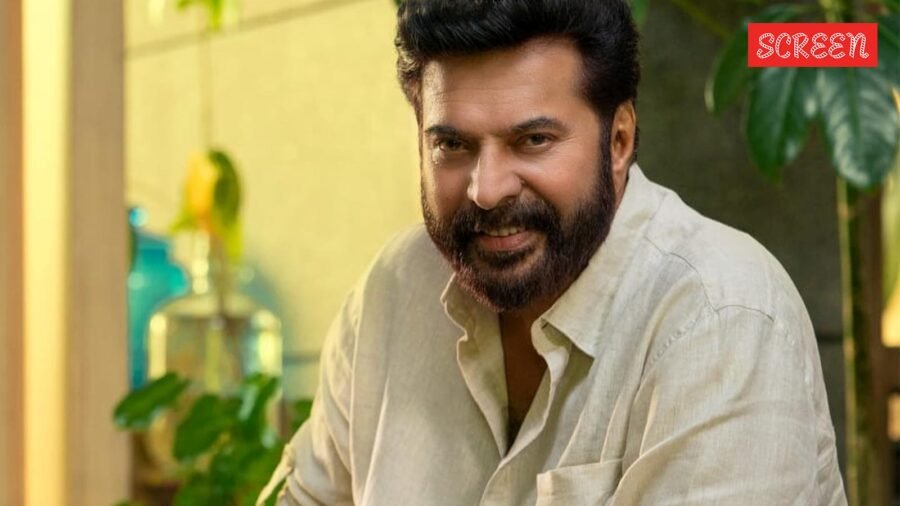
Like many North Indians, my tryst with regional cinema, Malayalam in particular, started with OTT. The first few films I watched were Bangalore Days, Koode, and then Kumbalangi Nights, and somewhere in that run I became a Fahadh Faasil fan. What followed was close to an addiction. I watched everything of his I could find, sometimes without subtitles, and there are messages sitting in Hotstar’s inbox somewhere from me, asking why a Malayalam film had no English subtitles. That’s the kind of viewer I’d become.
Fahadh led me into Malayalam cinema and I watched a fair amount of it — but never a Mammootty or a Mohanlal film. I hadn’t been unaware of their popularity, I had just never watched their films. My Malayali colleagues found this baffling and said so, often. I had a theory about superstar cinema: that a film built around a superstar would be more spectacle than substance. I’d never seen a Mammootty film when I formed that theory. I’d seen enough Hindi cinema to assume the theory travelled. It took me long to find out how wrong that was.
Nanpakal Nerathu Mayakkam
Years later I watched Nanpakal Nerathu Mayakkam. Mammootty plays James, a man who falls asleep on a bus mid-pilgrimage and wakes up convinced he is Sundaram, a Tamil villager who died years ago. It’s a strange film to build around a superstar — no twist reveal, no framing device to explain the transformation away, just a man other people slowly realise has become someone else. I was gobsmacked watching it. Not just by how good he was at holding two people in one body, but by the fact that he’d chosen to make this film at all.
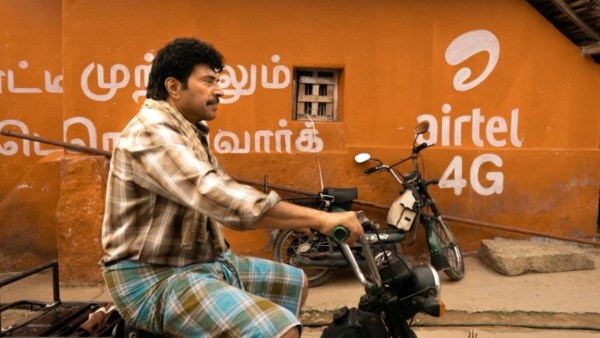 Mammootty in a still from Nanpakal Nerathu Mayakkam.
Kaathal: The Core
If Nanpakal surprised me, this one stunned me. A superstar of Mammootty’s scale playing a closeted gay man was unheard of in Indian cinema. Mathew, his character, isn’t asking for the audience’s approval or forgiveness — he’s just, after decades, no longer hiding. The bedroom scene with Jyotika, who plays his wife, is the one I keep coming back to. There’s no dialogue doing the heavy lifting there. It’s all restraint, and you don’t see Mammooty for a second – it’s just Mathew accepting his truth. What struck me most was that this great actor was choosing to experiment with roles superstars, by definition, don’t touch, because their image usually doesn’t survive the risk.
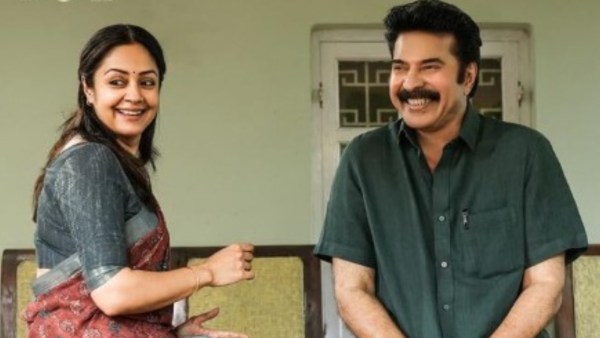 Mammootty and Jyotika in a still from Kaathal: The Core.
Bramayugam, and the pattern I’d missed
By the time Bramayugam arrived, I’d stopped being surprised, which is a strange thing to admit about a film where Mammootty plays a feudal sorcerer named Kodumon Potti, shot entirely in black and white, unravelling inside a single haunted house. It won him his fourth National Award for Best Actor — after Oru Vadakkan Veeragatha and Mathilukal in 1989, Vidheyan and Ponthan Mada in 1993, and Dr. Babasaheb Ambedkar in 1998.
Four awards across five decades is a pattern that took me embarrassingly long to notice.
Kalamkaval gave him a serial killer, Stanley Das, played with none of the stylised menace the genre usually leans on. Dominic and the Ladies’ Purse gave him a small-town detective, sincere to the point of being a little funny, chasing down a stolen purse like it’s the case of his life.
Story continues below this ad
A folk-horror sorcerer and a slightly ridiculous detective chasing a stolen purse got the same level of seriousness from him regardless of how big or small the film was. That range, across genres that have nothing in common with each other, is what made me a fan rather than just an admirer.
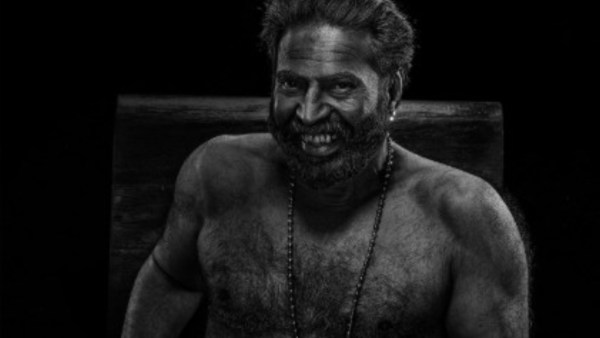 Mammootty in a still from Bramayugam.
Going backward
Once I’d caught up with everything new, Instagram started doing what Instagram does, and I let the algorithm walk me into his older films.
Peranbu had him play a father meeting his disabled daughter for the first time in her adolescence, and failing her, repeatedly, in small and uncomfortable ways with no big redemptive moment. Bhoothakkannadi, from 1997, had him play a clockmaker so timid he carries a torch in daylight because he’s afraid of shadows. Neither film gave him anything resembling a superstar entrance.
I found Vidheyan, where he plays a landlord’s brutalised, submissive labourer for Adoor Gopalakrishnan. I found Thaniyavarthanam, where a superstitious village decides his schoolteacher has lost his mind, and the performance stays quiet even as the character is slowly destroyed. I found Mrugaya, where he went completely de-glam to play a drunk hunter chasing a man-eating leopard .
Story continues below this ad
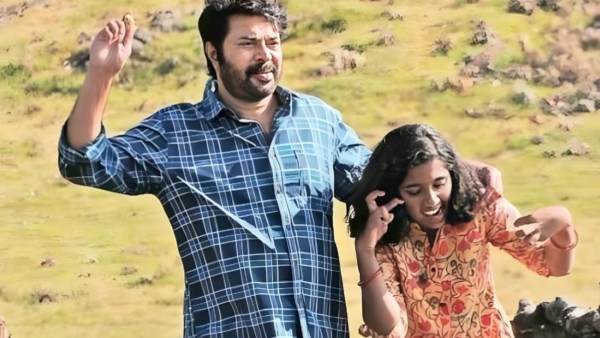 Mammootty in a still from Peranbu.
And running alongside all of it was Sethurama Iyer — the CBI officer he played in Oru CBI Diary Kurippu and returned to four more times over three decades, one of the biggest commercial franchises Malayalam cinema has produced. New Delhi, where he played a journalist turned vengeful media baron, pulled his career out of a slump in 1987 and never let it slip again.
He was never choosing between being a star and being an actor. He’d been doing both, in the same years, for most of his career.
Where I’ve landed
I still haven’t seen most of a filmography that runs past four hundred films across five decades. I’m not pretending I’ve caught up. But I know now why my colleagues kept bringing up his name the way people bring up something they consider settled fact. It was.
I came to Malayalam cinema through Fahadh Faasil. It took Mammootty a lot longer to get to me, and I’m still working through everything I missed along the way — but there’s no question left in my mind about why he’s considered one of the greatest actors this country has produced, or why he’s become my favourite.