How US seeks to choke Iran’s cash flow through Banque Misr UAE sanctions
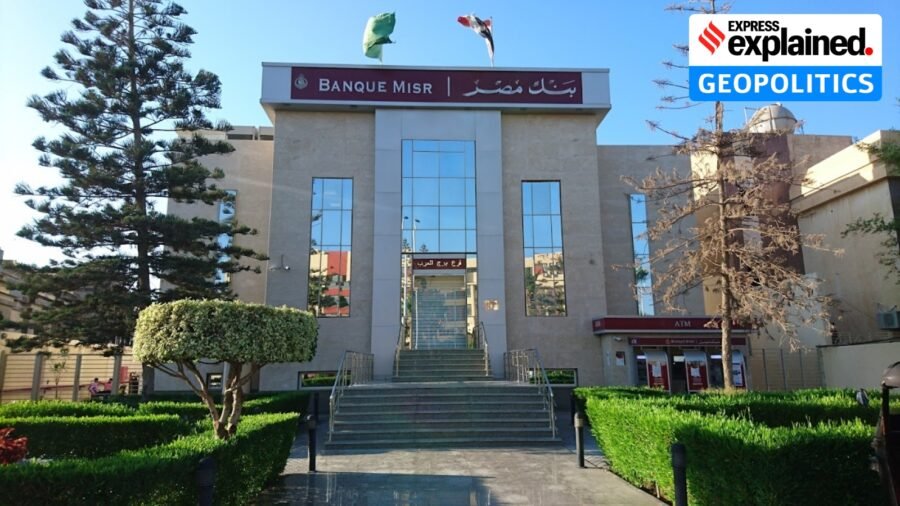
On August 28, the Secretary of the United States Department of Treasury, Scott Bessent, expanded the scope of “Operation Economic Outcast” by issuing an order that identified the United Arab Emirates (UAE) branches of Banque Misr — Egypt’s second-largest state-owned financial institution — as a financial institution operating outside the US of “primary money laundering concern”. The Treasury found that the bank’s UAE operations were processing transactions for accounts linked to Iran’s shadow-banking networks.
The US Treasury’s Financial Crimes Enforcement Network (FinCEN) proposed invoking Special Measure Five under Section 311, which bars US financial institutions from opening or maintaining correspondent banking accounts for, or on behalf of, Banque Misr UAE. The FinCEN described the bank as a key point of access to US dollar correspondent banking services for the Iranian regime and alleged that certain customers included front companies associated with Iran’s Ministry of Defense and the Islamic Revolutionary Guard Corps (IRGC).
The proposal applies only to Banque Misr UAE, which includes five branches in Abu Dhabi, Dubai, Sharjah, and Ras Al Khaimah. Banque Misr’s operations in Egypt and other countries are outside its scope.
Here’s how Iran used the Egyptian bank’s UAE branches, its underlying reasons, and the financial impact it would have on Iran and across West Asia.
How Iran used Banque Misr’s UAE branches
Since the primary sanctions issued by the US prohibit Iranian banks from accessing US dollars, Tehran uses multi-jurisdictional “shadow-banking” architectures to monetise export revenues (primarily petroleum and petrochemicals) and purchase foreign dual-use goods. According to the US Treasury, the mechanism functioned through layered commercial intermediaries.
The Iranian networks established shell companies registered in commercial hubs across the world. These firms posed as standard commercial entities engaging in food, consumer goods, or general commodities trade. The ultimate beneficial owners were tied to the IRGC, Iran’s Ministry of Defense and Armed Forces Logistics (MODAFL), and financial entities managing assets for Iranian Supreme Leader Mojtaba Khamenei.
FinCEN found that front entities held accounts at Banque Misr UAE. When these entities initiated foreign exchange transfers in US dollars, the bank routed the instructions through its correspondent bank accounts in the US. The bank was found to have transacted about $1.8 billion between January 2024 and June 2026 for 103 companies. Transactions worth $520 million took place during the last 12 months, alleged FinCEN.
Avoiding AI compliance: Why Iran chose an Egyptian bank
Story continues below this ad
The Iranian shadow-banking networks chose the UAE branches of Banque Misr because they offered the easiest path to clear US dollars while avoiding sanctions detection. Tehran exploited key structural features of regional North African bank branches instead of attempting to bypass the heavy, AI-driven compliance systems of major Western banks in Dubai.
Banque Misr UAE is involved in routine trade finance and worker remittances. Iran-backed companies, posing as general traders, choose places like Dubai and Hong Kong because these cities are considered neutral hubs. Unlike major international banks that rely on advanced real-time ownership-tracing tools, smaller bank branches still use standard, static name-matching software. So, Iran worked with layered shell companies and proxy directors to bypass basic filters.
Iran saw the situation as an opportunity to convert its export earnings into US dollars through a third-country bank that was not subject to sanctions. Moreover, the bank branches worked closely with money exchange houses to hide the true origin of the funds. Iran worked out an alternate dollar route through a regional bank that was dealing with accounts of high-volume trade.
Impact on the financial sector in West Asia
The financial institutions in the US are expected to end ties with Banque Misr UAE once the 30-day public consultation ends and the official rule is enacted. This will result in Banque Misr losing its capability to clear US dollars. The corporate account holders will also go for transactions in local dirhams (AED) or alternative foreign currencies.
Story continues below this ad
Major international institutions, including JPMorgan Chase, Citigroup, and Deutsche Bank, are also seen to be tightening compliance oversight across Egypt’s financial system. These possible changes, in turn, will hike transaction fees and increase clearance time.
Now, West Asian financial hubs like Dubai, Abu Dhabi, and Doha will remain vigilant. The action by the Treasury comes across as a warning for many banks in the region. The US is likely to keep a direct regulatory watch on the foreign bank branches working in the UAE.
The move also comes as a first phase of what could be the future of US sanctions against overseas branches in allied states without penalising parent institutions. By invoking Section 311 as a precision instrument, the US Treasury can effectively dismantle Iranian covert financing networks amid the risk of broader diplomatic fallout.
Compounding Iran’s financial woes
As the ongoing war against Iran seems far from any negotiated end, the US would like to choke all the possible financial sources for its adversary. Over the last few months, Iran appears to have seized every single opportunity to secure its finances, while its economy is getting worse by the day. Deprived of hard-currency inflows, the Iranian rial faces rapid devaluation, exacerbating hyperinflation and squeezing domestic consumer purchasing power toward a subsistence economy.
Story continues below this ad
The move leaves Iran with not many choices. Currently, Tehran is testing its endurance against an escalating fiscal insolvency and a severe domestic economic strain. The US hopes that the fresh sanctions would push Iran further into crisis and force it to capitulate on its regional proxy activities and nuclear efforts to prevent complete systemic isolation.

Good foundation: on India’s strong industrial growth performance
By Sohail Khan · 1 Oct
Bitter pills: on Court’s intervention, drug pricing
By Sohail Khan · 1 Oct
Household debt, financing today against tomorrow
By Sohail Khan · 1 Oct