How The Paradise objectified Kayadu Lohar in a film about fighting for dignity
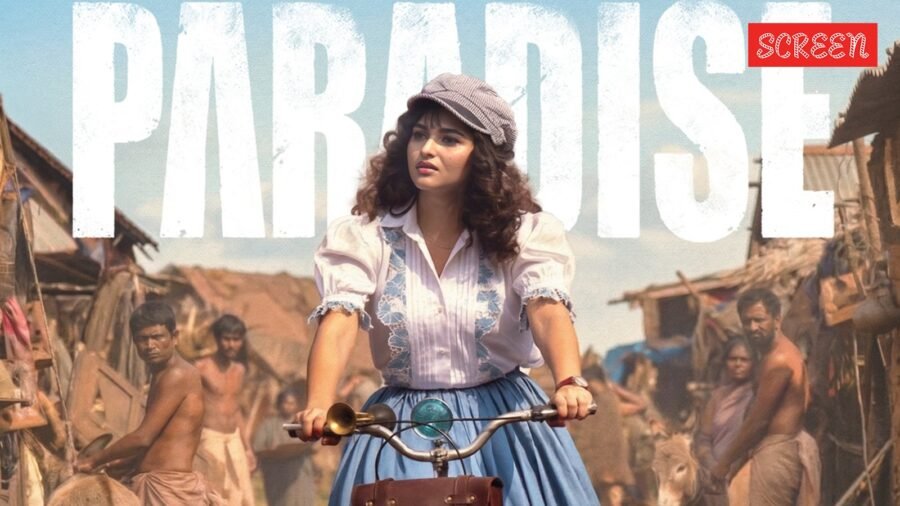
If you removed every scene Kayadu Lohar appears in, the story of The Paradise would not change. The rebellion would still happen. The tribe would still fight. The only thing that would be missing is the eye candy. And that tells you everything you need to know about where women stand in a Telugu film about people fighting for their right to exist.
Story continues below.
Subscribe to see fewer ads.
What The Paradise actually does with Kayadu Lohar’s Subbalakshmi
To makes suggestive videos of herself and sell them to survive would be enough to raise questions about how the character is conceived. But the film goes further.
In one scene, Subbu’s own mother refers to her as a “single shot actress.” The dialogue is played for laughs. The audience is meant to find it funny. A mother, looking at her daughter, reducing her to the number of shots it takes to film whatever it is she is doing on camera. The implication is clear: the mother knows what her daughter does, participates in facilitating it and has developed a shorthand for it that treats it as a job description rather than a tragedy.
In a different film, with a different writer, this could have been a devastating moment. A mother who has been so ground down by poverty that she can refer to her daughter’s exploitation in shorthand, without flinching, without the sentence catching in her throat, that is a character detail that could have opened a window into the economic violence women in these communities face. It could have made the audience uncomfortable. It could have forced them to sit with what it means when a parent becomes complicit in their child’s exploitation because there is no alternative.
Story continues below this ad
The B-grade actress as a writing shortcut
Writing a female character as a woman who does B-grade work or makes suggestive content for money is not inherently wrong, it is close to reality. Women in the entertainment industry, particularly those from economically vulnerable backgrounds, face situations where financial desperation leads to work they would not otherwise choose. A sensitive, well-written portrayal of that reality could be powerful, empathetic and genuinely progressive. It could interrogate the structures that push women into that position. It could allow us to understand her choices and what it costs her to survive. It could make the audience uncomfortable in the right way.
The Paradise does none of that. It does not explore why Subbu makes those videos. It does not examine the economic structures that force women into that work. It does not give her an inner life, a moral conflict or a moment of agency where she chooses something for herself rather than being acted upon by the world around her. It simply presents her doing it, uses the visual for what it is worth, and returns to the next action sequence featuring the male lead.
The B-grade actress detail acts as a licence. It gives the filmmaker permission to shoot certain frames, to place the actress in certain positions, to frame her body in certain ways, all under the protective cover of “this is what the character does.” The motivation exists to service the gaze, not the story. And the story, conveniently, never questions the gaze.
 Nani and Kayadu Lohar in a still from The Paradise
This is a technique that Telugu cinema has refined over decades. The woman is a bar dancer, so we can show this. The woman is an item girl, so we can show that. The woman makes suggestive videos, so the camera can do what it wants. The justification changes with every decade. The result never does.
Story continues below this ad
The contradiction The Paradise cannot see
The Paradise positions itself as a story about dignity. About a community that has been denied identity, citizenship and basic human recognition for decades. About people who have been treated as less than human by a feudal system that profits from their invisibility. The film’s entire moral argument, from its opening title card to its climactic rebellion, is that these people deserve to be seen. Not as property. Not as labour. Not as bodies to be exploited. As people.
And yet, when it comes to Subbalakshmi, the film reduces her to a body. It uses her for visual value. It discards her when she is no longer needed by the plot. It gives her no voice in a story that is literally about people demanding a voice. It gives her no identity in a story that is literally about people fighting for identity.
The film does not see this contradiction. That is the problem. Not that a filmmaker made a creative choice. But that the creative choice undermines the very thesis of the film, and nobody in the writing room, the direction team, the editing suite or the production office noticed. Or if they noticed, they did not care. Because in Telugu cinema, the heroine has never been part of the thesis. She is part of the packaging.
Story continues below this ad
The pattern that The Paradise fits into
The Paradise is not an outlier. It is the latest data point in a pattern so entrenched that pointing it out feels repetitive. But the pattern does not stop being a problem because people are tired of hearing about it.
The structural problem is not difficult to diagnose. Telugu commercial cinema is built around male stardom. The hero is the sun, everything else orbits. The villain exists to challenge him while the comedy track exists to relax him. The songs exist to glamourise him and the heroine exists to give him a romantic subplot which the audience tolerates and the story does not need. She feels less like a character and more like a box the film needed to tick.
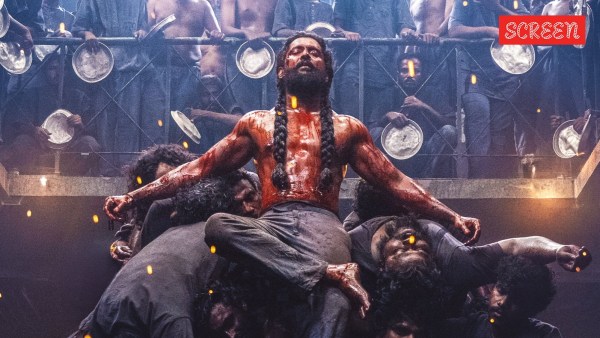 Nani in a still from The Paradise.
The real question
Nobody in that conversation will talk about what The Paradise did to its heroine. Nobody will ask how a Rs 200 crore film so deeply concerned with restoring dignity and humanity to the dehumanised could deny the same depth and personhood to its female characters. Nobody will hold the writing room accountable for a heroine track that the star’s own fan base defends as “bold” and “realistic”, even as they share clips from it for precisely the kind of attention Kayadu Lohar has said she never wanted to invite.
That is Telugu cinema’s heroine problem. The film can be about revolution, liberation, and a community demanding to be treated as human. And the woman in it can still be written as though she is not one.
Story continues below this ad
The audience will not notice because they have been trained not to. The industry will not change because the box office does not punish it. And Kayadu Lohar will move on to her next film and hope that the next filmmaker sees in her what this one did not: a person, not a prop.
The Paradise is a film about people fighting to be seen. The cruelest irony is that the one person the film refuses to see is the woman standing right next to the hero.



Leave a Reply