Gill hits fastest double ton on record-breaking night as India seal series
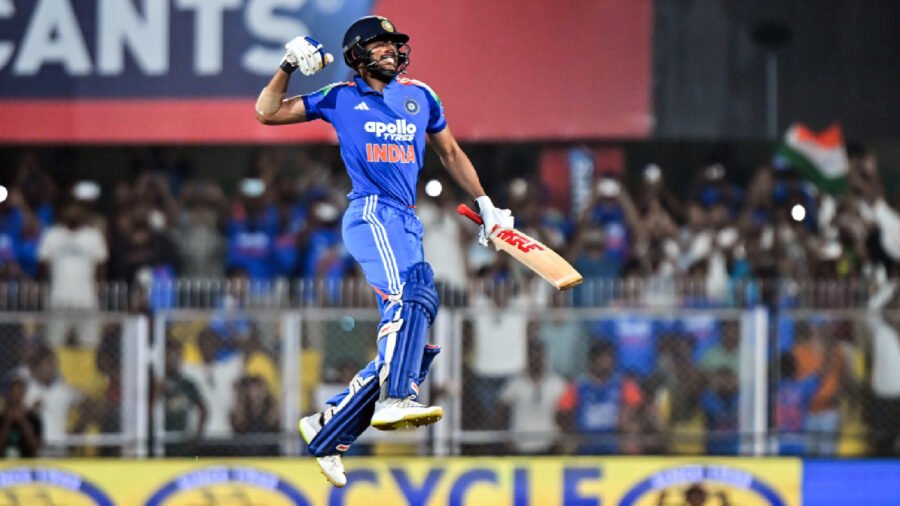
But the match boggles the mind, assaults cricketing sensibilities, and leaves the audience confounded rather than thrilled. A pursuit as heady as this shouldn’t shock the world. If 250-plus targets are chased down in T20s, it’s little wonder that competent batting units scale 400-plus peaks, especially when the path is smooth and there is little resistance from the elements.
Story continues below.
Subscribe to see fewer ads.
The chase manifested Indian batting’s glowing riches, just as it condemned West Indies’s appalling bowling. The game could be interpreted in two ways — a triumph of high-class batting, or a tragedy of low-quality bowling from both sides. All five hundreds on the day featured magnificent stroke-play; but no bowler on the day was even faintly impressive.
𝗗𝗢𝗨𝗕𝗟𝗘 𝗖𝗘𝗡𝗧𝗨𝗥𝗬 🤩🔥#ShubmanGill brings up his 2nd ODI double ton, becoming the fastest to do so in the history of the format! 💯
Records tonight, and a whole lot more to look forward to when the #CWC27 schedule launches TOMORROW! 🏆#INDvWI | 2nd ODI 👉… pic.twitter.com/E4tvOzYVqP
— Star Sports (@StarSportsIndia) September 30, 2026
A target beyond 400, even by the game’s dizzying chasing standards, daunts. But if John Campbell and Co could, so could a more pedigreed batting group. Gill and Rohit Sharma displayed nerveless aggression. No strokes of theirs looked remotely risky, partly because West Indies’ seamers were scattergun, often faltering on the shorter side. But chiefly because Gill and Rohit are supreme stroke-makers, whose expanse is so vast that they can manoeuvre perfectly good balls to the fence. They blocked those that swung away late from Jayden Seales, but when they did not deviate off the wicket, they merrily found the gaps.
Neither resorted to the crash-bang-wallop approach. Rohit, the usually more adventurous of the pair, did not venture into the stream of adventure. He left two off the first three balls he faced alone; the first burst of boundaries arrived when Alzarri Joseph bowled short, messed up his lengths and Rohit slapped two fours either side of point. He was rushed into a pull but it sailed over the fine-leg fence.
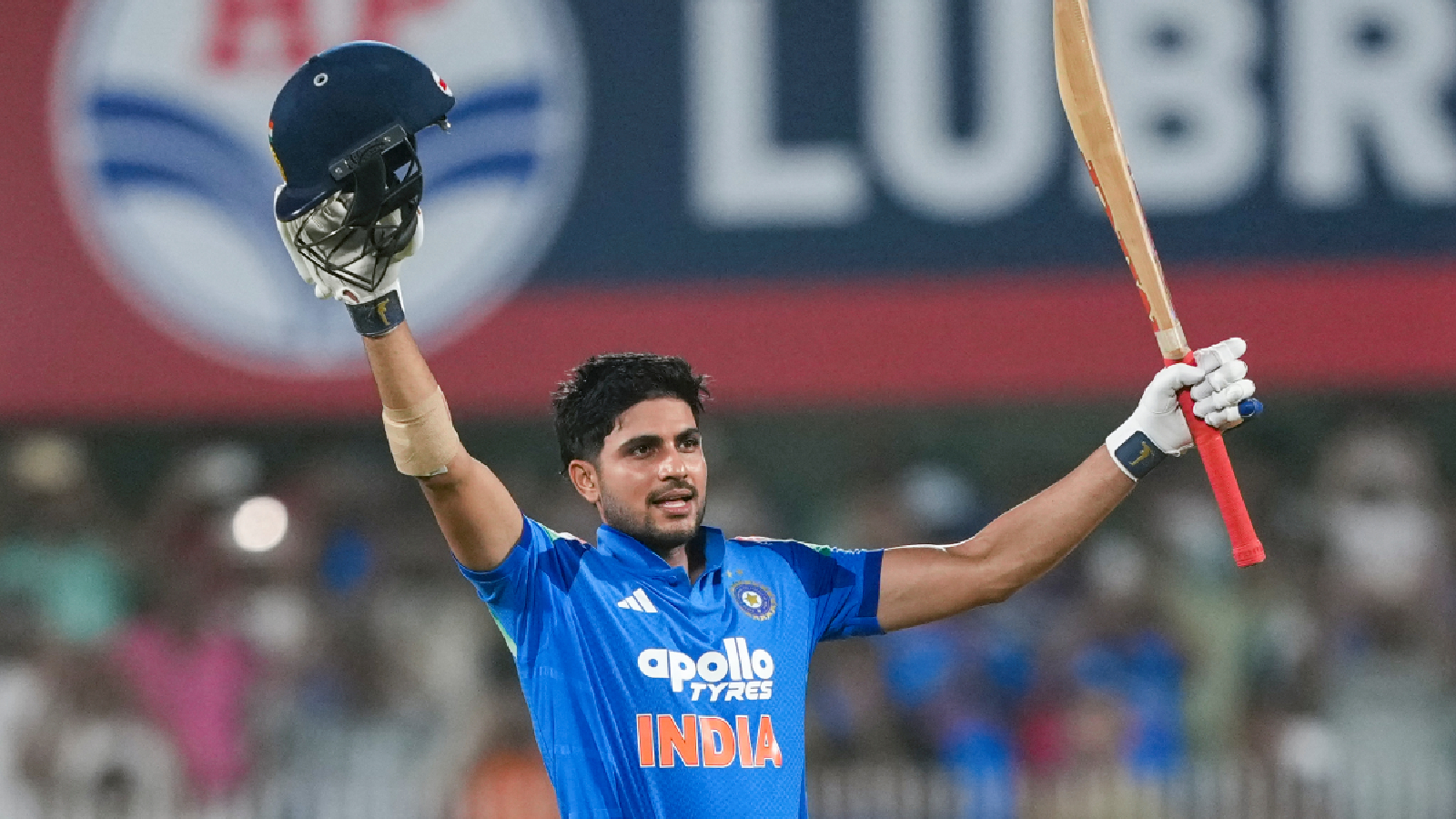 India’s captain Shubman Gill celebrates his double century during the second One Day International (ODI) cricket match between India and West Indies, in Guwahati, Assam, Wednesday, Sept. 30, 2026.
But the former captain was seldom in haste. The next 12 balls yielded him three runs but he knew bad balls would come; he knew he could make up; he knew India would overhaul the total if he stayed there.
The bad balls arrived in a flurry, leaving the crowd dazed in Rohit’s stroke-play splendour. He lashed a cut between point and backward point. Alzarri blew his cheeks in resignation. He nonchalantly flicked Seales over midwicket.
Story continues below this ad
Bowlers’ nightmare
As Rohit slipped into an unbreakable boundary-hitting trance, West Indies captain Shai Hope, one the centurions for his team, looked petrified. He simply kept dialling different numbers but none answered his SOS pleas. Keemo Paul steamed in; Rohit smeared him for a brace of sixes.
His partner Gill wondered at some of his strokes. His show was as thrilling, perhaps more brutal square of the wicket. Like Rohit, he is a minimalist. He doesn’t shuffle across the crease, doesn’t have an elaborate flourish. But his movements are precise, the flexing of wrists just enough to direct the ball through the gaps. If Rohit cajoles the ball, he commands it to the space he wants it to travel. He short-arm-pulled, smote seamers inside-out. He was not one for banal slogs.
Both took turns to accelerate, not so much intentionally as imperceptibly. At one juncture, Rohit was on 62 from 45 balls and Gill on 46 from 36. Just 26 balls later, the captain was celebrating his 11th ODI hundred. Rohit was on 83, and the score had blitzed to 206 in 22 overs. The required run rate had dropped from eight an over to seven by then.
𝐒𝐡𝐮𝐛𝐦𝐚𝐧 𝐆𝐢𝐥𝐥 𝐢𝐬 𝐨𝐧 𝐝𝐢𝐟𝐟𝐞𝐫𝐞𝐧𝐭 𝐥𝐞𝐯𝐞𝐥 🔥
The kind of night where records didn’t stand a chance – and tomorrow, the big #CWC27 schedule launch adds to the excitement! #INDvWI | 3rd ODI 👉 SAT, OCT 3, 1 PM pic.twitter.com/doGsXU4nmm
— Star Sports (@StarSportsIndia) September 30, 2026
Gill had stormed to 142 when Rohit completed his 35th hundred, off merely 72 balls. He added only one more run, but by then the pair had shellacked 255 runs, India’s highest opening stand in a chase. By the 30th over, India had rolled to 303/1, needing a shade above five runs an over. The result was effectively settled, but Gill was in no mood to relent.
But the 811-run day captured the format’s existential crisis. If ODIs are to survive, shirt-fronts are not the solution. The format is not an extended T20 game, but a condensed Test match, instilled with all its undulating drama, where there is room and relevance for both batsmen and bowlers. It was supposed to be a game that challenged the wits, technique and nous of all. Wednesday’s format, in that sense, was a hollow lop-sided thriller that would live in the audience’s mind for the deluge of runs rather than its enduring quality.
Story continues below this ad
Brief scores: West Indies 405/7 in 50 overs (Amir Jangoo 114, Shai Hope 104, John Campbell 101; Kuldeep Yadav 2/65) lost to India 406/2 in 43.3 overs (Shubman Gill 223 not out, Rohit Sharma 101) by eight wickets

Happiness compounded, Indian archers sweep up 3 golds
By Sohail Khan · 30 Sep
Lovlina beats 70kg world champion Kazakh to reach second straight Asian final
By Sohail Khan · 30 Sep
Inspired by father, guided by father-in-law: Kynan Chenai’s road to Asiad gold
By Sohail Khan · 30 Sep
Leave a Reply