From school charts to London Fashion Week: ‘Adarsh Balak’ gets a style makeover
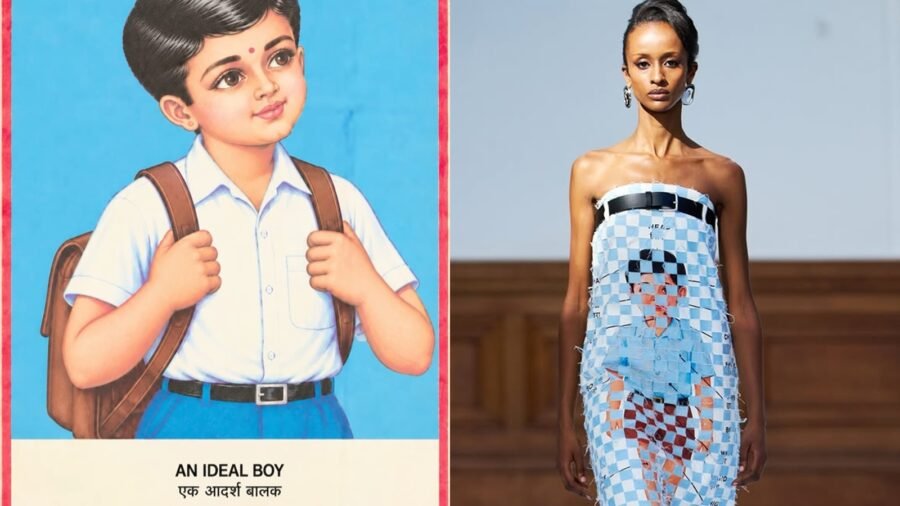
The average Indian kid has long been compared to the image of a young boy with neatly combed hair, a pressed shirt, folded hands, waking up at the crack of dawn and always on top of their homework. Growing up, many school charts featured the Adarsh Balak as the visual embodiment of the ideal child. Over the years, these educational posters became muse and inspiration to many a visual artists, who turned the young boy into an internet subculture, a parody of all things politics to middle-class behaviour.
Why am I telling you all this? Because our nostalgic icon featured in Delhi-based label Lovebirds’ debut showcase at London Fashion Week this week.
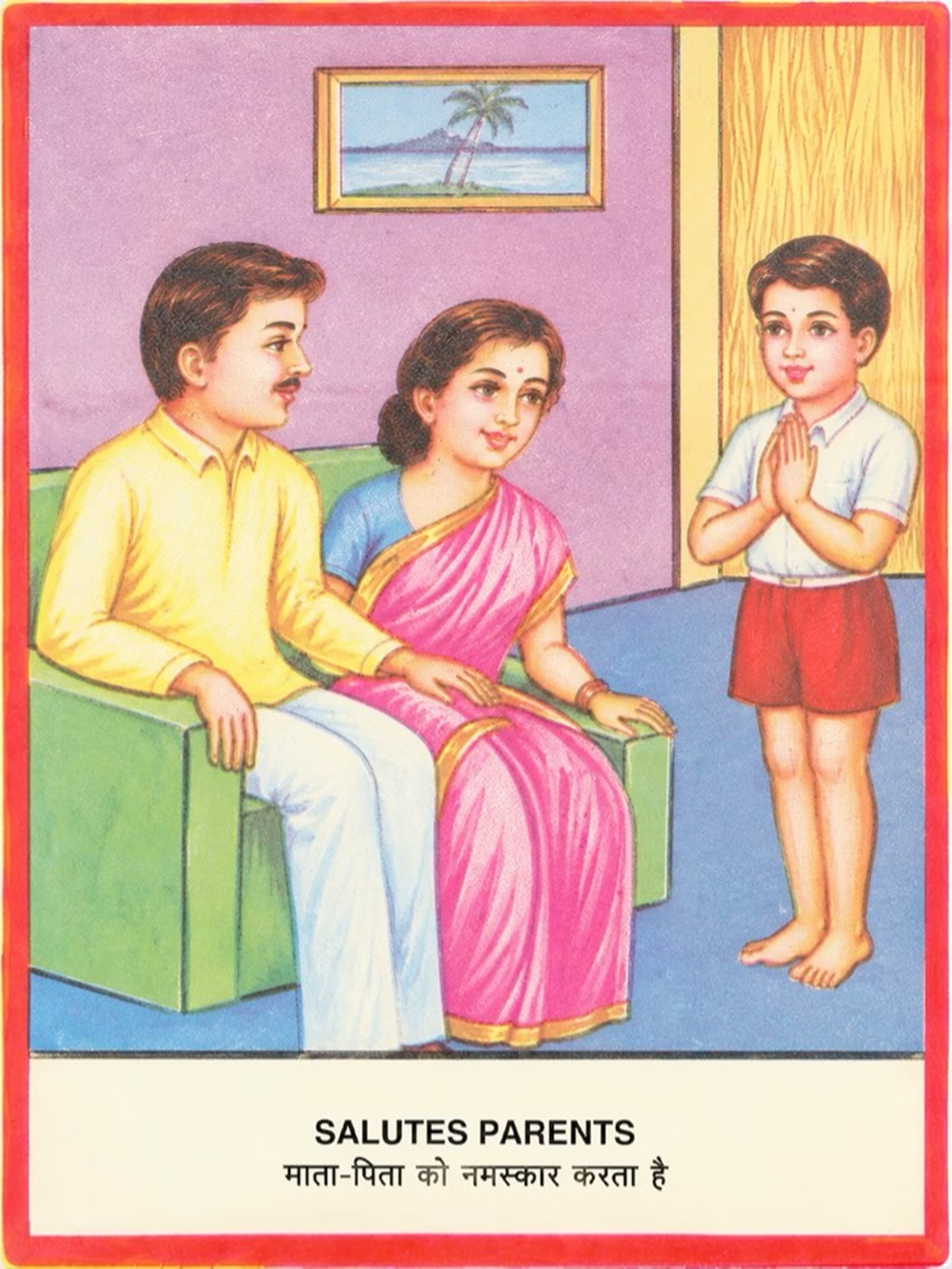 Adarsh Balak in Hindi school charts. (Source: Instagram/@lovebirds.studio)
The SS27 collection, titled ‘India-IYKYK’, looked beyond the postcard version of India, drawing from the everyday visual language and cultural references that feel instantly familiar to those who grew up here. Think hand-painted shop signs, Hindi school charts, matchbox labels, a tiger drawn from memory. Imagery made without references—an ode to the era before the internet got its sharp talons into our cultural fabric.
Story continues below.
Subscribe to see fewer ads.
The Adarsh Balak is a perfect example of such Indian iconography, so deeply embedded in our nostalgia-coated collective memory. According to the brand, this school chart taught generations what an ideal child should be like, and everyone was measured against him. “Printed cheaply and sold in stationery shops, it turned up in classrooms and above study tables across the country like a numbered grid of small virtues,” they mentioned in the caption of their Instagram post.
View this post on Instagram
A post shared by LOVEBIRDS (@lovebirds.studio)
The debut showcase
Designers Amrita Khanna and Gursi Singh of the homegrown label took familiar images and stripped them of their literal context. While the hands and ears of the Ideal Boy chart appeared throughout the clothes, the studio portrait background was reconstructed into wearable art.
The design language featured traditional Indian chintz, where block-printing artisans reworked, disrupted, and re-layered the classics. Banaras and Kutch weavers worked on handwoven silks like tussar, dupion and brocade to form the collection’s tactile foundation—making sure it remained traditional in method, but contemporary in intent.
The Spring-Summer 2027 collection also borrowed desi iconography from the 1970-2000s streets of India — highlighting vernacular urban culture and shifts in Indian society as hand-painted signs were steadily replaced by digital media. The inspiration? A GIF featuring photographs from Aradhana Seth’s book Sadak, which documented the vanishing art of hand-painted street signage across India.


Right to vote is bedrock of democracy. SIR must be rethought or abandoned
By Sohail Khan · 24 Sep
Why bank unions are striking — and why banks will open on Sunday
By Sohail Khan · 24 Sep
Leave a Reply