From MMA to teqball: Six sports making their debut at 2026 Asian Games
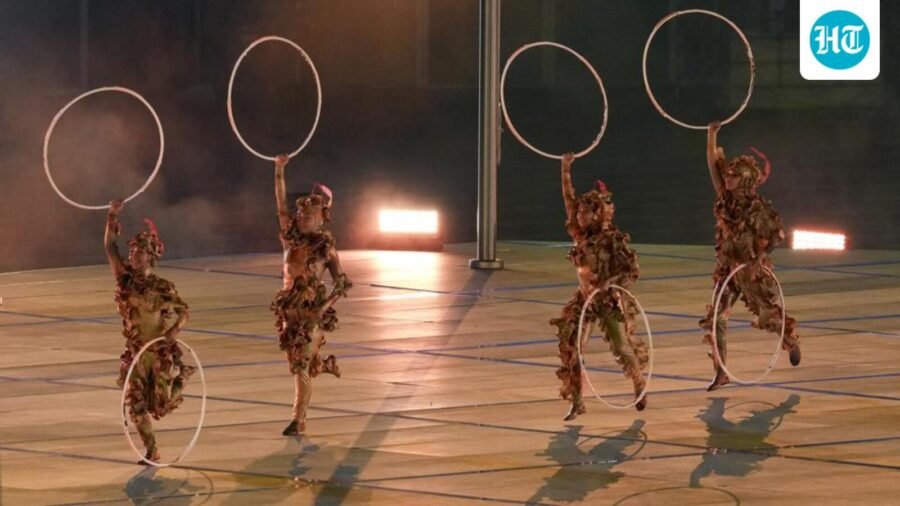
The 20th Asian Games in Aichi-Nagoya will debut six new sports, including freestyle BMX, MMA, padel, surfing, teqball, and virtual taekwondo, reflecting modern athletic trends.
Updated on: Sep 19, 2026, 18:23:07 IST
Prefer HTon Google
Share via
Copy link
With the 20th Asian Games unfolding in Aichi-Nagoya, the continental stage will undergo one of its most dynamic transformations.
Long celebrated as a bastion of Olympic tradition and indigenous Asian martial arts, the Games have continually evolved to reflect the shifting landscape of athleticism with the 2026 edition pushing boundaries even further.
This evolution represents an embrace of youth culture and modern spectator demands. As traditional boundaries fade, sports that once thrived in suburbs, beaches, or glass-walled courts are earning their place alongside track, field and combat disciplines.
Deep Dive
Powered ByAsk
Six distinct sports will make their debut at Aichi-Nagoya — freestyle BMX, mixed martial arts (MMA), padel, surfing, teqball and virtual taekwondo. Each brings a unique lineage, distinct rules and a fast-growing footprint, promising to deliver fresh drama at Asia’s premier sporting spectacle.
Freestyle BMX
Originating in Southern California in the 1970s, freestyle BMX involves young cyclists modifying their bicycle frames to perform tricks, jumps and aerial manoeuvres on concrete skateparks. Inspired from motocross, what started as an underground youth movement quickly organised into a sport, ultimately joining the Olympic programme at Tokyo 2021 before securing its spot for Aichi-Nagoya 2026.

Riders perform in a specialised skatepark filled with obstacles such as quarterpipes, spine transfers, box jumps and wallrides. Competitors are given timed runs to execute complex tricks like backflips, tail whips and bar spins. Judges score based on trick difficulty, execution, height, course utilisation and overall flow.
While the United States of America pioneered the sport, Asian nations have rapidly emerged as world leaders with Japan and China currently dominating the continent, and Thailand and the Philippines also building competitive rosters.
Mixed martial arts
Modern MMA found its shape through the creation of the Ultimate Fighting Championship (UFC) in 1993 in the USA, designed to answer a long-standing question: which martial art is most effective in an actual combat scenario?

Contested inside a fenced enclosure or ring, athletes use a full-contact combination of striking (boxing, kickboxing, Muay Thai) and grappling (wrestling, jiu-jitsu, judo). Bout durations consist of timed rounds within weight classes. Fights can end by knockout (KO), technical knockout (TKO), submission or a judges’ decision.
Highly regulated today, the USA, Brazil and Russia lead the sport. Within Asia, Japan, South Korea, Kazakhstan, Uzbekistan, China and the Philippines possess deeply rooted combat traditions and field some of the most dangerous martial artists in the world.
Padel
Invented in Mexico in the late 1960s by businessman Enrique Corcuera, who wanted to adapt a tennis court to fit in his backyard, padel quickly spread to Latin America and then to Europe where it transformed into a recreational and then a professional sport.
Combining elements of both tennis and squash, padel made its way into Asia and has also rapidly grown in India’s urban centres. While Spain and Argentina remain the undisputed global leaders, the sport has seen explosive growth in West Asia alongside developing national programmes in Japan and Thailand as well.
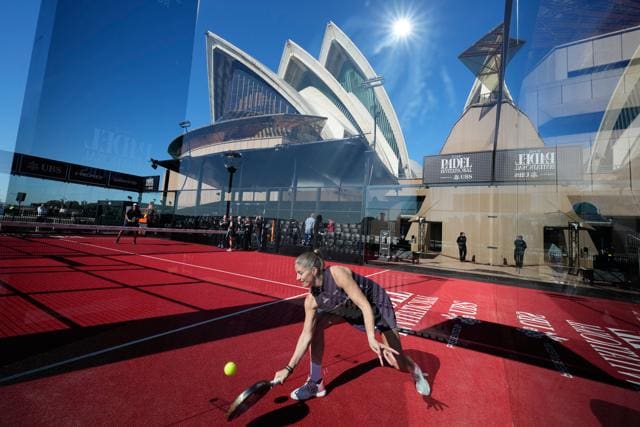
It is almost exclusively played in doubles on an enclosed court roughly one-third the size of a tennis court, bounded by glass and metallic mesh walls. Played with perforated racquets and low-pressure balls, the scoring system mimics tennis. Crucially, the ball can be played off the surrounding walls — borrowing from squash — creating strategic rallies that emphasise positioning over brute strength.
Many tennis players either play the sport recreationally (like Novak Djokovic and Serena Williams) or have invested in it (Andy Murray).
Surfing
After being part of the last two Olympic Games, surfing will make its debut this time in Asiad. Modern surfing was popularised in the early 1900s by Hawaiian Olympic legend Duke Kahanamoku.
Surfers paddle into ocean lineups and catch waves with five judges evaluating each ride based on five criteria — commitment and difficulty, manoeuvres (such as aerials and barrel rides), combination of moves, variety and overall speed and flow. An athlete’s top two wave scores are combined for their total score.
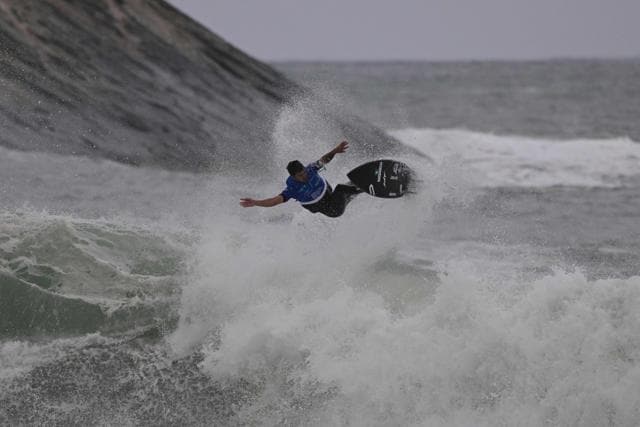
Brazil, the USA, and Australia power the international circuit. In Asia, Japan stands as the premier surfing power while island nations with rich coastlines, such as Indonesia, the Philippines, Maldives, and Sri Lanka, boast exceptional wave riders capable of claiming top honours.
Teqball
A sport that has already caught the attention of many in Aichi-Nagoya, teqball was created in Hungary in 2012 by former football player Gabor Borsanyi and computer scientist Viktor Huszar. It is a ball sport combining elements of football and table tennis.
Seeking a game that emphasised ball control without physical contact injuries, they engineered a curved table (teq table) that naturally forces the ball to bounce toward the players. Played on that unique table using a standard football, competitors play singles or doubles.
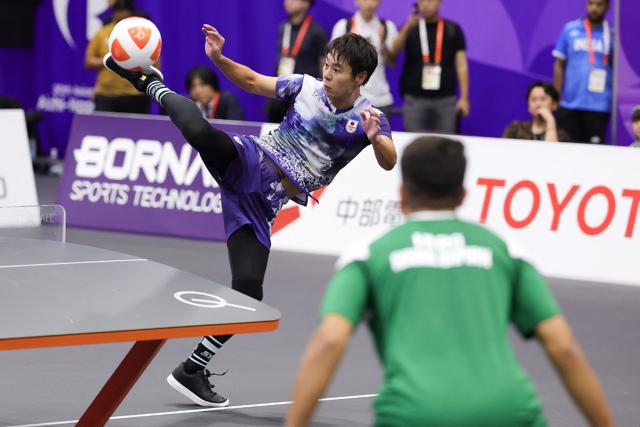
Players can use any part of their body except their hands and arms to return the ball across a solid acrylic net. A player or team is allowed a maximum of three touches before passing the ball over and they cannot touch the same body part twice in succession.
Hungary remains the birthland and developmental standard for teqball with Brazil holding a dominant position globally. Across Asia, Thailand has established itself as a powerhouse alongside squads from Malaysia, Indonesia, Vietnam and China.
Virtual taekwondo
A martial art without contact. Virtual taekwondo is a convergence of traditional martial arts and esports. Co-developed by World Taekwondo and tech developers to adapt combat sports for the digital age, the discipline uses virtual reality (VR) headsets and full-body motion-tracking sensors to turn physical movement into active digital gameplay.
Athletes wear motion-tracking sensors on their limbs and a VR headset, stepping into a physical ring while competing inside a synchronised virtual arena. Real-time motion sensors track the speed, power and placement of an athlete’s physical kicks and blocks, translating them into digital attacks on their opponent’s virtual health bar. It requires authentic physical stamina, reflexes and technique without full-contact physical impact.
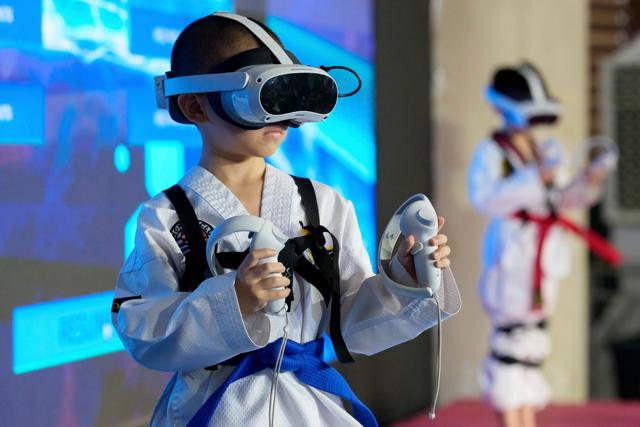
As the home of traditional taekwondo, South Korea leads the development of its virtual counterpart. However, technological hubs like Singapore, Chinese Taipei and Japan have also emerged as early leaders in this high-tech, physically demanding sport.
See Less



‘Stop complaining, enjoy moment’: Manu Bhaker’s message ahead of Asian Games
By Sohail Khan · 19 Sep
Leave a Reply