‘Fossil fuels will still play important role’: BRICS Declaration opposes carbon border tax
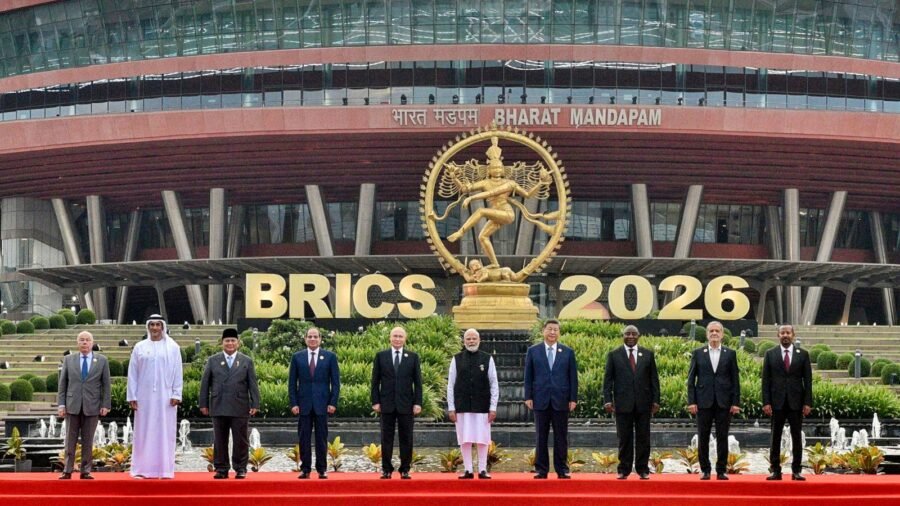
Amid disruptions to global supply chains and energy security due to the West Asia conflict, the New Delhi Declaration adopted at the 18th BRICS Summit unequivocally acknowledged that fossil fuels will still play an important role in the world’s energy mix, particularly for developing economies, and opposed European Union’s carbon border tax.
The declaration reaffirmed the commitment of BRICS to tackle climate change and called upon all countries to uphold their existing commitment to the Paris climate agreement, including its provisions related to climate mitigation, adaptation, loss and damage and the principles of equity.
However, it underscored the importance of nationally determined just transitions — which refers to shift to cleaner fuels for producing electricity and in energy use. It called upon developed countries to provide additional, adequate, predictable and accessible financial resources along with technological transfer to developing countries for climate adaptation to tackle impacts of climate change.
Story continues below.
Subscribe to see fewer ads.
The declaration framed energy security as a crucial foundation for social and economic development, national security and the welfare of all nations. “We acknowledge fossil fuels will still play an important role in the world’s energy mix, particularly for emerging markets and developing economies, and we recognize the need to promote just, orderly, equitable and inclusive energy transitions and reduce GHG (greenhouse gas) emissions in line with our climate goals and observing SDG7 (sustainable development goals), and the principles of technological neutrality and common but differentiated responsibilities and respective capabilities taking into account national circumstances, needs and priorities,” the declaration stated.
BRICS member countries China, India, Indonesia and Russia are among the top five largest coal consumers with the US being the only non-BRICS bloc country. They have also made rapid strides in the expansion of renewable energy, but coal continues to remain one of the largest sources for electricity production and energy use.
The declaration recognised the key role of critical minerals for development of zero-and low-emission energy technologies, energy security, and resilience in supply chains.
On the EU’s carbon border adjustment mechanism, which imposes an import levy on carbon-intensive goods, the declaration said that it opposed “unilateral, punitive, discriminatory and protectionist measures that are not in line with international law”. “…Such measures undermine efforts by countries, specifically developing countries, aimed at addressing the adverse impacts of climate change, increasing adaptive capacity and resilience.”
Story continues below this ad
In the backdrop of the Nepal flash flood last month, the BRICS declaration also acknowledged the growing complexity of disaster risks, including those related to climate change, and especially for the Global South. The guidelines for Disaster Management Early Warning Data Integration were welcomed.
India’s initiative in creating the International Big Cat Alliance and encouraging BRICS countries to work together for big cat conservation was also taken note of. India had initiated the formation of the Alliance in 2023, and its headquarters is now based in New Delhi. The Alliance seeks to cooperate on conservation of seven wild cats — tiger, lion, leopard, snow leopard, cheetah, puma, and jaguar.
On biodiversity conservation and effective implementation of the Kunming-Montreal Global Biodiversity Framework (KM-GBF), the declaration appreciated the establishment of the Kunming biodiversity fund and contribution made by China, and recognized its significant role in supporting developing countries for biodiversity conservation. Under the KM-GBF treaty, the key targets include reducing threats to biodiversity, meeting people’s needs through sustainable use and benefit-sharing, and tools and solutions for implementation for mainstreaming biodiversity protection.
PM Modi holds hands with Putin and Xi: 7 unmissable photos from BRICS Summit 2026 in Delhi
By Sohail Khan · 12 Sep
Members call for constructive engagement for pathogen access, benefit sharing
By Sohail Khan · 12 Sep
Four agri initiatives announced at BRICS, will boost climate resilience, productivity
By Sohail Khan · 12 Sep
Leave a Reply