‘Food safety is a huge public health crisis’: Tukaram Mundhe on his first 100 days as FDA chief
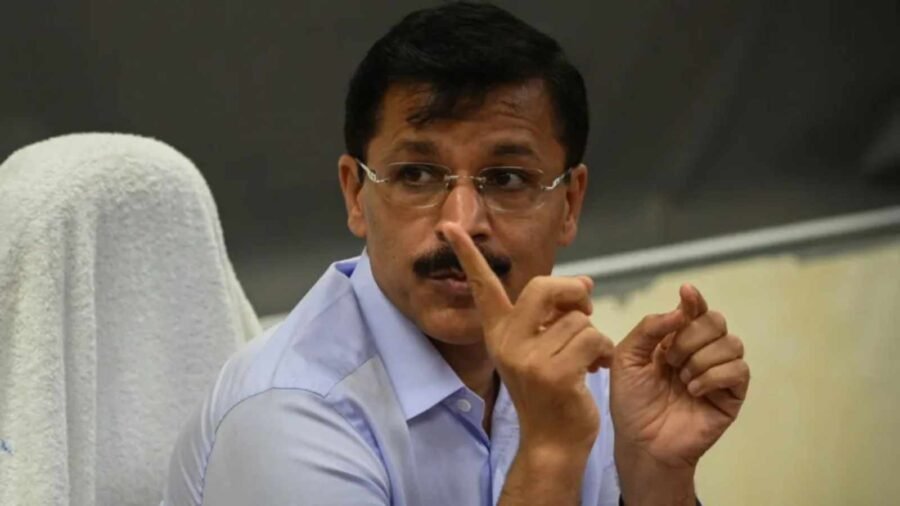
A week after completing 100 days as Maharashtra FDA Commissioner, Tukaram Mundhe says food safety is a public health crisis that demands a more visible and assertive regulator. In an interview with , Mundhe discusses his first 100 days, the FDA’s testing backlog, regulation of hospital consumables and pharmaceuticals, and his controversial push for healthier food in schools.
IE: FDA was last widely noticed for action against JJ and Cadbury in 2004 05. What’s different about your approach compared to how bureaucrats normally work, and why are you seen as an outlier?
Tukaram Mundhe: It’s difficult for me to answer objectively since I’m an interested party. But “outlier” can be positive or negative. You are outside the normal course of action, depending on the prism you use.
I distinguish between doing a “job” and doing a “role”. When I say “I”, I mean the institution, not myself. I look at the FDA Commissionerate as an institution.
Over time, we have started viewing public service through a lens of distrust. I believe we should instead look at it critically: applaud what is done right and punish what is done wrong.
Public service is a trust vested in us by the Constitution and the people. When we join the services, we take an oath to uphold constitutional values such as equality, fraternity, liberty and development. We have to act not only on the letter of the law but its spirit.
As a public servant, I ask myself daily: am I honest, transparent, responsible and accountable? Beyond being answerable to seniors and the government, I am answerable to my conscience. Have I made a difference in people’s lives, or made things worse?
Story continues below this ad
IE: Civil servants are trained to be backroom men. The minister gets the mic, the officer gets the file. Your stint doesn’t look like that — the press releases, the videos, the presseron a day the CM asked the state to stay indoors. Is that a choice, and why?
Tukaram Mundhe: It isn’t about being “front end” or “back end”; it is about the sector. Food and drugs are precious in everyone’s life, yet most people don’t know what “standard” or “safe” food means.
My press conferences and notes follow a deliberate strategy. It isn’t about publicity for Tukaram Mundhe, but about publicising rules and regulations. I hold a press conference when there is a compliance order to announce.
Take the balanced diet in schools order. The regulation already existed; I wasn’t creating something new, just reframing it so schools, parents, officers and the press could understand it. We cannot achieve food safety without public awareness and stakeholder compliance.
Story continues below this ad
IE: Is the food sector’s problem actually much bigger than what has come to light so far?
Tukaram Mundhe: Absolutely. This is a huge public health scale crisis. The government and WHO have flagged it. At Independence, communicable diseases accounted for around 70 per cent of the disease burden. Today, non communicable diseases account for roughly 70 per cent. Two major contributors are food intake and medicines, particularly uncontrolled consumption of HFSS products.
Population growth has driven demand and supply has followed. Maharashtra imports more than 1.5 crore eggs a day because local production does not meet demand. On milk, we say we produce around 1.8 to 2 crore litres a day, but our stated production does not match the state’s milking animal population. So where is that milk coming from?
This is not merely about food adulteration in hotels or milk products. It is a public health issue and, by extension, an issue of the health of the nation.
Story continues below this ad
The school order is only a beginning. The momentum needs to build nationally.
IE: Your balanced diet in schools order faced backlash. Did you anticipate it?
Tukaram Mundhe: Yes. Even my children were unhappy for a day or two because they were being trolled at school. But someone had to take the lead. I had anticipated the backlash and alerted them.
I even offered to personally come and explain the order to their school, if needed. Almost every affected school has since changed its practices and parents have responded positively. Such short term friction is part and parcel of the job.
Story continues below this ad
IE: Lab backlogs in FDA have always been an issue — how bad was it when you took over, and what have you done to fix it?
Tukaram Mundhe: When I joined, around 14,000 samples were pending. I found laboratories were working only from 10 am to 6 pm, although they are meant to operate on a 24×7, 48 hours a week roster.
We worked on efficiency, management and resource allocation. In three months, we processed more than 35,000 samples, of which more than 32,000 have been tested, with results available.
We are purchasing new equipment and four new laboratories have already been sanctioned, with civil work completed this year. It is not about lacking finances or staff; it is about using existing resources properly.
Story continues below this ad
IE: You have been transferred around 25 times. What is the biggest lesson from your postings, and how do you ensure reforms survive beyond an individual officer?
Tukaram Mundhe: It isn’t about the individual; it is about how systems work. The real question is what work culture institutions carry and whether society rewards excellence or pays for mediocrity.
We need a culture where governance, institutions and systems take centre stage, not individuals.
People will come and go. If a disruption is constructive, take it forward; if destructive, discard it. Ultimately, this is about 12 to 13 crore people of Maharashtra, not just the roughly 1,200 people in the department.
Story continues below this ad
IE: What is the biggest achievement of your previous postings, and how does the current role compare?
Tukaram Mundhe: In Divyang Kalyan, we designed a portal, reportedly India’s first, offering end to end disability welfare services. Applicants enrol with their disability or ID and Aadhaar cards, details are verified through backend APIs and the portal automatically shows the schemes they are eligible for.
In AIDS Control, I served as Project Director from January 2019 to January 2020. One major challenge was parent to child transmission of HIV, which was around 4 per cent when I joined and fell to 2 per cent within a year. The design was subsequently adopted by NACO as a model for reviewing performance.
My current posting, however, touches everyone’s life. The number of people affected is larger than in any previous role.
Story continues below this ad
IE: You also oversee Maharashtra’s pharmaceutical sector. What are its biggest challenges?
Tukaram Mundhe: Maharashtra is one of India’s biggest pharma manufacturing hubs, with more than 800 allopathic manufacturers, over 400 Ayurvedic manufacturers and 400 to 800 blood centres.
The biggest challenges are spurious and substandard drugs and, most importantly, affordable access to medicines, which also involves doctors and hospitals.
But if I were to identify one issue as a regulator and citizen, I believe information asymmetry is the biggest challenge. There is a book called “Healers or Predators?” I am not calling anyone a healer or predator; the question is whether “healers” are increasing and “predators” decreasing.
IE: Is there a similar crackdown being planned on drugs?
Tukaram Mundhe: Pricing is one of the major issues from a citizen’s point of view. Some essential drugs are regulated only through MRP declaration, without real price control.
We studied hospital consumables and found large gaps between purchase prices and MRPs. A Medifusion IV set, for instance, is purchased at Rs 11.05 while its MRP is Rs 325, a margin of 2,841 per cent. An autofusion set costs Rs 70 against an MRP of Rs 393, a 461 per cent margin.
A 10 ml Lifelong Meditech syringe is purchased at Rs 6.75 and has an MRP of Rs 57.20, a 747 per cent margin. Nebuliser and oxygen masks purchased for Rs 40 to Rs 45 are sold at Rs 650 to Rs 715, translating to margins of roughly 1,300 to 1,600 per cent.
I submitted a policy proposal to the National Pharmaceutical Pricing Authority under the Department of Pharmaceuticals, seeking that primary in hospital devices and consumables be brought under Section 4 of the Drug Price Control Order, 2013, for regulation.
In the last three months, we conducted 2,485 inspections of pharmaceutical manufacturers, blood centres, storage centres and approved laboratories. Licences of 230 establishments were suspended and 38 cancelled.
Among pharmacies and medical shops, 11,780 establishments were inspected, 2,075 licences suspended and 394 cancelled. Of 1,449 complaints received, action has been taken.
IE: Your department has faced judicial scrutiny, including in the Cipla case. How do you respond to concerns about due process?
Tukaram Mundhe: I don’t see it as a “backlash”. Courts sometimes convey certain messages through their observations. Where there is an error in procedure on my officer’s or the department’s part, we will improve.
In Cipla’s case, we followed due process. An issue arose in June and the State Drug Control authority issued a recall order, which Cipla did not comply with. A second inspection was conducted in July. A final notice was issued on August 13, giving seven days to reply for cancellation. There was no reply by August 20, so a further two days were given. Still, there was no reply.
My officer, going beyond what was strictly required, gave them a hearing. The only issue the court flagged was that the hearing was held on a public holiday. The court directed us to issue a fresh show cause notice, which we are doing.
When implementing law in a high stakes sector such as food and drugs, smooth sailing is not realistic. If there are genuine legal or procedural errors, we will correct them. Public servants must be above reproach. We will continue following due process, improving where needed and taking legal recourse where warranted.

Kalyan Crime Branch Raids Dombivli Shed, Seizes Liquor Worth ₹7.22 Lakh; 3 Held
By Sohail Khan · 30 Sep