Exclusive | Why India is making IST legally enforceable: An expert explains
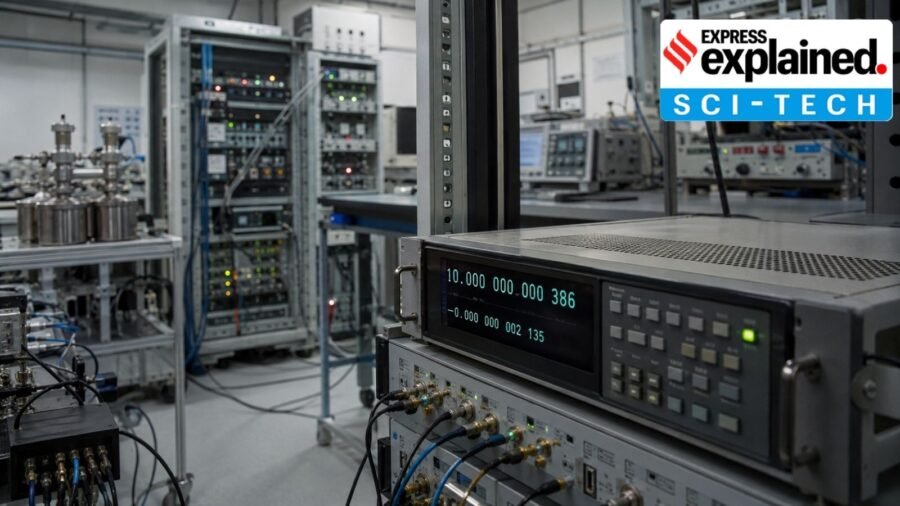
India has followed Indian Standard Time (IST) for decades. The new Legal Metrology (Indian Standard Time) Rules, 2026, make it the legally enforceable reference for official and commercial use, requiring systems across sectors to synchronise to time traceable to IST.
Poonam Arora, Scientist G & Head, Time & Frequency Metrology Division, CSIR-National Physical Laboratory (NPL), spoke to about what “traceable” time means, how organisations will synchronise to IST, and how CSIR-NPL, Regional Reference Standard Laboratories (RRSLs) under the Consumer Affairs Ministry, and NavIC fit into India’s timing infrastructure.
The larger objective is a common national time reference. “‘One Nation, One Time’ means having one time reference. At present, different organisations may refer to different sources. It is like each person establishing their own starting point; you then cannot properly compare events or measurements,” she said. Edited excerpts:
Story continues below this ad
India already has Indian Standard Time. What changes for organisations once these rules come into effect?
Poonam Arora: Indian Standard Time has been in place for decades. Under an Act of Parliament, CSIR-NPL is the National Metrology Institute mandated to maintain the country’s scientific standards.
Maintaining and disseminating IST has been part of our mandate. In fact, IST® (Indian Standard Time) is a registered trademark of CSIR-National Physical Laboratory (CSIR-NPL). It has been a team effort over the years, involving scientists and technical staff at NPL, with the guidance and support of successive Directors.
But until now, time itself did not have legal status in the country. You could not enforce a requirement that someone’s time be traceable to IST.
NPL is the standards body, while enforcement comes under the Department of Legal Metrology. They already enforce measurements such as mass and volume: inspectors can check measurements at a petrol pump or verify the weights used by an establishment. They did not have an equivalent capability for time.
Story continues below this ad
Five Regional Reference Standards Laboratories now maintain secondary time scales that are traceable to Indian Standard Time (IST) through CSIR-NPL. ISRO also maintains IST traceability links from NPL. This enables IST to be disseminated and realised at multiple locations while maintaining traceability to the national reference maintained by CSIR-NPL.
The broader purpose is to make IST the country’s common legal time reference for commercial and other purposes, including the display of time. This can also improve cybersecurity, reduce crime and make critical infrastructure more resilient.
What does it mean for time to be “traceable” to IST, and how is that done?
Take the time on your computer. It has to come from somewhere. In the date and time settings, you can select an NTP, or Network Time Protocol, server. The default server may be abroad, so it is not directly providing IST.
At present, people obtain time from many sources, often indirectly from GPS. A telecom provider may give you the time maintained in its data centre, but there can be a lag of seconds or even minutes.
Story continues below this ad
While travelling, one FM station may say it is seven according to its studio clock, while another says it is 7.01. That is the issue: different people are referring to different sources. IST would become the common national time reference.
Traceability can be established through different technologies. NPL has an NTP service with a domain name. If you synchronise your computer with it, your computer becomes traceable to Indian Standard Time.
NTP is the most common and accessible method and operates over the internet. Other options include PTP, or Precision Time Protocol, satellite and optical links, and NavIC. The method depends on the accuracy required.
How much accuracy do different systems need, and how do NTP, PTP and other methods compare?
Story continues below this ad
The required accuracy depends entirely on the application. ISRO has to be traceable to IST within nanoseconds, while we maintain the country’s time within a few nanoseconds of the international reference, UTC.
For many ordinary applications, NTP can provide millisecond-level accuracy. PTP can provide microsecond-level accuracy and works particularly well within a local area network.
Any clock or oscillator begins to drift after synchronisation. NTP therefore checks the reference at polling intervals, which can be adjusted depending on how closely a system must remain aligned with IST.
For more demanding applications, satellite links are used for highly precise time transfer. NPL provides ISRO with time through satellite links; techniques include Common-View GNSS and two-way satellite time and frequency transfer. Optical links over dedicated dark fibre can reach picosecond-level accuracy, though they are not universally available.
Story continues below this ad
An ordinary user does not need the kind of system ISRO uses. Defence and other critical applications may require such high levels of accuracy, while for applications such as banking and finance, millisecond-level NTP services may be sufficient.
What will businesses have to do to comply? Are there any exemptions?
At the very least, an organisation should be able to show that its systems are synchronised with IST. A computer’s settings show the selected time server or domain name; NPL, NIC and the RRSLs have their own services. A direct PTP or satellite connection could also show that the organisation is receiving time from an approved source.
There is no exemption at this moment. But organisations such as hotels or ISRO launch centres may need to display other time zones. That should not be a problem as long as they also display IST and use it as the reference.
Story continues below this ad
The requirement is not only about display. There must also be synchronisation, so that “the seconds start at the same time across applications and sectors”.
Enforcement will be the responsibility of the Legal Metrology Department. NPL will advise them because we helped establish the regional time scales and dissemination technologies. There will be a mechanism for checking compliance, and further procedures will be put in place over time.
What does this mean for an ordinary user? Will we need to install an update or change anything?
Unless you have a business, you are unlikely to face any immediate requirement. But accurate time can matter if investigators or a court need to reconstruct events, for example in a fraud investigation.
Story continues below this ad
For ordinary users, much of this would happen through service providers. If they comply with the rules, the time supplied automatically to your device would be traceable to IST.
On your computer, there is already a mechanism to select a time server. NPL also provides instructions for doing this on its website.
Why does India want to reduce reliance on foreign satellite-based timing sources?
At present, most people obtain time through GPS, which is owned by the United States. The US has the ability to degrade or deny access to its services. During the Kargil War, India was denied access to the GPS information it had sought, and that was the genesis of India asking its space agency to develop a similar navigation system.
ISRO therefore developed the Indian Regional Navigation Satellite System, or IRNSS, now known as NavIC. It provides regional satellite-navigation coverage over India and the surrounding region. NavIC was designed so that India could retain an independent navigation capability if access to GPS were denied.
Story continues below this ad
Time is critical to navigation. NavIC satellites carry atomic clocks, while ISRO’s ground stations are traceable to IST through satellite links. NPL provides the time reference for NavIC, so obtaining time through NavIC is another way of receiving time traceable to IST.
NPL has developed indigenous primary frequency standards and is developing advanced atomic clocks, while upgrading its timing infrastructure. These capabilities will provide India with an independent and resilient source of highly accurate time, enabling continuity of the national time scale and critical time-dependent services even in the event of failures or disruption of international traceability links.

Don’t buy a lab-grown diamond before checking these 7 things
By Sohail Khan · 29 Sep
Towards a gender just Uniform Civil Code
By Sohail Khan · 29 Sep
Essar eyes $18-billion US steel plant: Why Indian firms are investing in US amid tariffs
By Sohail Khan · 29 Sep