‘Every minute important’: Inside the fast-track court racing to try NEET leak case
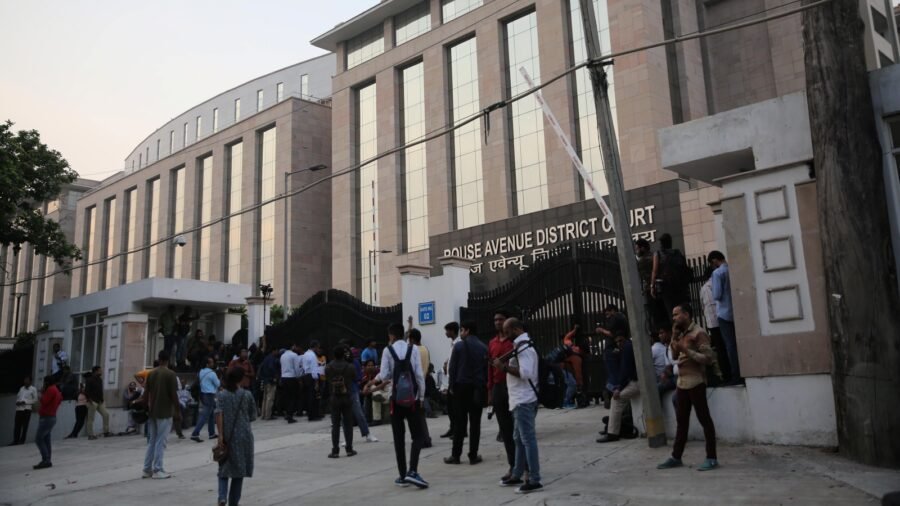
For over 40 days, Judge Ajay Gupta has been driving one of the country’s most closely watched examination paper leak cases at a pace that has left little room for delay.
At 10 am each working day, the Fast Track Special Court Judge at Delhi’s Rouse Avenue Court takes his seat and works through the case against 13 accused in this year’s NEET-UG paper leak. Chargesheet scrutiny, preliminary arguments and a string of interim applications have followed in quick succession, with Judge Gupta repeatedly pressing lawyers to appear on time.
The latest test of that timetable came on Monday, in the form of a request to defer arguments because the investigation was ongoing. “Time is very precious…We can continue the hearing all day if necessary,” the Judge told the defence counsel. The hearing, which stretched for nearly two hours, was a snapshot of the urgency Judge Gupta has brought to the case since taking charge of it on August 4.
Story continues below.
Subscribe to see fewer ads.
The Special Court’s pace is significant, given that the case is unfolding against the backdrop of nationwide outrage over examination paper leaks, triggered by the NEET-UG leak four months ago. The exam was held on May 3, with around 22 lakh candidates taking part, but was cancelled nine days later by the National Testing Agency (NTA) after the leak came to light. The NTA subsequently held a retest on June 21.
On July 23, following a month-long protest over the leak by students at Jantar Mantar, Prime Minister Narendra Modi announced the setting up of fast-track courts to ensure swift and stringent punishment for those involved in exam fraud.
In the NEET-UG case, the CBI filed its chargesheet naming 13 accused on July 28. Judge Gupta took cognizance of the chargesheet on August 12. Two days later, an application by the CBI seeking permission for further investigation was allowed.
According to the CBI, the NEET-UG paper was allegedly leaked initially by three NTA panel members and translators. The probe agency has submitted in court that various hotel premises were allegedly used in April to “facilitate access” to the leaked papers, which were then circulated on Telegram.
Story continues below this ad
Judge Gupta has also been designated to hear other paper-leak cases under the Public Examinations (Prevention of Unfair Means) Act pending across Delhi’s district courts. Two such cases from Karkardooma Court have been transferred to him, and one from Dwarka is about to follow, taking his tally to four. These cases relate to recruitment exams held in Delhi for school staff and Lower Division Clerks.
In the NEET-UG case, the Judge heard an application moved on Monday by accused Shivraj Raghunath Motegaonkar, seeking to defer “arguments on charge” on the ground that further investigation was still underway.
Arguments on charge is the stage after which trial begins — where the agency must show a “prima facie case”. This follows the filing of the chargesheet, its cognizance, and scrutiny of documents.
In this case, arguments on charge began in the first week of September, with document scrutiny expedited within two weeks. The CBI’s arguments concluded on September 6, six of the 13 accused argued on September 8, and the rest over the following two days.
Story continues below this ad
In an order dated September 14, the Judge noted: “…arguments on the point of Charge on behalf of CBI as well as all accused persons except A-5 have already been addressed at length and heard.”
On Monday, A-5 (Accused No.5) Motegaonkar, represented by advocate Ashneet Singh, argued that arguments on charge should be stalled until the supplementary chargesheet was filed.
Motegaonkar runs Renukai Chemistry Classes (RCC) in Maharashtra’s Latur and, according to the CBI, a phone allegedly seized from him had 136 handwritten questions, of which 111 matched the NTA’s master question sets.
The CBI, represented by Senior PP V K Pathak and P P Arjun Anand, argued that there was no legal prohibition against hearing arguments on charge before a supplementary chargesheet was filed.
Story continues below this ad
Reserving his order for Wednesday, Judge Gupta said: “I have to look at other cases as well. Some other (Delhi High Court) notification has come.” The order is now under dictation and will be pronounced on Friday.
This isn’t the first time Judge Gupta has pushed to expedite the case. In the first few days of his tenure, he pulled up defence counsel for arriving late. “Understand my anxiety please. Every minute here is important…you all should be there at 10 am sharp. It can’t go on like this…please be here at 10 everyday,” he had said.
Judge Gupta has also decided several miscellaneous applications within days of their filing: for a lie detector test, spectacles and religious books in custody, virtual meetings with family, and more time to inspect documents.
Most recently, he dismissed an accused’s plea for time to file a discharge application. In an order dated September 7, Judge Gupta wrote: “…this court is of the view that the accused already had sufficient time at her disposal and therefore, in case, accused was actually willing, she should have got her discharge application filed by today… it seems that the present application has been filed in order to drag/ delay the trial of the present case.”
Story continues below this ad
In the same order, the Judge said arguments on charge could have begun on August 13 itself — just a day after cognizance of the charge sheet — but was deferred because some of the accused had moved applications related to document scrutiny.


700 trees were felled for stadium. Now, Madhya Pradesh asked to plant 7,000 instead
By Sohail Khan · 17 Sep
‘Made in Bastar’: How Chhattisgarh is moving from Red to green
By Sohail Khan · 17 Sep
Leave a Reply