‘Even better than South India’: Goa CM says Portuguese rule cost state its temples
Underlining the need to “remember our history”, Goa Chief Minister Pramod Sawant said Friday the state witnessed a “golden era” during the Kadamba dynasty. If the Portuguese had not come to Goa, the state would have many temples similar to those in South India, he said.
At Divar, where he performed ‘Udakshanti and Gangapujan’ to mark the commencement of the ‘Koti Tirth Corridor Development Project’, Sawant said many temples were later destroyed during Portuguese rule.
“Goa was ruled by several kingdoms. The golden period for the state was between the 10th and 14th centuries during the rule of the Kadamba dynasty. The kings Jayakeshi I, II, III and IV ruled Goa. If we say that the Portuguese destroyed a thousand temples, then who is it who built these temples? It is the people of Goa during the rule of the Kadamba kings. That was the true golden period. Remember your history,” Sawant said.
Sawant said the people of Goa ‘suffered’ for generations under Portuguese rule.
“If the Portuguese had not come here, we would have had a chance to witness temples in Goa…even better than those seen in South India. Unfortunately, it was the Portuguese, who succeeded Adil Shah, and were the first people to bring religious conversions to Goa. They decided that if they are to rule for many years, then they have to convert people and therefore made conversions their main objective,” he said.
In September last year, Sawant had announced that the cabinet had granted approval for development of a ‘Koti Tirth corridor’, where a new Saptakoteshwar temple – destroyed during Portuguese rule in the state – would be constructed at the old historic site in Divar. Sawant said that nearly 1,000 temples in Goa were destroyed by the Portuguese and the project was part of the government’s effort to restore such places of worship.
According to historical records, the site of Saptakoteshwar temple at Naroa in Divar existed during the Kadamba dynasty (10th to 14th century). The rock cut tank of the temple was called ‘Koti-Tirth’. The temple was destroyed during the Bahmani rule and it was subsequently rebuilt in 1391 by a minister in the Vijayanagar kingdom. The Portuguese destroyed the temple in the 16th Century. The deity’s idol was shifted across the river to Bicholim, where Shivaji established a new temple in 1668.
Story continues below this ad
“If there are any group of people who have suffered the most across the country, it is the people of Goa. Others only suffered over 150 years of English rule, but in Goa, we witnessed 450 years of foreign rule. The people of Goa know what the Inquisition is…people from other parts of the country do not know what it is,” Sawant said.
He said it was the Maratha warrior king, Shivaji, who put a stop to religious conversions in the state. “When we are recounting Goa’s history, it is only the Portuguese history that is repeated again and again. Before the Portuguese, there was Adil Shah. Adil Shah’s palace itself was not built by him, but during the reign of the Kadambas. We have to recount all the kings and rulers who have come before them,” Sawant added.
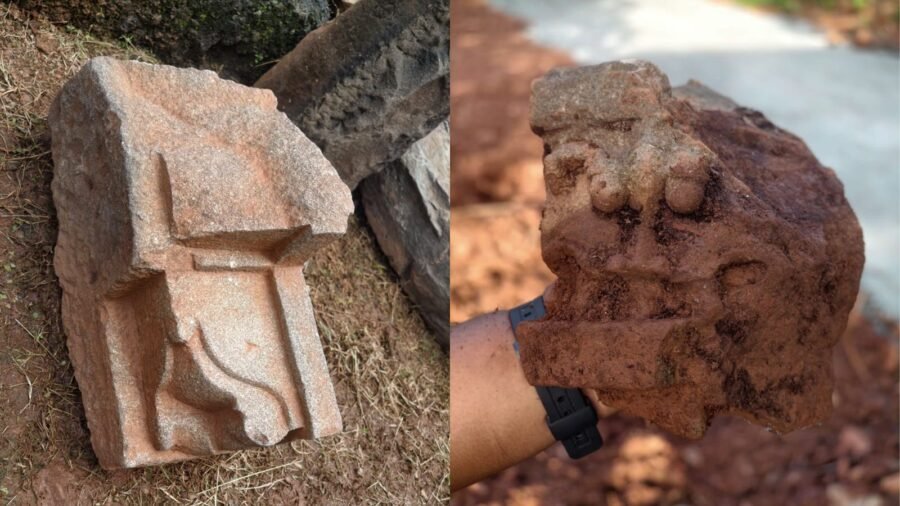
On Thursday, Sawant said some ancient relics dating between 14th and 16th centuries, indicating the existence of an ancient temple complex and a corridor, have been found during restoration work at the old site of Saptakoteshwar temple in Divar. The archaeological discoveries included a ‘Kirtimukh’ motif, which is traditionally carved above temple doorways, and a carved capital of a temple pillar.

‘Told myself, this will be last push’: Smit Machchhar to PM on flydubai cockpit fight
By Sohail Khan · 2 Oct
UP girl dies amid ‘loud DJ music’: Allahabad High Court takes up noise pollution menace
By Sohail Khan · 2 Oct