Domestic chip mandate for smart meters by mid-2028: Power Secretary Pankaj Agarwal
Story continues below.
Subscribe to see fewer ads.
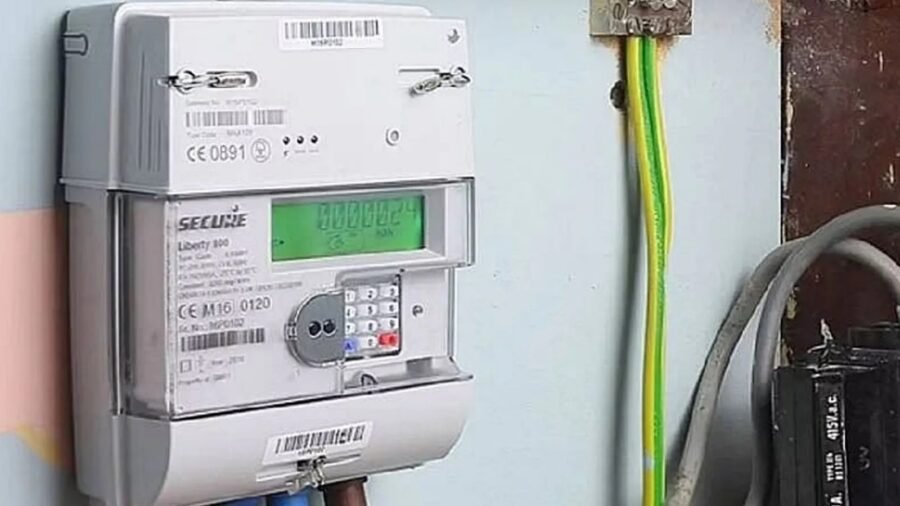
He said he was hopeful that by mid-2028, the government could mandate “design in India chip” and maybe even “make in India” chip in the system. Currently, a smart meter chip costs between $8 and $10 apiece, he said.
“We have already issued, I think, the Make in India requirement for the mandating design in India chips for the smart meters, including fabricated in India chips for the smart meters with the same timeline,” he added.
However, he maintained that there is no need for a separate incentive for domestically designed chips as government procurement will ensure that they have an assured market.
Under the Revamped Distribution Sector Scheme (RDSS), smart metering works for 19.79 crore consumers, 52.53 lakh Distribution Transformers (DTs) and 2.05 lakh feeders, totaling 20.33 crore smart meters, have been sanctioned based on proposals submitted by states and distribution utilities. Till date, 5.73 crore smart meters have been installed under the scheme, government data shows. In addition, smart meters have been installed by states under their state plans and other schemes. Overall, 7.24 crore smart meters have been installed across the country under various schemes.
Story continues below this ad
Apart from addressing cybersecurity risks, the push to domestically design smart meter chips could also help reduce the overall cost of smart meters, as chip design accounts for a significant share of the meter’s manufacturing cost. The move to develop and eventually manufacture these chips domestically could therefore help lower input costs for smart meter manufacturers.
Push for new electricity policy
Agarwal also said the Ministry of Power has sent a note on the draft National Electricity Policy (NEP) to the Union Cabinet for inter-ministerial consultation.
He said the note was sent after incorporating comments and observations from stakeholders and the government, and that the government will come up with the policy once the inter-ministerial consultation concludes.
“I think it shouldn’t be taking very long,” Agarwal said on the sidelines of the event.
Story continues below this ad
The development comes nearly eight months after the ministry issued the draft NEP in January this year. The new NEP will replace the two-decade-old NEP notified in 2005.
Agarwal also said the government plans to mandate the use of domestically designed chips in smart meters by mid-2028 to address cybersecurity-related issues.
The push comes amid concerns about cybersecurity in the country’s power systems. In July, a data breach exposed information linked to the country’s flagship nuclear project — Kudankulam Nuclear Power Plant (KKNP). In July, the Central Electricity Authority also notified cybersecurity regulations to enhance the cybersecurity and resilience of power systems against cyber threats.
Focus on new challenges
Agarwal said under the new policy, flexibility will be expected not only from the supply side but also from the demand side, especially those with very large loads like data centres.
Story continues below this ad
Referring to data centres and green hydrogen, Agarwal said, “These are gigawatt-scale groups. They will inject a lot of fluctuations in the grid. While they want security of supply and redundancy, they also want us to be in the commons to absorb all the fluctuations. That is where we are also asking them to do certain duties to the grid. And we are going to provide them with flexibility mandates.”
In July, the Power Ministry had informed Parliament that Artificial Intelligence (AI) data centres will put an additional load of 26.3 gigawatts (GW) by 2031-32 and this additional load is expected to be integrated into the grid and will primarily be served by renewable energy capacity.
“The new policy is basically designed keeping in view the demands of Viksit Bharat 2047. Because the last policy we issued in 2005, there were very different sets of challenges…. today, we are at a very different level…. we are already at 300 gigawatt of non-fossil and now, going forward, the challenges are entirely different. The grid management itself is a challenge. Building transmission systems is a challenge,” he added.


‘Amit Shah must resign’: Sonam Wangchuk on Ladakh violence, one year on
By Sohail Khan · 24 Sep
Leave a Reply